Small Bathroom, Big Style: Game-Changing Decor Ideas
Struggling with a small bathroom? Discover smart and stylish decor ideas to make your space feel bigger, brighter, and more organized. From clever storage to...
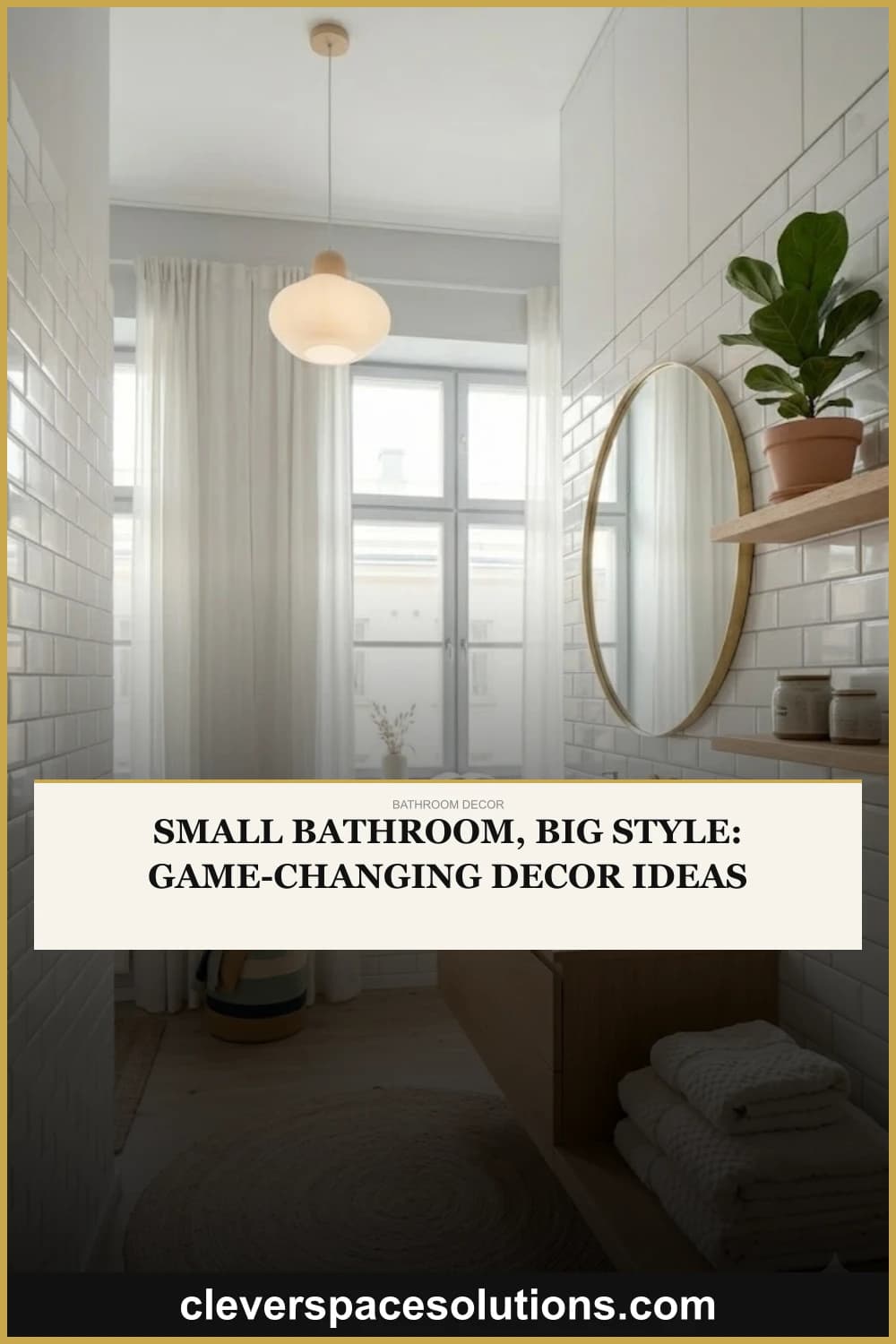
Small Bathroom, Big Style: 14 Decor Ideas That Actually Work
The average U.S. bathroom is just 40 square feet, according to the National Association of Home Builders (NAHB) — roughly the size of a large walk-in closet. Yet bathroom renovations rank as the second most popular home improvement project in the country, per the Houzz 2023 Bathroom Trends Study. The good news? You don't need a renovation budget to transform a cramped bathroom. The right small bathroom decor ideas — color, storage, lighting, and a few smart tricks — can make even the tightest space feel intentional and calm. how to decorate a small home starts here.
TL;DR:
- The average U.S. bathroom is only 40 sq ft (NAHB) — but color, mirrors, and smart storage make it feel twice as large.
- Light colors, large-format tiles, and continuous flooring are the three fastest visual space-expanders.
- Wall-mounted storage, over-toilet units, and tension rod organizers recover floor space without any structural changes.
- A $15 fog-free mirror and well-placed sconces can do more for a small bathroom than a full tile overhaul.
How Does Color Make a Small Bathroom Look Bigger?
Color is the single fastest tool for changing how a room feels. According to the Houzz 2023 Bathroom Trends Study, white and off-white remain the top wall color choices in bathroom renovations, with over 60% of remodeled bathrooms using light neutrals. That's not a coincidence — light tones reflect natural and artificial light, which makes walls appear to recede and rooms feel larger.
I've found that the biggest mistake people make is going too dark on every surface. One bold accent wall — behind the vanity or the toilet — can add personality without closing the space in. Think a deep navy or earthy terracotta on a single wall, with everything else kept bright and light.
Soft whites, warm creams, and pale sage greens work particularly well in small bathroom decor because they reflect light without feeling cold or clinical. Paint the ceiling the same color as the walls, or even a shade lighter. Most people paint ceilings bright white by default, but a tonal ceiling removes the visual "lid" that makes a small room feel boxy.
Grout color matters more than you'd think. Dark grout with light tiles draws a grid pattern across every surface, which emphasizes the room's edges. Matching grout color to tile color — or going with a very light grout on light tiles — keeps the eye moving instead of stopping at every joint line.
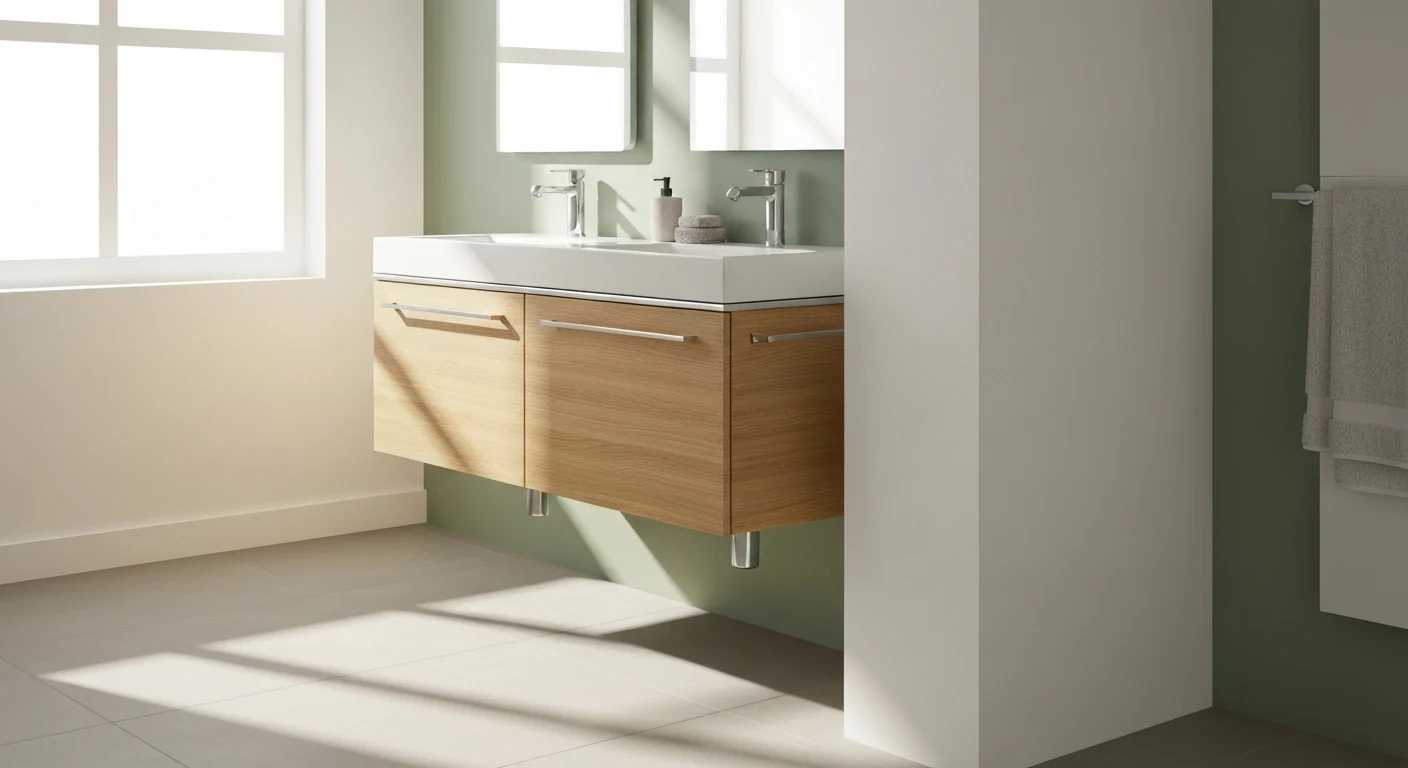
Citation capsule: According to the Houzz 2023 Bathroom Trends Study, more than 60% of renovated bathrooms use white or off-white wall colors, making light neutrals the dominant choice for homeowners seeking to visually expand small spaces.
Storage Solutions That Keep Small Bathrooms Clutter-Free
Storage is the number-one pain point in small bathrooms — and also the most solvable. The Houzz Bathroom Trends Study found that storage improvement is cited by the majority of homeowners as a primary motivation for bathroom updates. The key insight is this: floor space is precious, so every storage solution should go vertical or wall-mounted. Read our full guide to small space storage solutions for a broader look.
Wall-mounted shelves above the toilet are one of the highest-impact, lowest-cost changes you can make. An over-toilet storage unit — a freestanding or wall-mounted three-shelf tower — fits in a footprint of roughly 26 by 8 inches and can hold towels, toiletries, and decor without touching the floor. No drilling required if you go freestanding.
Under the sink is almost always wasted space. A tension rod organizer installed inside the under-sink cabinet creates a second tier for hanging spray bottles, freeing the shelf for bins and baskets. Stackable acrylic bins with pull-out drawers do the same job in a cleaner package.
Mirrored medicine cabinets deserve more credit than they get. They combine three functions in one footprint: mirror, storage, and a reflective surface that adds depth to the room. A recessed medicine cabinet — the kind that sits inside the wall — takes up zero floor space and zero wall projection. In my experience, swapping a flat mirror for a recessed medicine cabinet is one of the smartest single upgrades in a small bathroom remodel.
Don't overlook corner shelves. A two- or three-tier corner shelf unit fits in dead space that would otherwise hold nothing. In a shower, a corner caddy rated for wet environments keeps shampoo and soap off the floor and out of the way.
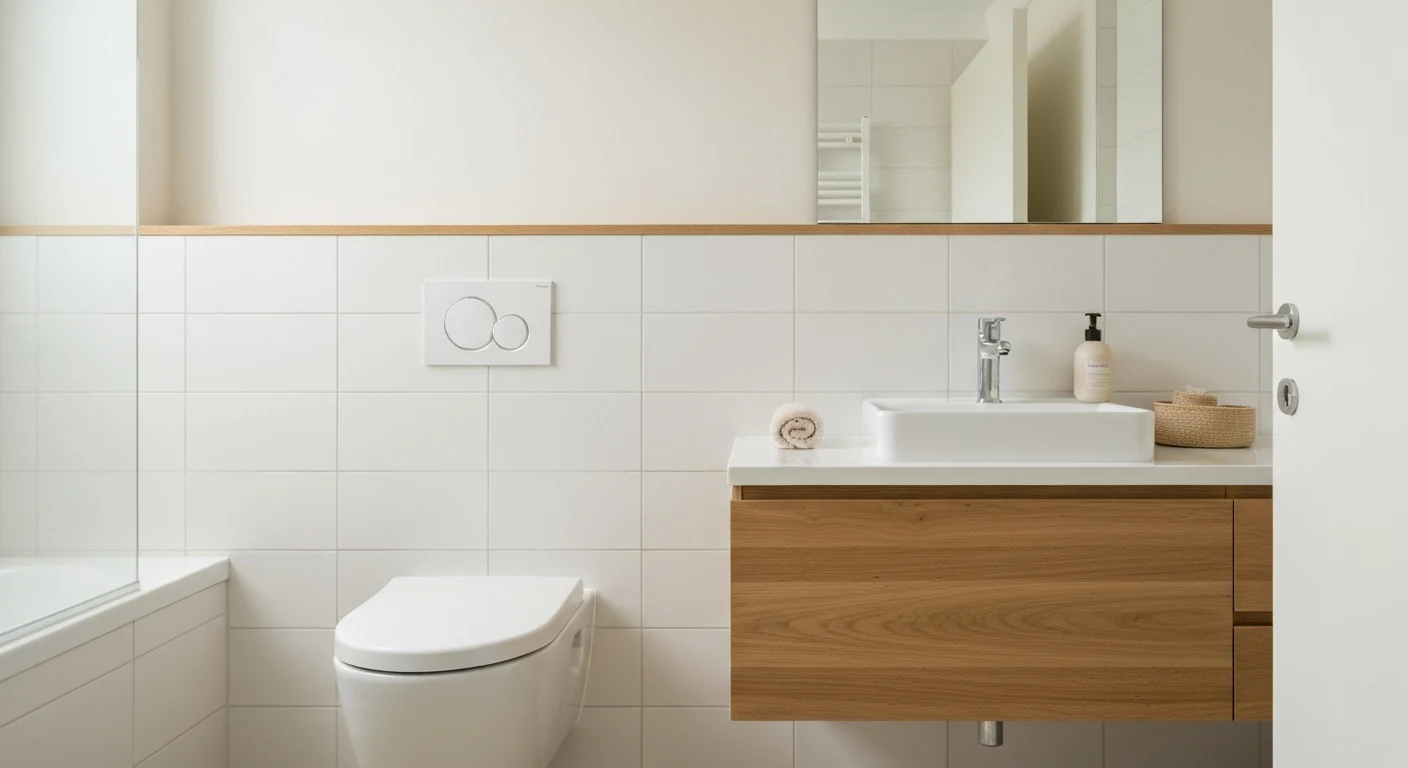
Citation capsule: The Houzz 2023 Bathroom Trends Study identifies storage improvement as a top motivation for bathroom updates, with wall-mounted and vertical solutions being the most practical approach in bathrooms averaging just 40 square feet (NAHB).
Which Bathroom Accessories Work Best in Small Spaces?
Accessories do a lot of heavy lifting in small bathroom decor ideas. They're often the difference between a bathroom that feels curated and one that feels cluttered. The guiding rule is simple: every accessory should do at least one job, and nothing should live on the counter unless it's used daily.
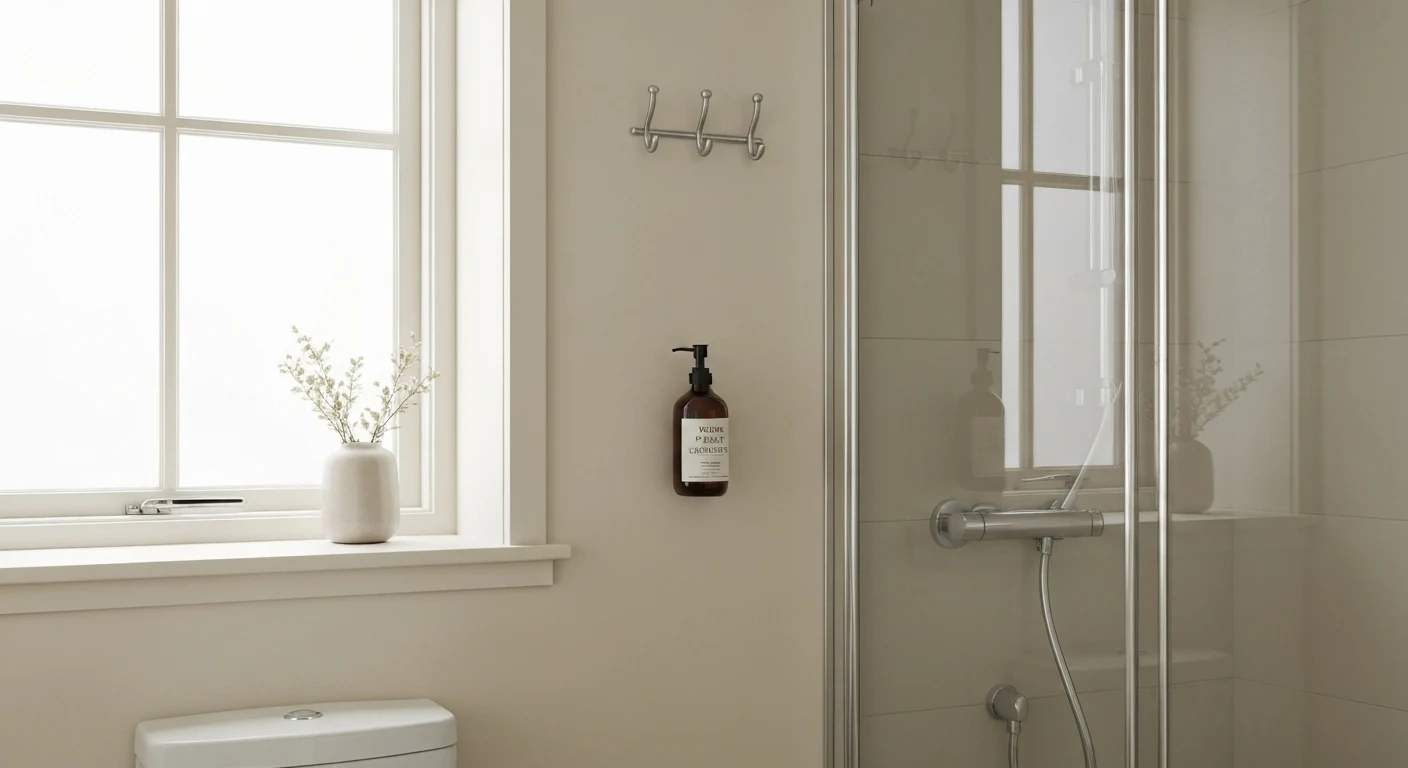
Wall-mounted accessories are almost always better than counter-mounted ones in tight spaces. A wall-mounted soap dispenser, toothbrush holder, and tumbler take up zero counter real estate and keep surfaces clear. Most mount with adhesive strips rated for bathroom humidity, so there's no drilling needed. What surprised me when I first made this switch was how much larger the counter looked with just two inches of clear space on each side.
Towel storage is worth thinking through carefully. A standard towel bar needs about 24 inches of wall width. If you don't have that, a hook rail — a strip of five or six hooks on a single board — mounts in half the width and holds more towels. A heated towel rail is a particularly smart choice if you're in a cold climate; it pulls double duty as warmth and storage.
Shower curtain versus glass door is a real decision. A clear glass door or a frosted glass panel visually opens the shower area, which helps in very small bathrooms. A fabric shower curtain in a light color achieves a similar effect at a fraction of the cost. Dark or heavily patterned curtains are the one thing to avoid — they visually shrink the room every time you look at them.
Choose slim, transparent, or light-colored bathroom mats rather than thick, dark ones. A thin cotton bath mat or a lightweight woven mat keeps the floor visible, which helps the room read as larger. Transparency works: clear acrylic soap dishes, glass bottles for cotton swabs, and open-weave baskets all keep the visual weight low.
How to Use Mirrors and Lighting to Open Up a Small Bathroom
Mirrors and lighting together are probably the most powerful combination in any small bathroom decor strategy. A large frameless mirror — or a pair of mirrors flanking a double vanity — can make a 40-square-foot bathroom feel genuinely spacious. According to the NAHB, standard vanity mirror height runs 36 to 40 inches, but going larger (48 to 60 inches tall) dramatically increases the sense of depth in a small bathroom.
A fog-free mirror is worth the modest upgrade. Nothing undermines a well-lit bathroom faster than a steamed-up mirror after every shower. Fog-free mirrors use a thin heating element behind the glass — they stay clear even in a hot, steamy bathroom and make the room feel more functional and open at the same time.
Lighting placement matters as much as fixture choice. A single overhead light creates shadows on the face and leaves the corners of a small bathroom dim. Flank the mirror with two vertical sconces — one on each side — or add a horizontal LED bar across the top of the mirror. This "Broadway mirror" setup provides even, shadow-free light that makes the whole room feel brighter.
Natural light is always worth protecting. If your small bathroom has a window, don't cover it with heavy drapes or opaque blinds. A frosted privacy film on the lower half of the window lets in light while maintaining privacy — it's a $15 solution that makes a visible difference. If there's no window at all, a backlit mirror or a warm-toned LED strip behind a floating vanity adds a sense of depth that mimics natural light.
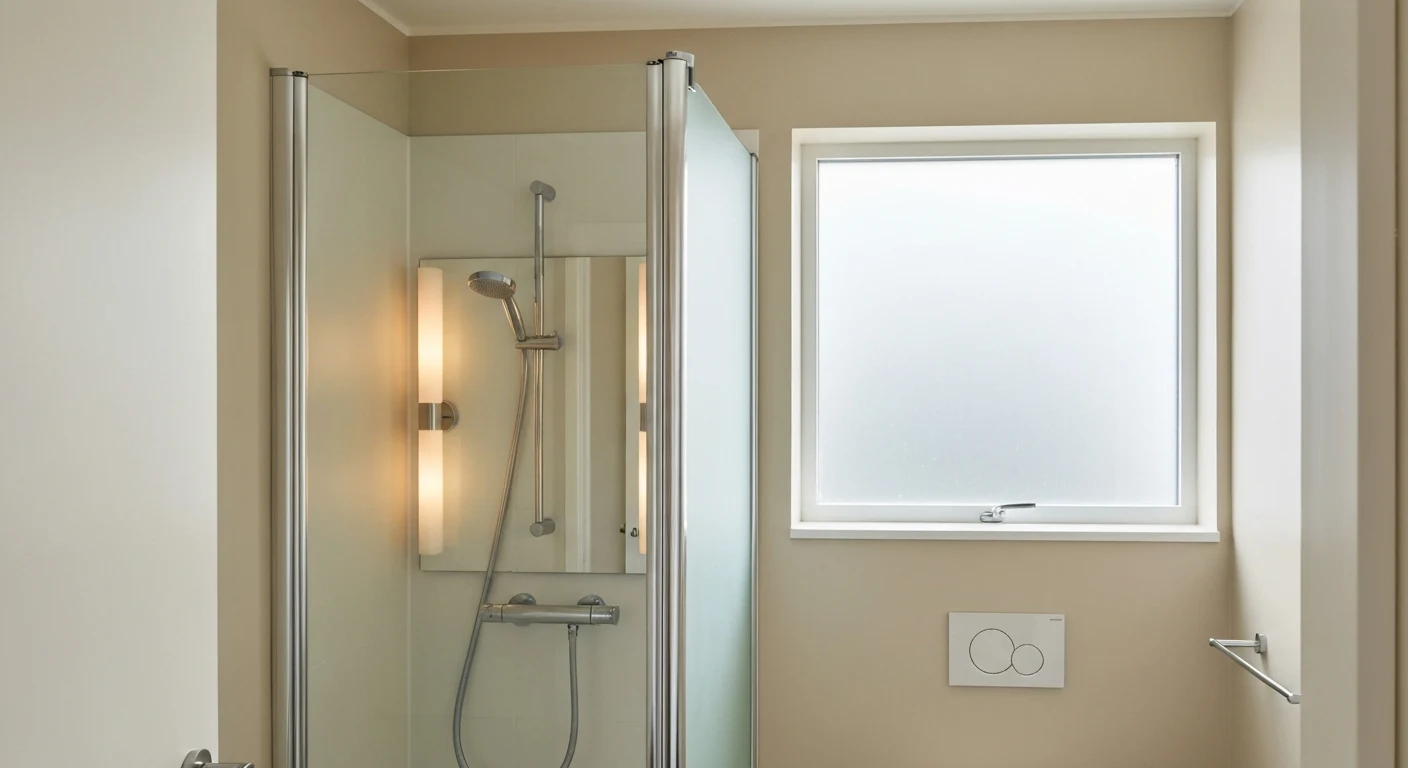
Citation capsule: The NAHB notes that standard vanity mirror height is 36–40 inches, but selecting a larger mirror (48–60 inches tall) is one of the most cost-effective ways to visually expand a small bathroom without structural changes.
Minimalist Bathroom Design: Less Clutter, More Space
Minimalism isn't about an empty bathroom. It's about intentional editing — keeping only what you use, storing it neatly, and letting the surfaces breathe. For small bathroom decor, this approach works especially well because every item left on the counter or floor competes for the limited visual space available.
Start with a neutral color palette: white, warm gray, soft beige, or pale greige. These tones reflect light and create a calm, cohesive atmosphere without requiring any particular style commitment. They also make it easier to mix materials — wood, stone, ceramic — without the room feeling visually chaotic.
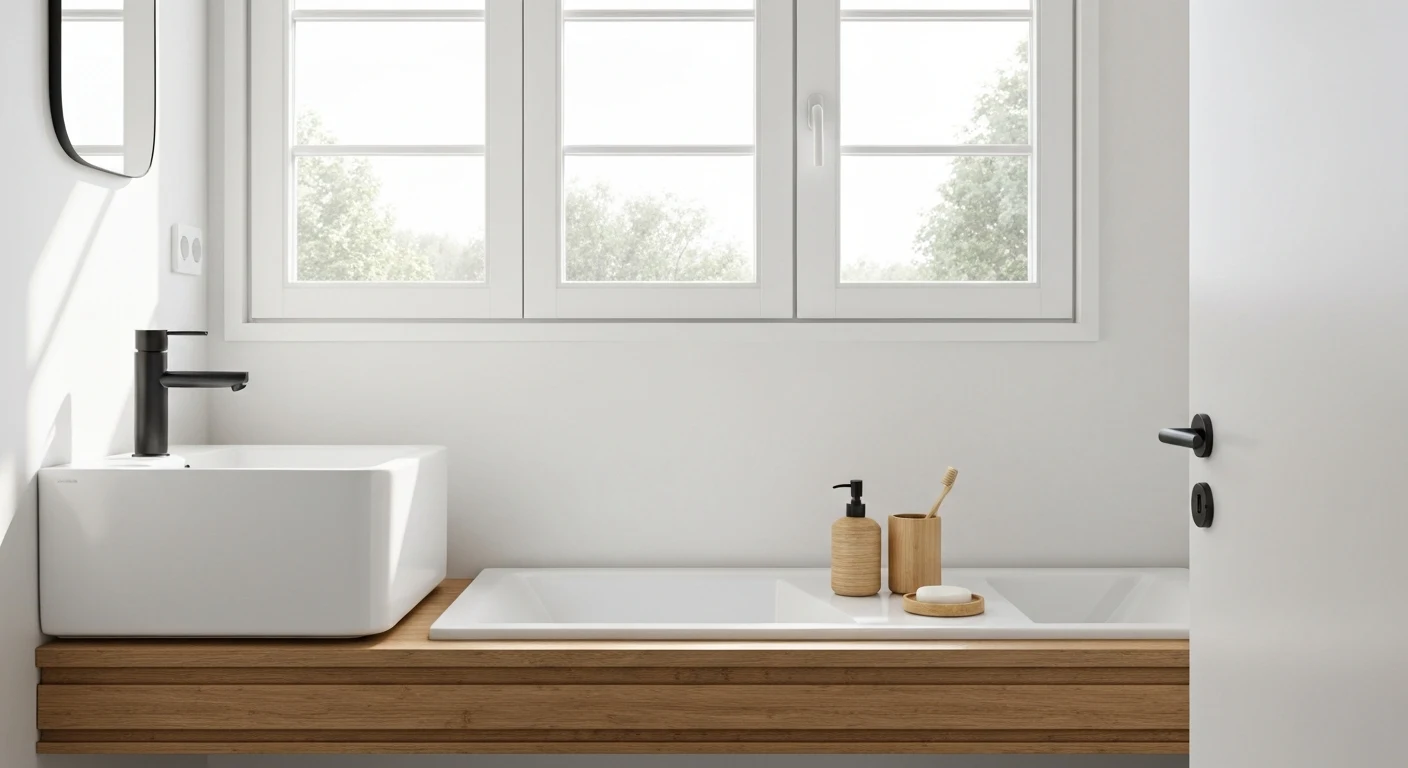
A floating vanity is probably the single best piece of minimalist small bathroom furniture you can choose. Standard floating vanities are mounted at 32 to 36 inches from the floor, leaving 8 to 12 inches of clear floor space beneath them. That exposed floor space makes the room feel larger, and it's actually easier to clean than a floor-mounted vanity. Pair it with a simple vessel sink rather than an under-mount if you want a cleaner countertop line.
The "one in, one out" rule applies especially well in small bathrooms. Every new product that enters the bathroom should displace something that's already there. I've found that applying this rule for just one month cuts bathroom counter clutter by roughly half — without buying a single new organizer. The discipline matters more than the products.
Natural materials — a teak bath mat, a stone soap dish, a small ceramic planter — add warmth without adding visual weight. Keep accessories to three or four max on any visible surface, and group them together rather than spreading them across the counter.
Flooring and Tile Tricks for Small Bathrooms
Flooring choices have an outsized effect on how large a bathroom feels. Large-format tiles — 12-by-24-inch or 18-by-18-inch — have fewer grout lines than small mosaic tiles, which means fewer visual interruptions across the floor. According to the NAHB, the most popular bathroom floor tile sizes are now 12-by-24-inch planks, up from the traditional 12-by-12-inch square, precisely because the larger format reads as more spacious.
Tile direction matters. Running rectangular tiles diagonally across a small bathroom floor creates the illusion of more floor area. Running them lengthwise — parallel to the longest wall — draws the eye down the room and makes it feel longer. Both tricks work better than a standard grid layout, which tends to emphasize the room's square edges.
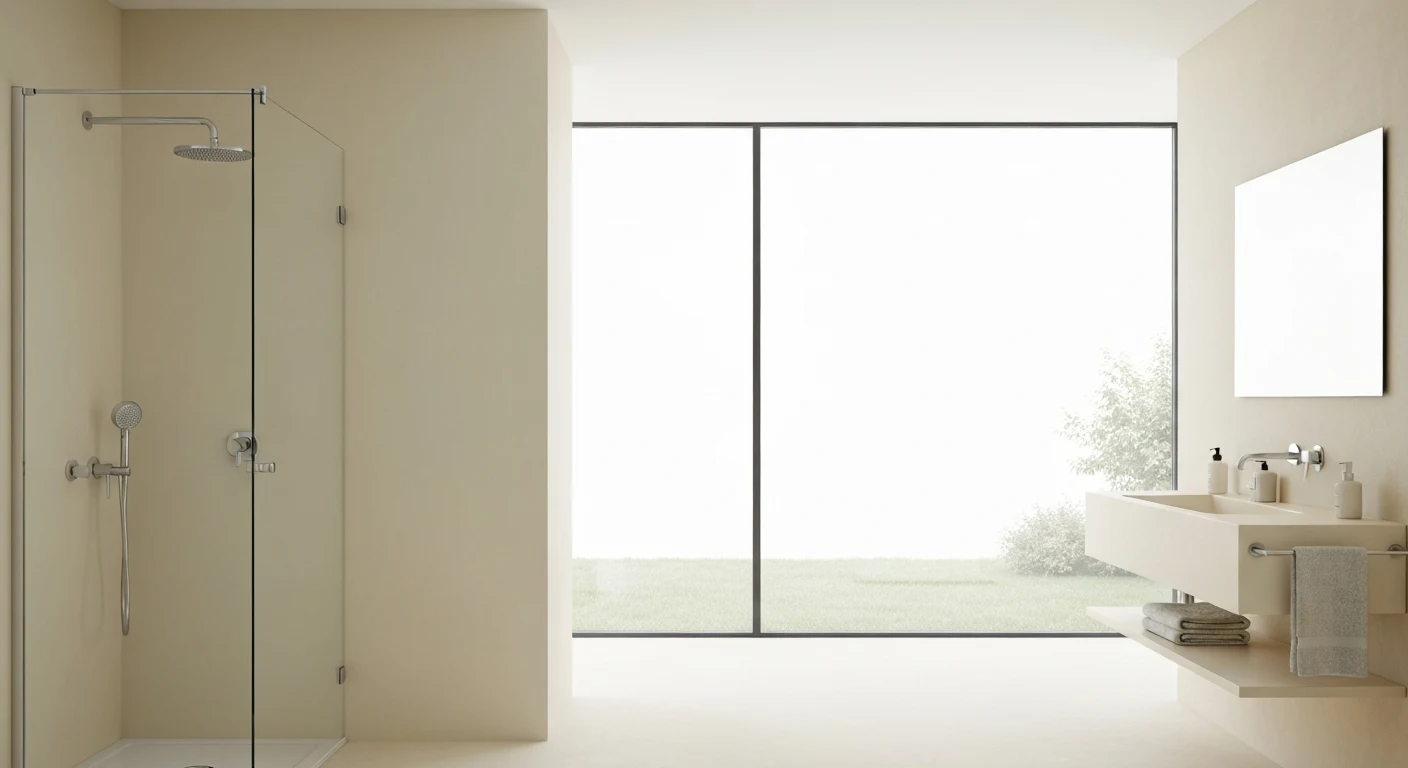
Continuous flooring — using the same tile or material from the bathroom floor into the shower, without a threshold strip — removes a visual break that would otherwise chop the room into smaller sections. It's a detail that designers use often in small bathroom renovations because the effect is surprisingly strong relative to the cost.
For walls, a large-format subway tile (4-by-12-inch or 3-by-12-inch) installed vertically reads as taller than the same tile installed horizontally. Vertical tiling draws the eye upward, which makes ceilings feel higher and rooms feel larger. It's a small shift that has a real perceptual impact.
Plants and Natural Elements in a Tiny Bathroom
Plants are one of the most underused tools in small bathroom decor ideas. A single well-chosen plant adds color, texture, and a sense of life to a bathroom without taking up meaningful floor space. And contrary to what you might expect, bathrooms are often ideal environments for certain plants because of their consistent humidity levels.
The best choices for low-light, high-humidity bathrooms are pothos, spider plants, Boston ferns, and peace lilies. Pothos in particular is nearly indestructible — it thrives on indirect light, tolerates missed waterings, and can trail down from a wall shelf in a way that adds vertical interest without taking up counter space.
A small shelf bracket above the toilet or beside the mirror is the ideal plant placement. Keep the pot small — 4 to 6 inches — so the plant stays in proportion. A single ceramic pot in a matte finish adds more warmth to a small bathroom than most decorative accessories at any price point.
Beyond plants, natural materials like woven baskets, a wood-framed mirror, and a rattan towel basket introduce texture that makes a bathroom feel less sterile. These elements work especially well in minimalist and spa-style bathrooms, where the risk of the space feeling cold is real.
Budget Small Bathroom Makeover: Where to Start
Bathroom renovations are the second most popular home improvement project in the U.S., according to the Houzz 2023 Bathroom Trends Study, but the median spend is well over $9,000. You don't need to spend anywhere near that to see a real transformation. Most of the highest-impact small bathroom decor changes cost under $100.
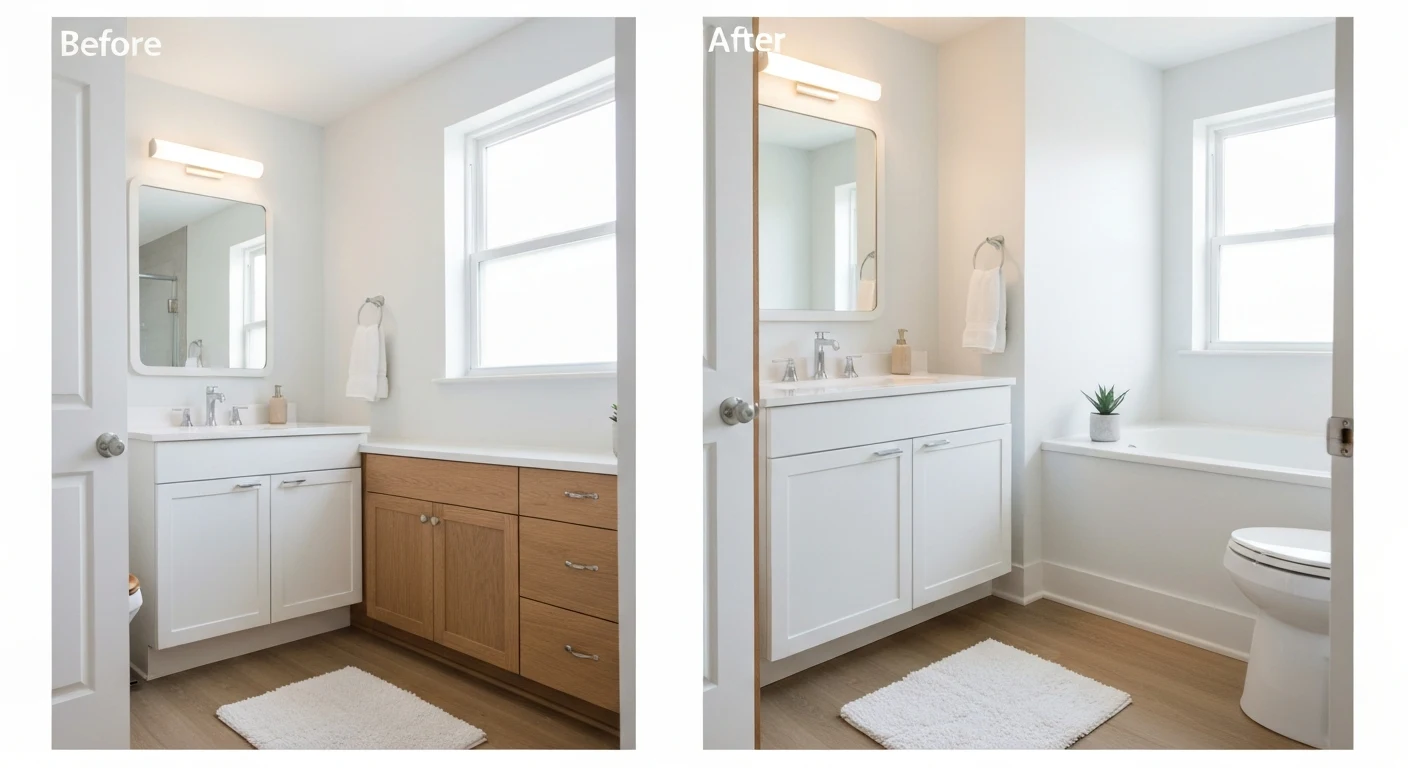
Start with paint. A single quart of paint covers a small bathroom twice over. Repainting with a fresh, light color is the fastest and cheapest way to change how the room feels. Budget about $30 to $50 for a quality bathroom-grade paint with mildew resistance.
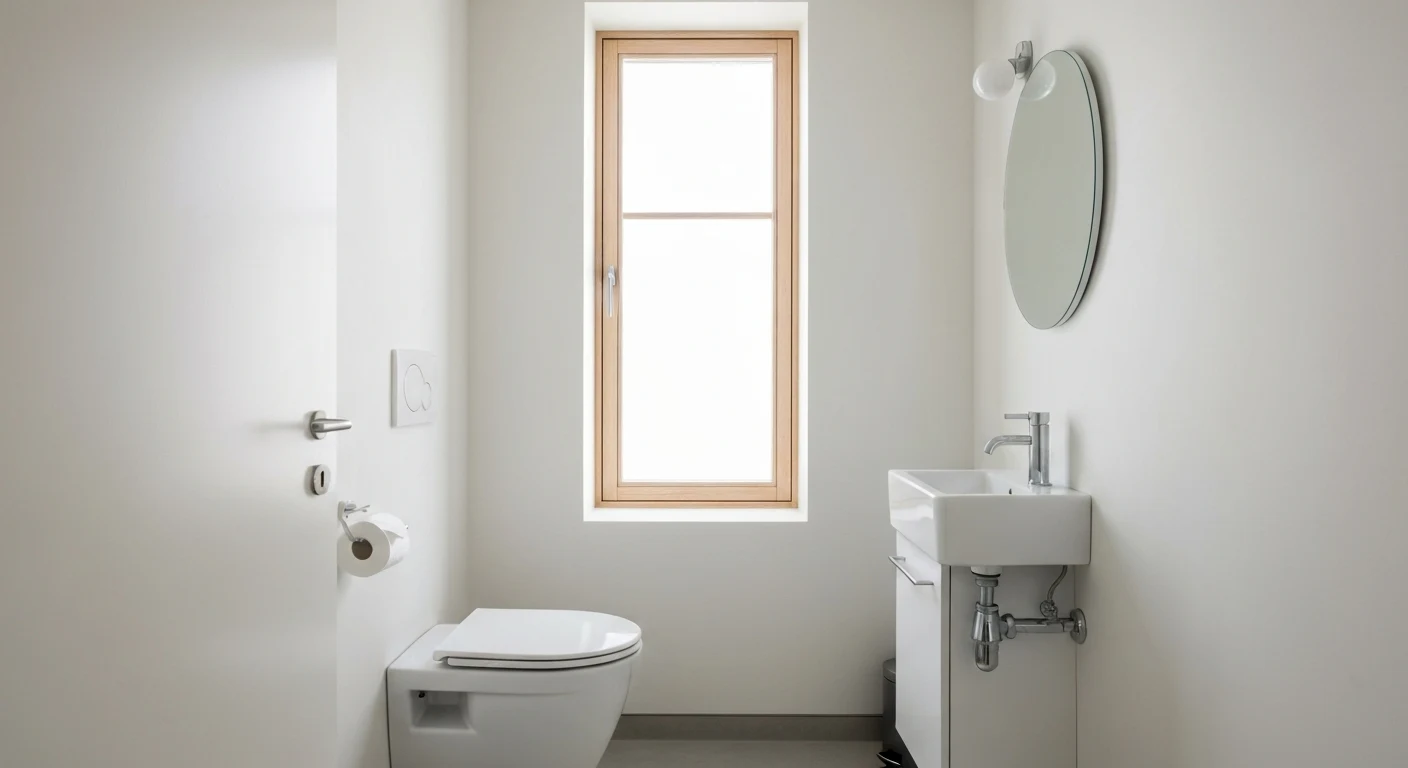
Next, address the hardware. Swapping out builder-grade towel bars, toilet paper holders, and cabinet pulls for brushed nickel, matte black, or warm brass finishes takes about an hour with a screwdriver and costs between $40 and $80 for a matching set. The impact is disproportionate to the effort — hardware is what the eye notices first at close range.
Lighting is the third priority. If your bathroom has an outdated, dim light bar above the mirror, replacing it with a modern LED vanity light with a warm color temperature (2700K to 3000K) costs between $40 and $120 and makes an immediate, visible difference. Pair it with a new mirror — a frameless or simply framed option — and the vanity wall looks completely updated.
Finally, add a plant, clear the counter, and put two or three cohesive accessories in place of the usual collection of mismatched bottles and holders. That's a full budget bathroom makeover for well under $200, and it hits all the right small bathroom decor ideas at once.
Small Bathroom Decor: Your Questions Answered
How can I make my small bathroom look luxurious?
Luxury in a small bathroom comes from consistency and finish quality, not size. Matching metal finishes across all hardware — brushed gold, matte black, or polished chrome throughout — gives the room a designed, intentional feel. A heated towel rail, a frameless glass shower door, and a single large-format mirror add perceived value at a relatively modest cost. According to the Houzz Bathroom Trends Study, heated floors and frameless showers are among the top luxury features homeowners add during renovations.
What colors make a small bathroom look bigger?
Light, warm neutrals work best: soft white, warm cream, pale greige, and light sage. The Houzz 2023 Bathroom Trends Study found that white and off-white are the most common choices in renovated bathrooms, used in over 60% of projects. Tonal ceilings — painted the same color as the walls or a shade lighter — remove the visual "lid" that makes small rooms feel shorter. Avoid very dark or heavily saturated colors on more than one accent wall.
How do I add storage to a small bathroom with no space?
Go vertical and wall-mounted. An over-toilet storage unit fits in a footprint of roughly 26 by 8 inches and provides three full shelves. A recessed medicine cabinet sits inside the wall, adding storage without any projection. Tension rod organizers inside under-sink cabinets create a second tier for spray bottles. See our full breakdown of small space storage solutions for step-by-step guidance on each approach.
Should I use a shower curtain or glass door in a small bathroom?
A clear or frosted glass door is the better choice for visual space in a small bathroom. It keeps the shower area visible, which makes the room read as one continuous space rather than two divided zones. A light-colored fabric curtain is a solid budget alternative. Dark or heavily patterned curtains close the room down visually and are best avoided. If you go with a curtain, a tension rod mounted as close to the ceiling as possible adds height to the room.
What is the best flooring for a small bathroom?
Large-format tile in a light color — 12-by-24-inch ceramic or porcelain in white, cream, or light gray — is the strongest choice for small bathroom floors. According to the NAHB, 12-by-24-inch plank tiles have become the most popular bathroom floor format because larger tiles mean fewer grout lines and a more open visual. Run the tile diagonally or lengthwise to further expand the sense of space. Avoid small mosaic tiles on the floor — the high grout-to-tile ratio creates a busy pattern that visually shrinks the room.
What These 14 Small Bathroom Decor Ideas Add Up To
A small bathroom doesn't have to feel like a compromise. The ideas here — color strategy, wall-mounted storage, smart accessories, mirrors, lighting, tile choices, plants, and a focused budget approach — all work together toward the same goal: making 40 square feet feel like more than it is.
Start with the highest-leverage changes first. Paint the walls a light neutral, swap the mirror, and clear the countertop. Those three steps cost under $100 combined and transform how the room feels before you've touched a single piece of hardware or storage unit. Then layer in the rest at your own pace and budget.
The best small bathroom decor ideas aren't the most expensive or the most dramatic. They're the ones that understand how perception works — how color, light, and visual continuity trick the eye into reading a space as larger than it is. Get those fundamentals right, and the style follows naturally.
If you're working through a broader home project, our guide to how to decorate a small home covers the same principles across every room — it's a useful next step once you've sorted the bathroom.
More from Small Bathroom
Decor, storage, and style for small bathrooms.
Tags

Written by Joesp H.
Interior Design & Small Space Living Specialist
Former marketing manager turned full-time home optimizer. After living in 7 homes ranging from 450 to 2,000 sq ft, I started CleverSpaceSolutions to help people create organized, functional spaces on real budgets.
Other Articles
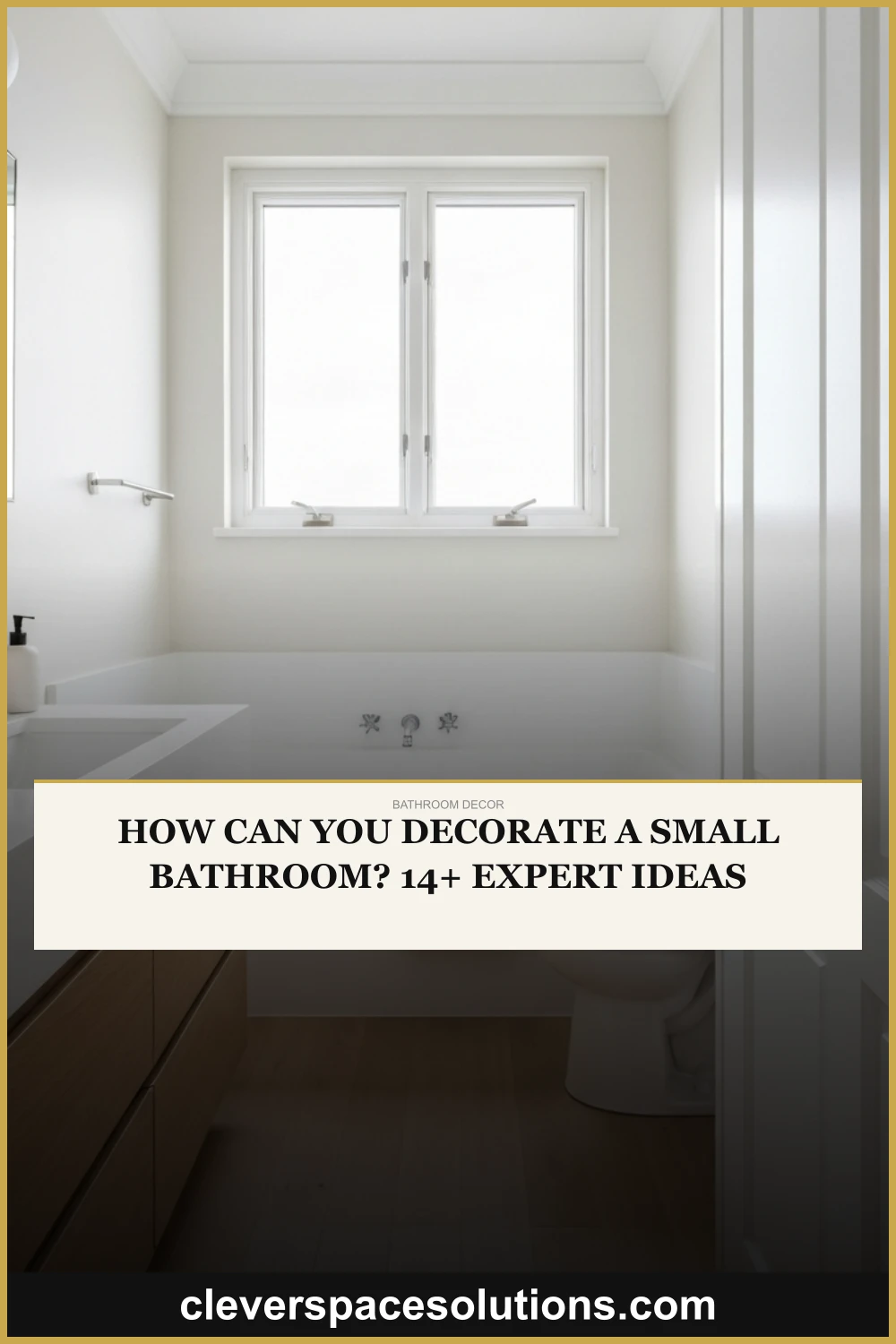
How Can You Decorate a Small Bathroom? 14+ Expert Ideas
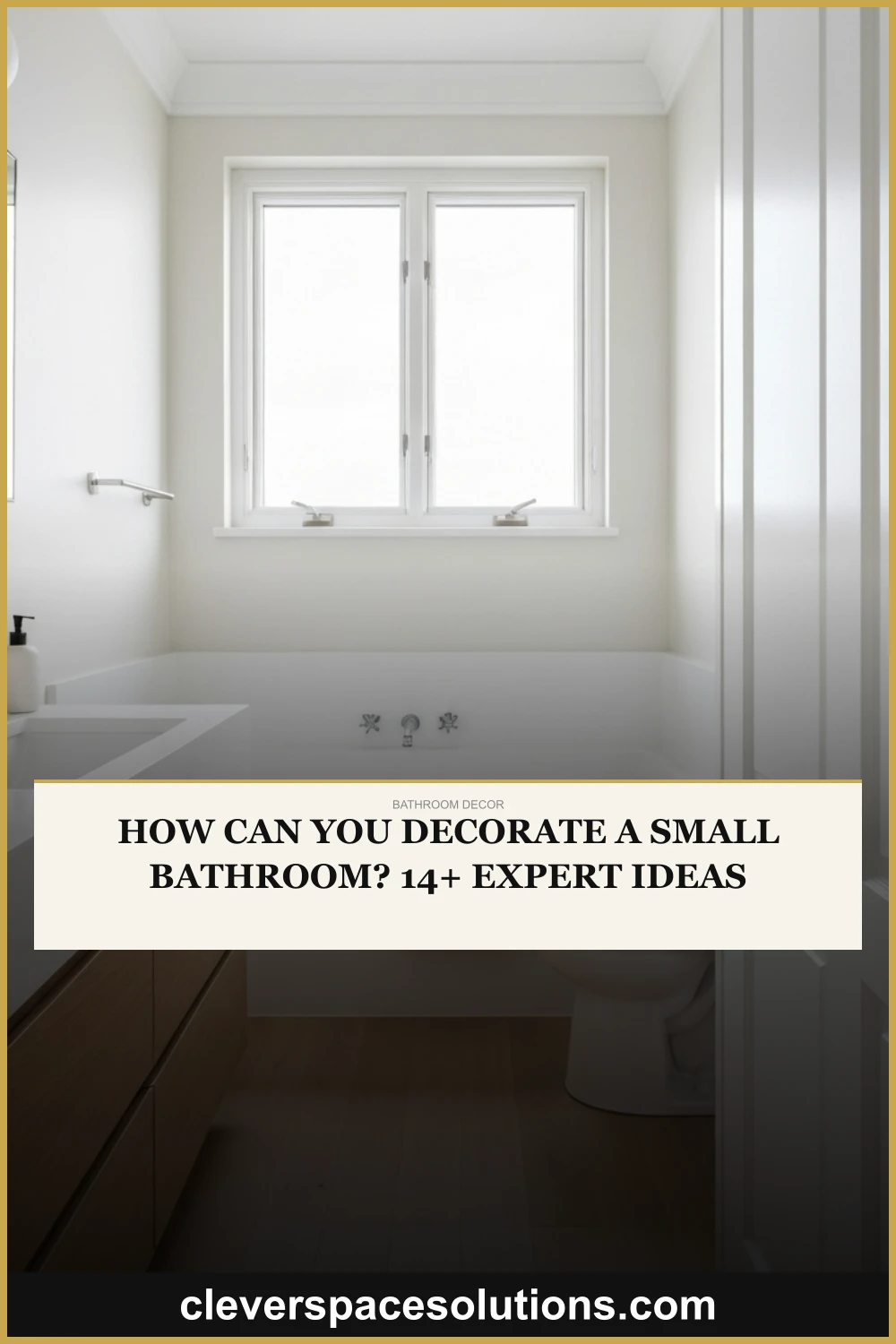
Wondering how to make your small bathroom feel bigger and more stylish? This guide answers your questions with 14 expert ideas for storage, color, and layout...
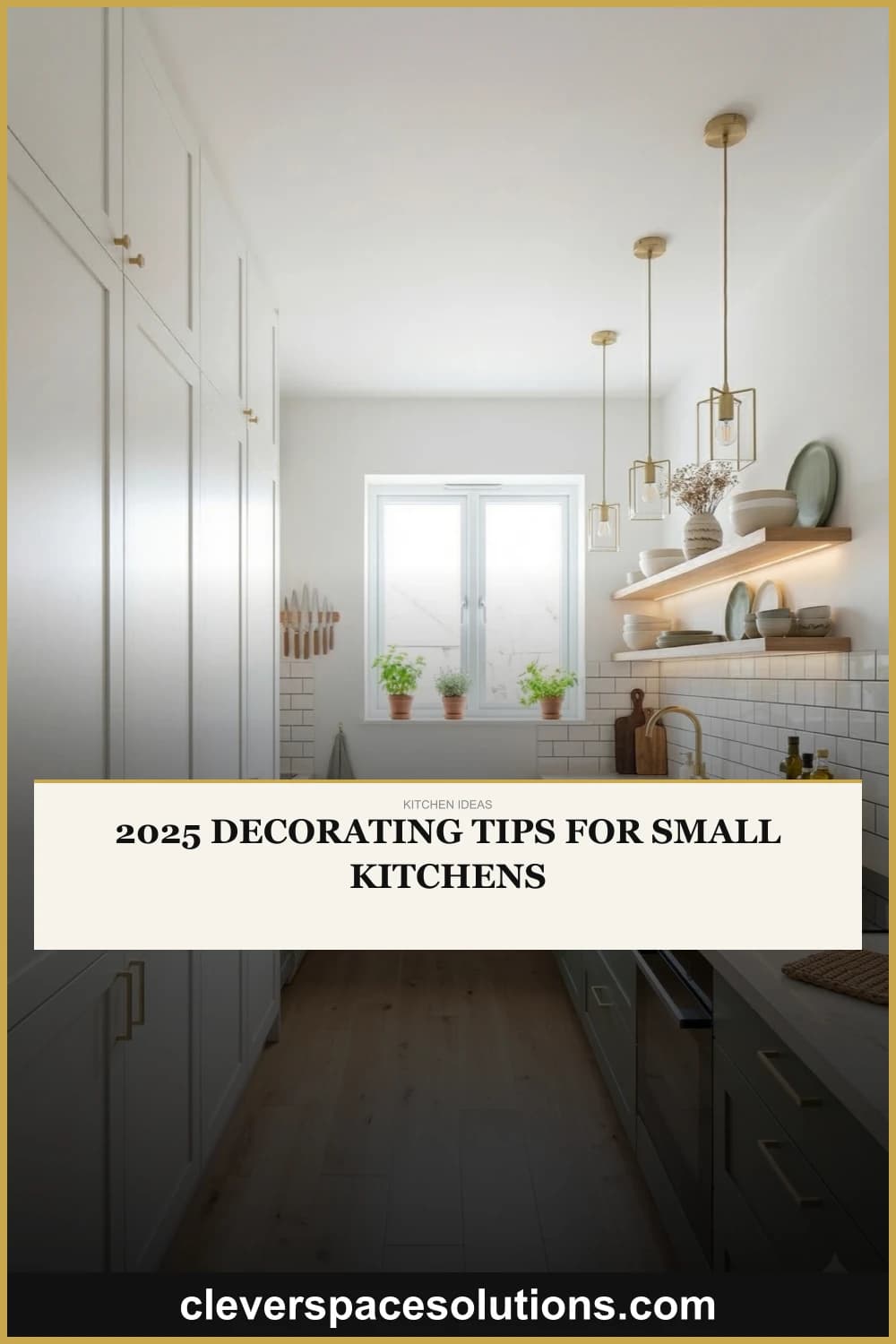
2025 Decorating Tips for Small Kitchens
Is your small kitchen feeling cramped? Discover our complete 2025 guide to making it feel bigger and more stylish. We cover everything from smart storage hac...
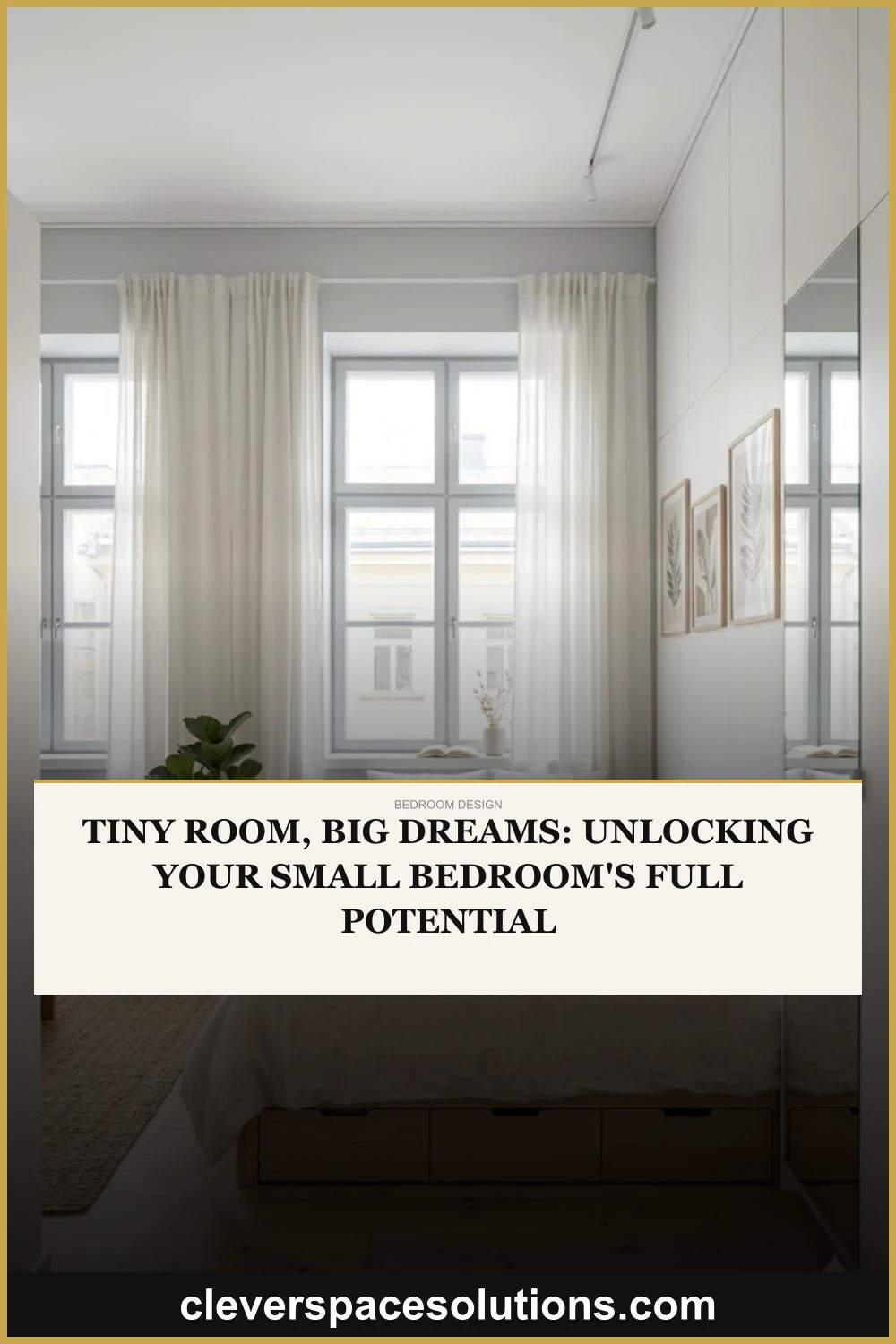
Tiny Room, Big Dreams: Unlocking Your Small Bedroom's Full Potential
Wondering how to unlock your small bedroom's full potential? This ultimate guide answers your questions, exploring design history, current trends, and future...