Best Sofas and Sectionals for Small Spaces in 2026 (Tested in Real Apartments)
The best sofas and sectionals for small living rooms in 2026: clearance formulas, sofa types ranked, fabric picks, and arrangement rules for real apartments.
Best Sofas and Sectionals for Small Spaces in 2026 (Tested in Real Apartments)
TL;DR: In a small apartment (studios average 457 sq ft, one-bedrooms average 735 sq ft, per RentCafe's 2025 national survey), your sofa is the room's anchor piece and its biggest potential sizing mistake. The sweet spot for most small living rooms is 72 to 84 inches wide with a seat depth under 36 inches. Loveseats and apartment-scale sofas outperform full-sized sectionals in rooms under 200 sq ft. Measure your clearance paths before you shop, not after.
According to the Bureau of Labor Statistics' 2024 American Time Use Survey, Americans spend an average of 2 hours and 36 minutes a day watching television. In a small apartment, that time happens on one piece of furniture in one room. Getting the sofa right is not a style decision. It is a daily quality-of-life decision. Whether you are furnishing a studio for the first time or replacing a sofa that has always felt one size too large, the process follows the same framework: measure first, then shop. I have covered the layout and furniture fundamentals for small living rooms in my guide to furnishing a small living room, and this post goes deeper into the sofa decision specifically: types, sizes, fabrics, and the arrangement rules that make a small space feel intentional rather than cluttered.
The small-space furniture market reflects how common this challenge has become. Future Market Insights puts the segment at $6.7 billion in 2025, projected to grow to $12.2 billion by 2035, a compound annual growth rate of 6.2%. That growth is faster than the broader living room furniture category, which Global Market Insights estimates at $231.8 billion in 2025 with a slower 3.9% CAGR. Manufacturers have responded with more purpose-built options than at any previous point: apartment sofas with shallower seats, modular sectionals starting at 90 inches rather than 110, and performance fabrics built for years of heavy use in close quarters.
The Houzz 2025 consumer survey found that 44% of homeowners planned to invest in new home furnishings in 2025, with Millennials leading at 48% who purchased large furniture in 2024. In high-cost rental markets where 49% of renter households spend more than 30% of income on rent and utilities, per Harvard JCHS 2026, the sofa decision carries extra weight. It travels with you, takes the most daily use of any furniture piece, and sets the scale for everything else in the room.

Know Your Numbers Before You Shop
Studios average 457 sq ft and one-bedrooms average 735 sq ft nationally, according to RentCafe's 2025 analysis of multifamily buildings across the top 100 US cities. In practice, the living area in a studio runs closer to 150 to 250 sq ft once you subtract the kitchen, bathroom, and sleeping zone. A one-bedroom's living room typically covers 120 to 200 sq ft. These numbers matter because sofa sizing has to account for the whole room layout, not just the sofa's footprint in isolation.
Three measurements determine what sofa you can buy:
Maximum sofa width. Measure the wall or zone where the sofa will sit. Subtract at least 6 inches on each side for breathing room between the sofa arm and any wall or adjacent furniture. A 10-foot wall leaves room for up to 108 inches of sofa at the absolute maximum, though 96 inches gives a more comfortable margin.
Walkway clearance. Houzz, drawing on National Kitchen and Bath Association and American Society of Interior Designers standards, recommends 30 to 36 inches for primary walkways and 24 inches minimum between furniture pieces. Measure the path from the front of where your sofa will sit to your coffee table, TV stand, and any doorways in the room's traffic flow. The standard gap between sofa front edge and coffee table is 12 to 18 inches. Once you know that gap, subtract the sofa depth from your available room depth to confirm what fits.
Delivery clearance. A sofa that fits the living room means nothing if it cannot get through the front door. Standard US apartment doors run 32 to 36 inches wide, and a 90-inch sofa needs at least 42 inches of hallway clearance to tilt through. Ask the retailer whether the sofa ships in sections or as a single unit. Many apartment-scale sofas arrive in two pieces for exactly this reason.
Sofa Types Ranked for Small Living Rooms
Grand View Research put sectional sofas at 27.3% of global sofa market share in 2025. Market share does not equal suitability in small spaces, though. Here is how the main sofa types perform in rooms under 200 sq ft.
Loveseats (58 to 64 inches)
Loveseats suit rooms under 150 sq ft or situations where floor space matters more than seating capacity. A loveseat seats two adults comfortably, and that is the full capacity. For anyone who regularly has more than one guest, the logistics become awkward fast. If you live alone or with a partner and rarely host, a loveseat recovers more floor space than any other seating option available.
Apartment Sofas (72 to 84 inches)
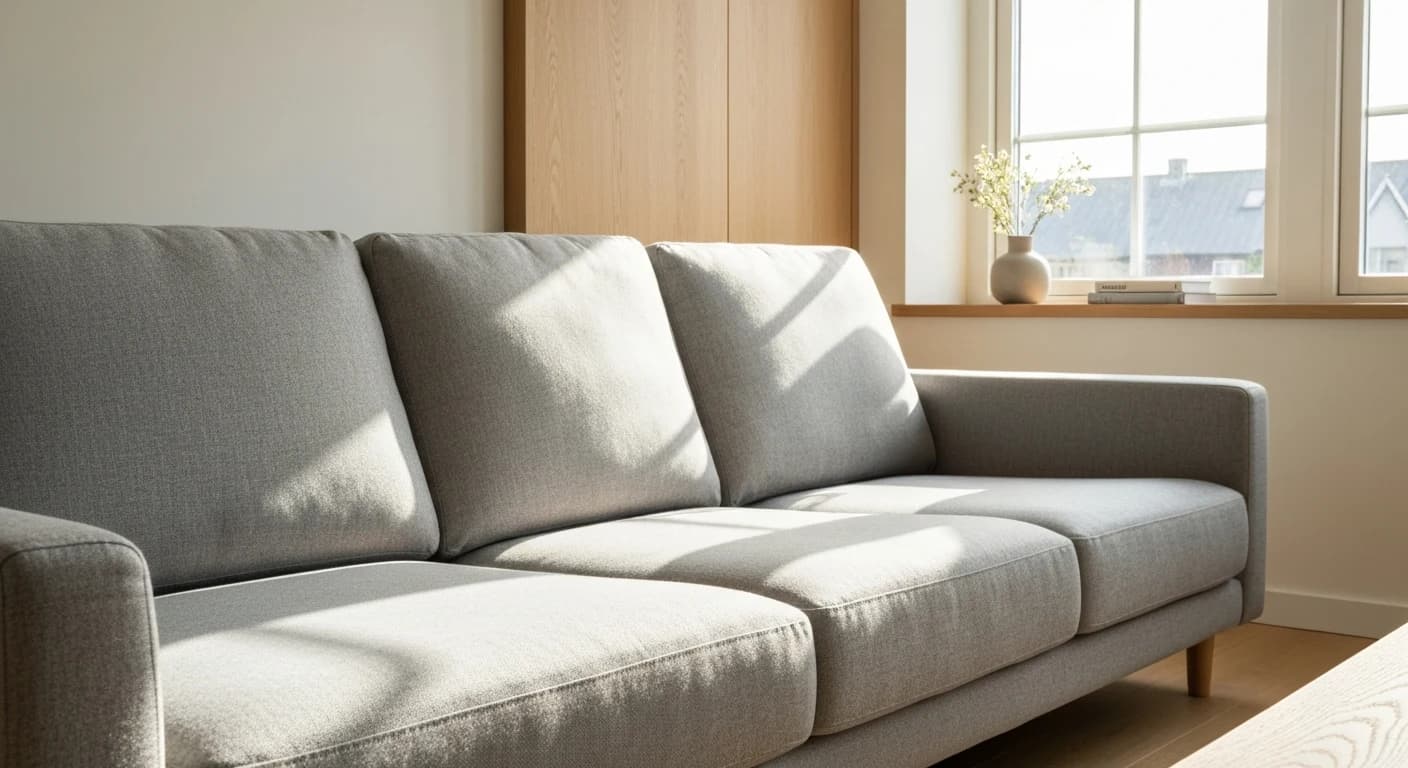
This is the category purpose-built for small-space living. Apartment sofas run 72 to 84 inches wide and typically offer a seat depth of 22 to 27 inches rather than the 30 to 36 inches of full-scale sofas. The shallower depth serves two purposes: it reduces the room's physical footprint and it supports a more upright sitting position suited to small-apartment living where the sofa often doubles as a work-from-home seat. For most one-bedroom apartments at the 735 sq ft national average, an 80-inch apartment sofa hits the right balance of seating capacity and floor clearance.
Modular Sofas
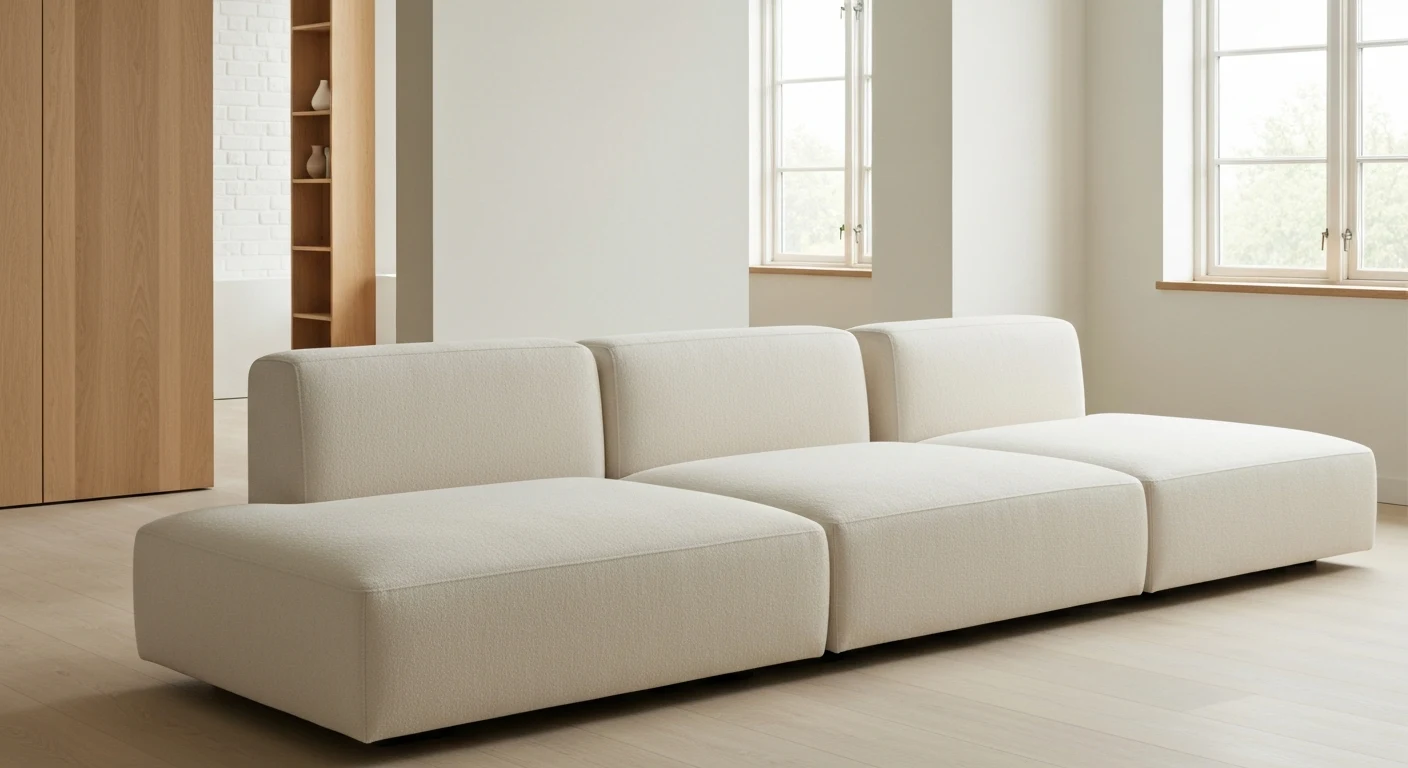
Modular sofas let you configure individual sections to match your room's geometry. A four-piece modular might function as an 88-inch straight sofa today and convert to an L-shape if you move to a different space later. In small apartments, that flexibility is the main selling point. The risk is quality: budget modular sets often use poor connectors that loosen with use, and the seams between sections can feel unfinished. Test the joints in person before buying by pulling the sections apart at the showroom.
Curved Sofas
Pinterest Predicts 2026, drawing on trend signals from approximately 600 million monthly users, identified curved sofas as a top living room trend for 2026. In small spaces, a curved sofa works well in rooms with circular layouts or bay windows, where the curve follows the room's geometry rather than cutting across it. In square rooms, the curve creates dead space behind the sofa that a straight sofa would not. Match the curve to the room's shape before committing to the style.
Sleeper Sofas
Sleeper sofas earn their keep in studios where the living room doubles as a guest room. The tradeoffs are weight (most sleepers run 150 to 220 lbs versus 80 to 140 lbs for a standard sofa) and seat comfort. The mattress mechanism consumes seat depth, which pushes the cushion forward and reduces comfortable sitting depth. Prioritize a queen-size mattress over a full for adult guests, and choose a foam mattress mechanism over a spring one for lighter weight and easier deployment.
Daybeds
Daybeds function as seating, napping surface, and guest sleeping option in one piece. They work particularly well in studios where a full sofa would dominate the room. A standard daybed runs 38 to 45 inches deep and 79 to 83 inches long. The depth is comparable to a full-scale sofa, so daybeds do not save floor space along the depth axis. The payoff is visual: a lower, leaner profile reads as less massive than a full sofa back, which helps a small room breathe.
When a Sectional Works in a Small Space (and When It Backfires)
Sectionals generate more confusion than any other sofa type in small spaces. A well-placed sectional can transform a small living room into a comfortable, contained seating zone. A poorly placed one fills the room to the point where walking through it feels like navigating a furniture showroom floor.
A sectional works when the room is roughly square (at least 11 feet wide), the L-shape anchors a corner rather than extending into the room's center, and the longer side stays under 95 inches. A 90-inch sectional sitting in the corner of a 12 x 14 foot room, with a compact coffee table and a single floor lamp, creates a conversation zone that reads as intentional and contained.
A sectional fails in narrow rooms under 11 feet wide, in rooms where the chaise leg has no logical wall or corner to point toward, and in apartments where the front door opens directly into the living area. It also fails when buyers reach for a 110-inch or larger standard sectional in a room where a 72 to 80-inch apartment sofa would have worked. The small-space sectional sweet spot is 85 to 95 inches on the longer side, with the chaise on the shorter side staying under 65 inches.
Sectionals with built-in storage under the chaise are worth a significant premium in small apartments. A sectional that doubles as a sofa and a storage unit eliminates the need for a separate piece of furniture in a room with no spare square footage. I covered the full range of furniture-meets-storage options in my guide to multifunctional furniture for small apartments, and the trade-off principles there apply directly to the sectional decision.
Fabric and Frame: What Holds Up in a Small Space
Small apartments put sofas under heavier daily use than larger homes where activities spread across more rooms. The BLS American Time Use Survey found Americans average 2 hours 36 minutes of television-adjacent leisure per day, and in a small apartment, that time concentrates on the sofa. Fabric and frame choices need to account for that intensity.
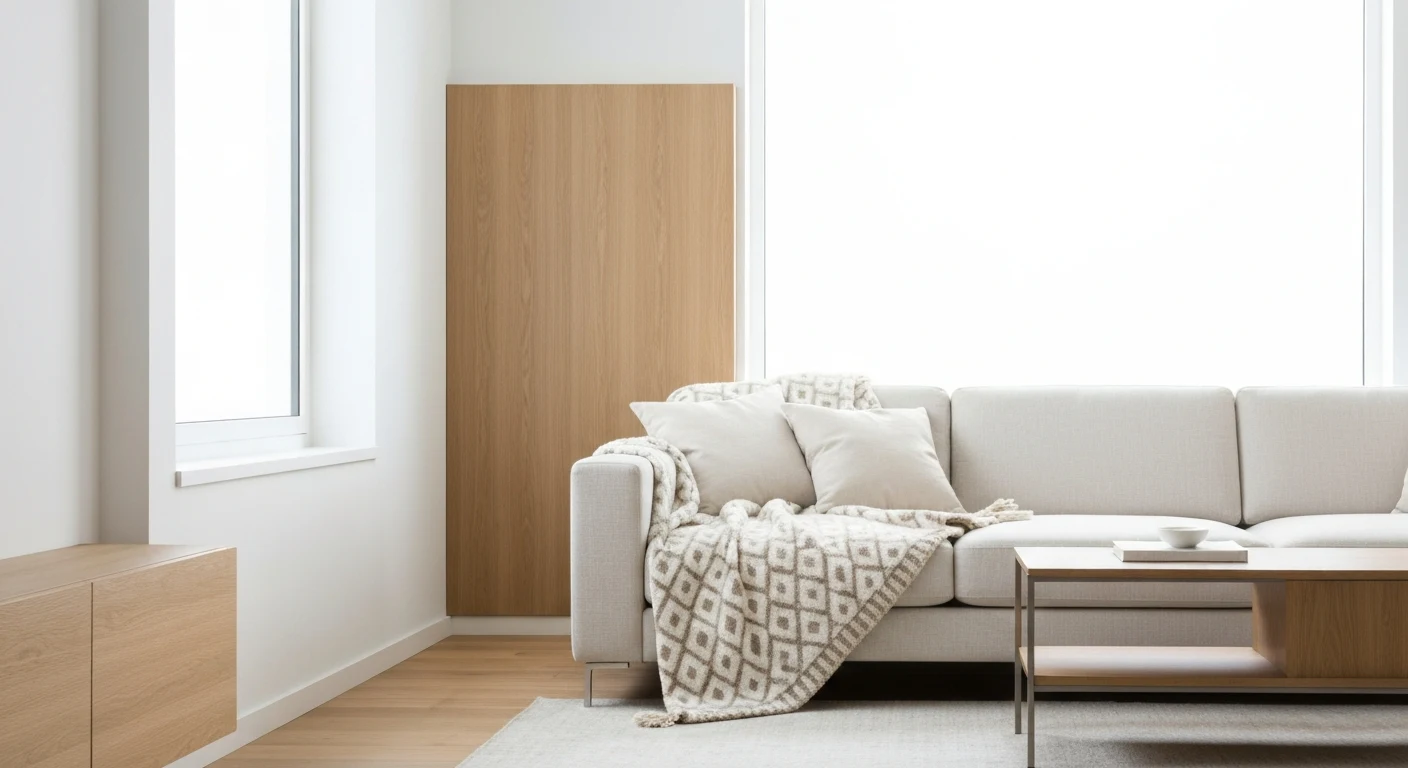
Performance velvet is the top fabric choice for small-space sofas in 2026. It reads visually rich, cleans with a damp cloth, resists pilling better than standard velvet, and aligns with Pinterest Predicts 2026 trends around velvet and boucle in living rooms. Performance velvet uses microfiber yarns with water and stain resistance built into the fiber rather than applied as a surface coating. It holds dye better than linen over time, which matters in a high-use piece that needs to look good for years.
Tight-weave linen and linen blends breathe better than velvet in warm apartments and carry a more casual aesthetic. They are susceptible to snags from pet claws and wear faster in high-contact zones like armrests. If you have pets, skip linen and choose performance velvet or indoor-outdoor performance fabrics from brands like Sunbrella, which now make sofa-grade versions that resist staining, UV exposure, and pet hair.
Standard polyester and microfiber cover the budget-to-mid-range market. Polyester holds up reasonably but pills over time, particularly on seat cushions. Microfiber is softer but traps pet hair. Both are acceptable at their price point; neither performs at the level of performance velvet for long-term use.
On the frame, the clearest quality signal is kiln-dried hardwood. Kiln drying removes moisture from the wood, which prevents warping and joint failure over time. Softwood and particleboard frames are lighter and cheaper but fail faster under consistent high use. Ask specifically about the frame material before buying. Most retailers will confirm it if you ask directly.
For a broader look at how storage furniture pairs with sofa choices in a small living space, including ottomans that add seating and hidden storage to a sofa zone, my guide to space-saving storage furniture covers every category.
How Much to Spend on a Small-Space Sofa
The US seats and sofas market reached $44.55 billion in revenue in 2025, per Statista, with a projected CAGR of 6.15% through 2030. That scale means the price spread is enormous, from $300 flat-pack options to $5,000 custom sectionals. For small-space buyers, the relevant question is where the quality cliff sits.
Industry consensus from Furniture Today and the American Home Furnishings Alliance places quality in three tiers. Budget sofas under $700 use engineered wood or pine frames with low-density foam, and typically last 3 to 7 years. Mid-range sofas from $700 to $1,800 use engineered hardwood or plywood frames with higher-density foam, and run 7 to 12 years. Premium sofas at $1,800 and above use kiln-dried hardwood frames, often with eight-way hand-tied spring systems that extend sofa life to 15 to 20 years or more with basic maintenance.
Harvard JCHS reported in 2026 that 49% of US renter households spend more than 30% of income on rent and utilities. For cost-burdened renters, the math often favors a $1,200 mid-range sofa that lasts 10 years over a $350 sofa replaced every 3, even when the upfront cost feels high. The BLS Consumer Expenditure Survey puts average US household furniture spend at roughly $648 per year. A mid-range sofa amortized over its lifespan costs $120 to $180 per year.
One practical note for renters: apartment moves stress sofa frames harder than stable household use. If you move every two to three years, a kiln-dried hardwood frame handles repeated transport better than particleboard, which can crack at a joint by the third staircase carry.
Arrangement Rules That Make Small Living Rooms Feel Bigger
A 2014 study published in PLoS ONE by von Castell, Oberfeld, and Hecht found that sparse furnishing increased perceived spatial size relative to both fully furnished and empty rooms. In practical terms, a small number of well-chosen, correctly placed pieces reads larger than the same pieces clustered or overcrowded.
For sofa placement in small living rooms, four rules apply consistently:
Float the sofa away from the wall. Pushing a sofa flush against the wall is instinctive in small rooms, but it collapses the room's perceived depth. Even 4 to 6 inches of space between the sofa back and the wall improves depth perception without consuming meaningful floor area.
Face the sofa toward the focal point. In most small living rooms, the focal point is the TV wall or a window with a meaningful view. Diagonal placement works in corner rooms but creates awkward traffic patterns in linear layouts. For a full walkthrough of furniture sizing and placement logic, my piece on small bedroom layout ideas covers the same clearance-first principles in an adjacent room type.
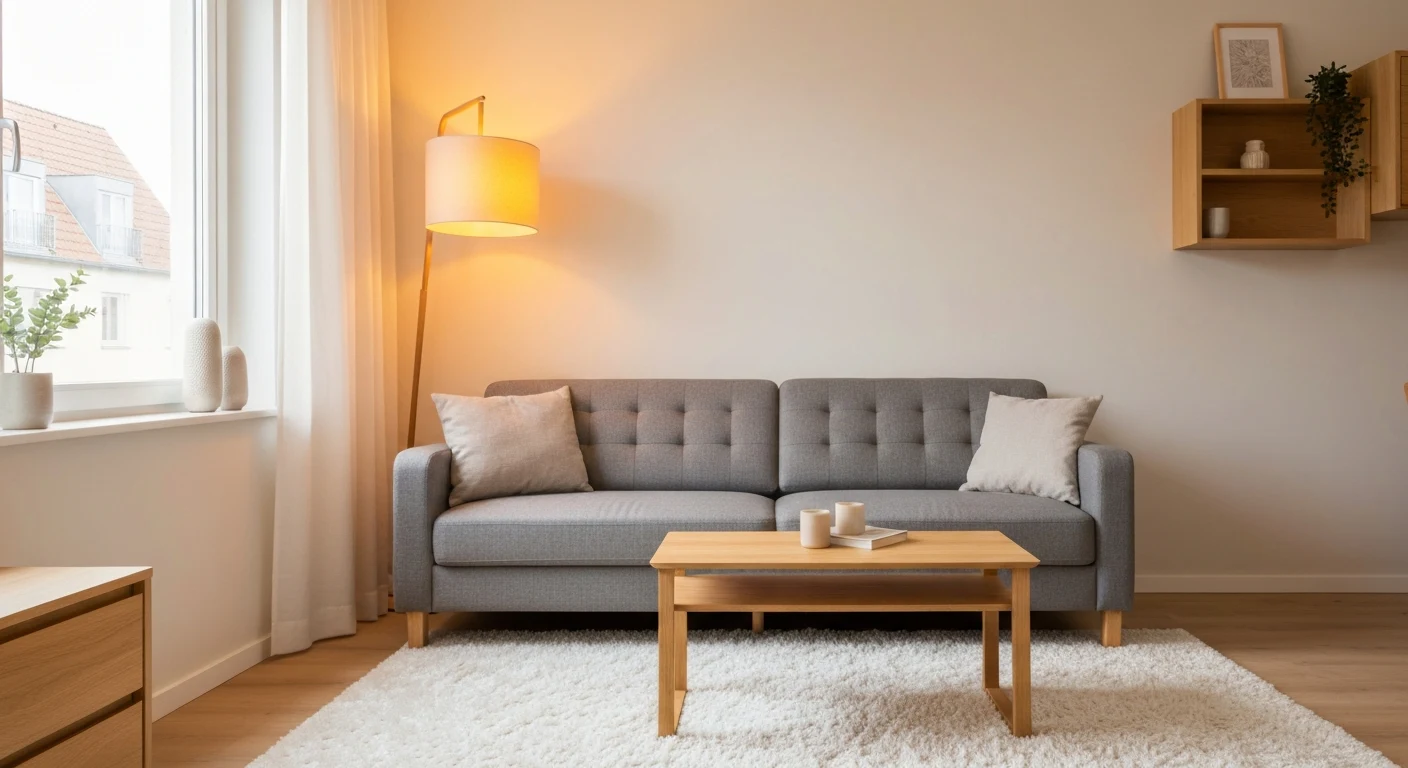
Anchor with a rug. A rug that sits at least partially under the front two legs of the sofa visually defines the seating zone and makes the room's layout legible. In a small living room, a 5 x 8 foot or 6 x 9 foot rug anchors the sofa without overwhelming the space. The rug's front edge should sit under the sofa front legs, not floating 12 inches in front of them.
Pair with layered lighting. Overhead lighting flattens a small living room. A floor lamp beside the sofa or a pair of table lamps creates a warm, contained zone that makes the seating area feel intentional at night. My guide to lighting apartments without overhead light covers the full layered-lighting approach for small living spaces.
What Renters Need to Know Before Buying a Sofa
Renters face sofa-buying constraints that owners often do not. Lease terms typically run 12 months, and many renters move every two to three years. That mobility changes the calculus in several ways.
Modular sofas and sectionals ship in pieces and reassemble without tools in a new space. That portability matters more than it sounds. A sofa that fits your current apartment's 36-inch doorway may not pass through your next apartment's 30-inch entry. Modular designs reduce that risk substantially.
Neutral colors hold their value better than trend-forward colors in secondary markets. If you sell or donate a sofa during a move, a grey, cream, or charcoal piece finds a new home faster than a cobalt blue or terracotta one, regardless of how on-trend the color was at purchase. Color and pattern choices in the rest of the room can compensate for a neutral sofa without sacrificing personality. My guide to color drenching in small spaces covers how saturated color on walls and textiles can transform a room even when the anchor furniture stays neutral.
The wall behind and around the sofa is where renters have the most design freedom. Gallery walls on adhesive mounts, floating shelves on removable hardware, and removable wallpaper panels behind the sofa all create the impression of a designed space without lease violations. My guide to renter-friendly wall decor covers every non-damaging wall option worth considering in 2026.
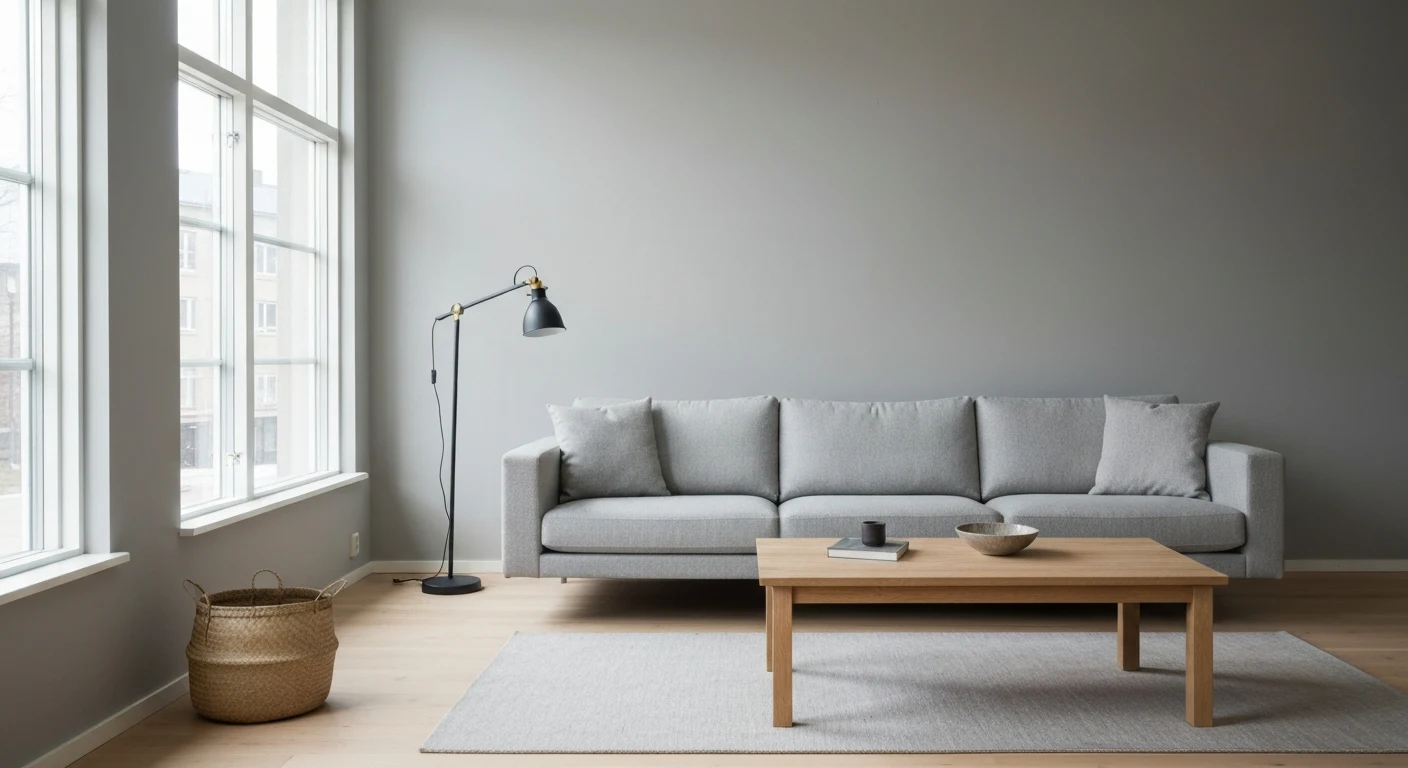
5 Mistakes to Avoid When Sofa Shopping for Small Spaces
Shopping without measurements. The showroom floor lies. A sofa that looks proportionate against a 14-foot ceiling in a 3,000 sq ft showroom reads completely differently against an 8-foot ceiling in a 300 sq ft living room. Measure the wall zone, the walkway clearances, and the door entry before you browse. Bring the numbers with you to every showroom visit.
Prioritizing looks over seat depth. A sofa with a 38-inch seat depth looks luxurious in a product photo and creates back strain in daily use when the coffee table sits 15 inches away. Seat depth of 22 to 27 inches suits most small-room sofa setups where upright and semi-reclined sitting split the daily use. Check the seat depth specification before committing to any sofa.
Choosing a sectional for a narrow room. The chaise leg of a sectional needs a logical wall or corner to point toward. In rooms under 11 feet wide, the chaise either blocks the walkway or cuts the room in half. In those rooms, a 72 to 80-inch apartment sofa with a separate accent chair provides the same seating capacity without the floor-space penalty.
Ignoring the sofa's leg height. Sofas with exposed legs, typically 6 to 8 inches off the floor, read as lighter and less imposing in small rooms because light and air pass under them. Sofas that sit flush to the floor look heavier and consume more visual space, even when their physical dimensions are identical. Higher legs also make floor cleaning easier, which is a practical bonus in a small apartment where every square foot gets maintained more intensively per unit area.
Skipping the delivery check. Verify the sofa's delivery dimensions (which differ from its installed dimensions), confirm whether the retailer offers white-glove delivery that includes navigating stairs, and measure the path from your building entry to the apartment before the delivery window. A sofa that arrives at your door and cannot make it through the stairwell is a costly and stressful outcome that a five-minute measurement check prevents entirely.
Frequently Asked Questions
What sofa size works best in a small living room?
For most small living rooms under 200 sq ft, a sofa between 72 and 84 inches wide with a seat depth of 22 to 27 inches hits the right balance of seating capacity and clearance. Leave 30 to 36 inches of walkway in front of the sofa and 12 to 18 inches between the sofa front edge and any coffee table. Measure those clearances first, then choose a sofa width that fits within them.
Can a sectional work in a small apartment?
A sectional works in a small space when the room is roughly square (at least 11 feet wide), the L-shape anchors a corner, and the longer side stays under 95 inches. In narrow rooms or studios under 12 x 12 feet, an apartment-scale sofa with a separate accent chair typically serves the same seating function with less floor sacrifice. The chaise leg needs somewhere logical to point before the purchase makes sense.
What fabric holds up best for a sofa in a small apartment?
Performance velvet is the top choice for small apartments in 2026. It resists staining, cleans with a damp cloth, holds color well over time, and aligns with living room trends per Pinterest Predicts 2026. For pet owners, indoor-outdoor performance fabrics from brands like Sunbrella offer better scratch and hair resistance. Standard linen and loose-weave cotton wear faster in high-use small-space settings where the sofa takes 2 or more hours of daily use.
How do I make a sofa look right in a small living room?
Float the sofa 4 to 6 inches from the wall, anchor it with a rug that sits under the front two legs, and pair it with a coffee table at or slightly below seat height (16 to 18 inches). Add a floor lamp or table lamps on either side rather than relying on overhead lighting alone. Keep the total piece count in the seating zone to three or fewer items to prevent visual crowding.
Is it worth spending more on a sofa for a small apartment?
Mid-range sofas ($700 to $1,800) typically offer the best value for renters who move frequently. Budget sofas under $700 average 3 to 7 years before frame failure or significant cushion wear. Mid-range sofas last 7 to 12 years. Amortized over a 10-year lifespan, a $1,200 sofa costs $120 per year, which is well below the BLS Consumer Expenditure Survey's average US household furniture spend of $648 per year.
Should a sofa face the TV or the window in a small living room?
Face the sofa toward the room's primary focal point, which in most small apartments is the TV wall. Windows are secondary focal points unless the view is exceptional. In rooms where the TV and a good window share the same general wall, angle the sofa slightly to capture both. Avoid diagonal placement in linear rooms because it creates dead corners and complicated traffic paths that make small rooms feel more cramped, not less.
The sofa is the one piece of furniture in a small living room where the wrong choice is felt every single day. With the BLS reporting Americans spend 2 hours 36 minutes in television-adjacent leisure daily, getting the dimensions, fabric, and placement right is a sustained quality-of-life investment. Start with measurements, choose a type that matches your room's geometry, and prioritize frame quality for the durability your daily use demands. For everything else that goes into making a small living room work as a complete space, my guide to furnishing a small living room walks through the full framework from furniture scale to layout to storage.
Tags

Written by Joesp H.
Interior Design & Small Space Living Specialist
Former marketing manager turned full-time home optimizer. After living in 7 homes ranging from 450 to 2,000 sq ft, I started CleverSpaceSolutions to help people create organized, functional spaces on real budgets.
Other Articles
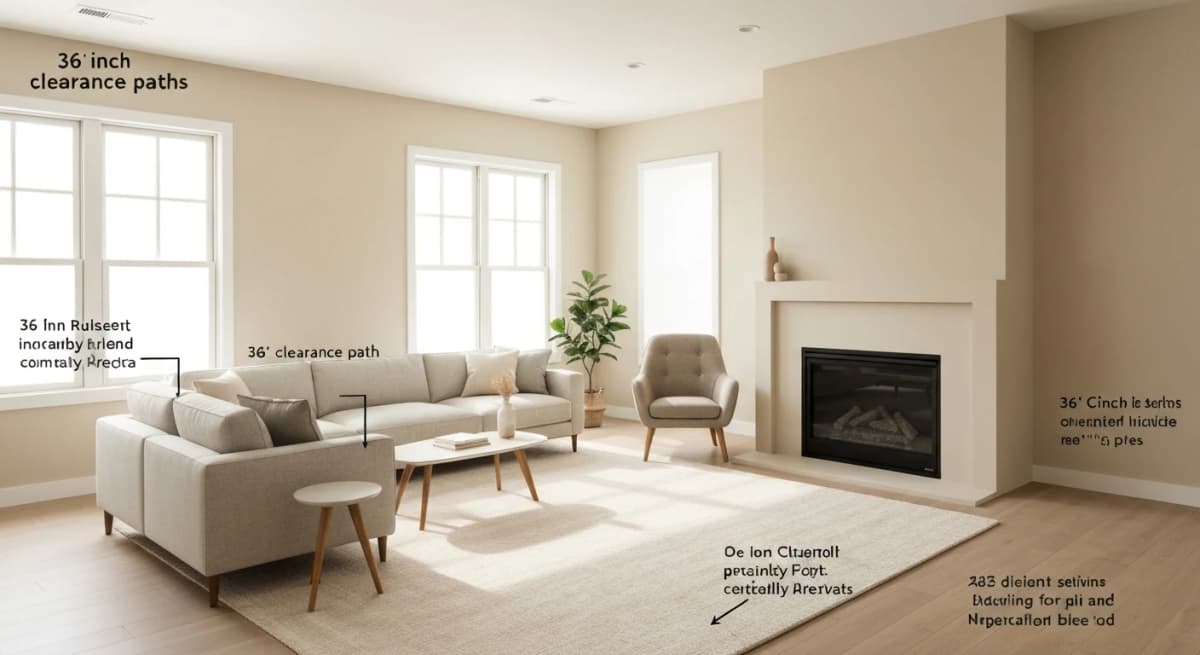
How Do You Furnish a Small Living Room? 4 Key Furniture Choices
Wondering which furniture to choose for your small living room? This guide helps you decide between L-shaped vs. regular sofas, glass vs. wood tables, and mo...
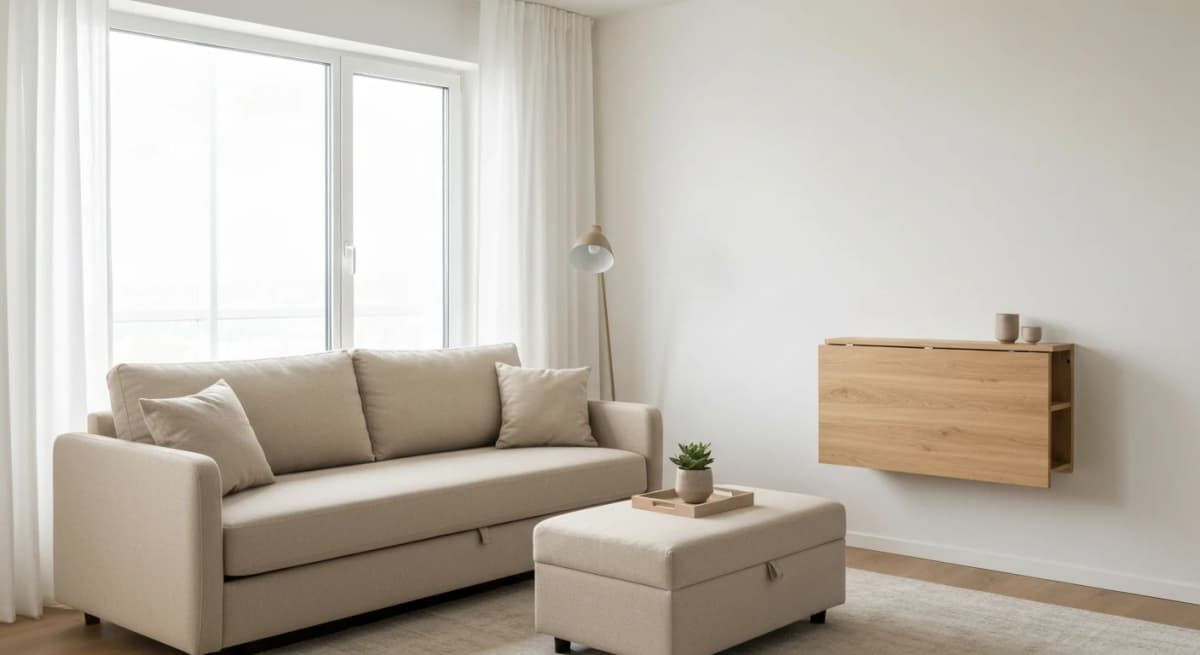
The Best Multifunctional Furniture for Small Apartments in 2026
Discover the best multifunctional furniture for small apartments in 2026. Sleeper sofas, murphy beds, storage ottomans, convertible desks, and modular shelving tested in real apartments.
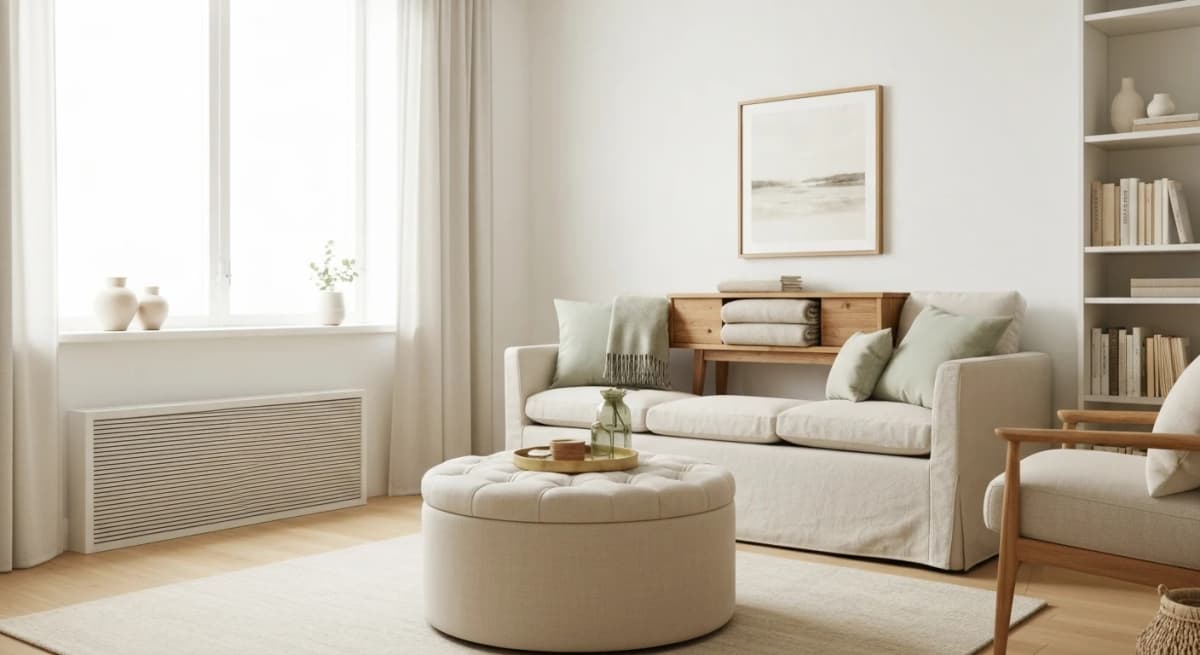
Space-Saving Storage Furniture for Small Apartments: Ottomans, Cabinets & Hidden Solutions
Space-saving storage furniture for small apartments: storage ottomans, beds, lift-top tables, and cabinets, plus 2026 price ranges and three budget setups.