The Best Multifunctional Furniture for Small Apartments in 2026
Discover the best multifunctional furniture for small apartments in 2026. Sleeper sofas, murphy beds, storage ottomans, convertible desks, and modular shelving tested in real apartments.
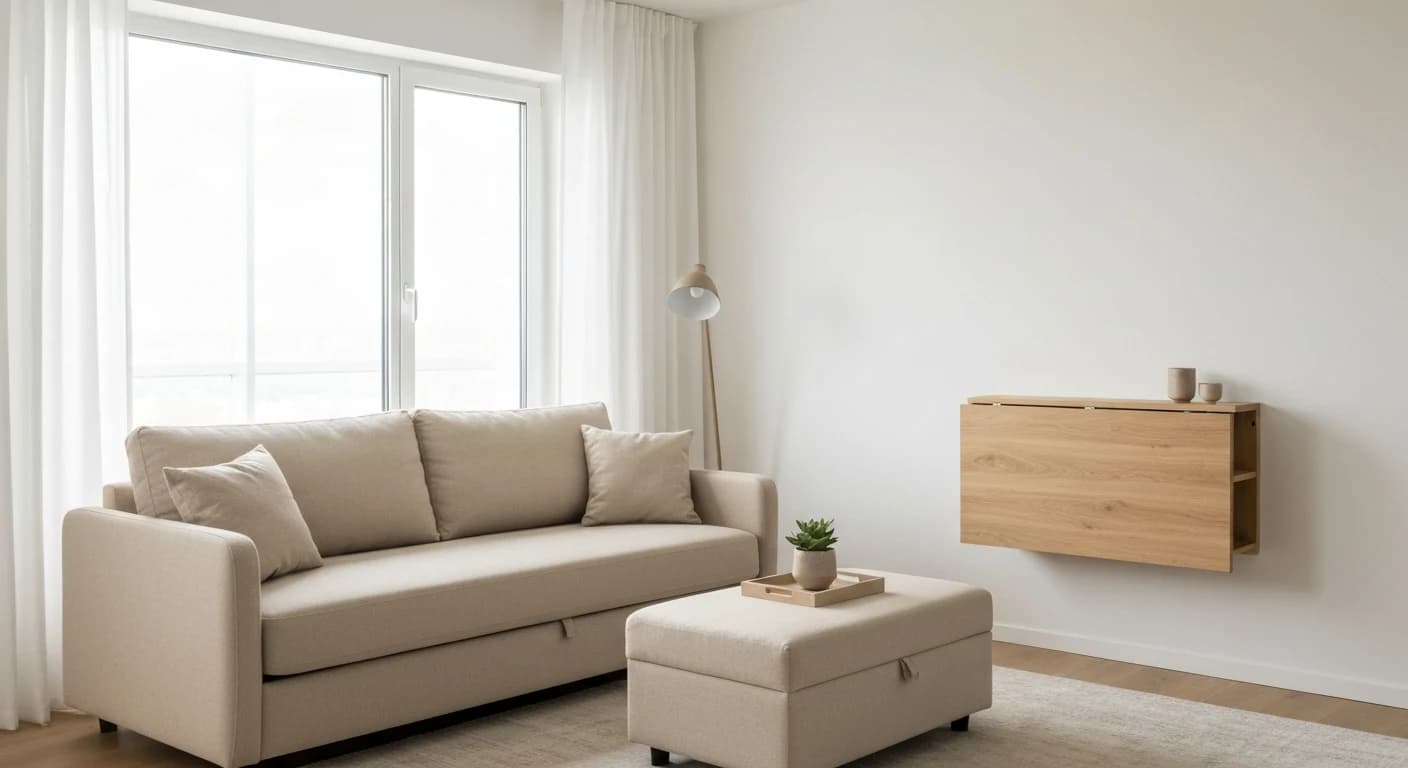
The global multifunctional furniture market hit $15.9 billion in 2024, and analysts project it will reach $25.4 billion by 2034 (Global Market Insights, 2025). That is not a trend driven by aesthetics. It is driven by math. When the average American apartment sits at 908 square feet and studios average just 457 (RentCafe, 2025), every piece of furniture needs to justify the floor space it occupies.
I have furnished six apartments in the last ten years, and the single biggest lesson I learned is this: in a small space, a piece of furniture that does only one thing is a luxury you probably cannot afford. The sofa that hides a bed, the coffee table that stores blankets, the desk that folds into a dining table for four. These are not compromises. In a well-planned small apartment, they are upgrades.
This guide covers the categories of multifunctional furniture that actually work in real apartments, based on what I have tested, returned, kept, and recommended to friends. We will look at sofa beds, murphy beds, storage ottomans, convertible desks, modular shelving, nesting tables, and entryway benches. For each category, I will tell you what to look for, what to avoid, and what the realistic price range is in 2026.
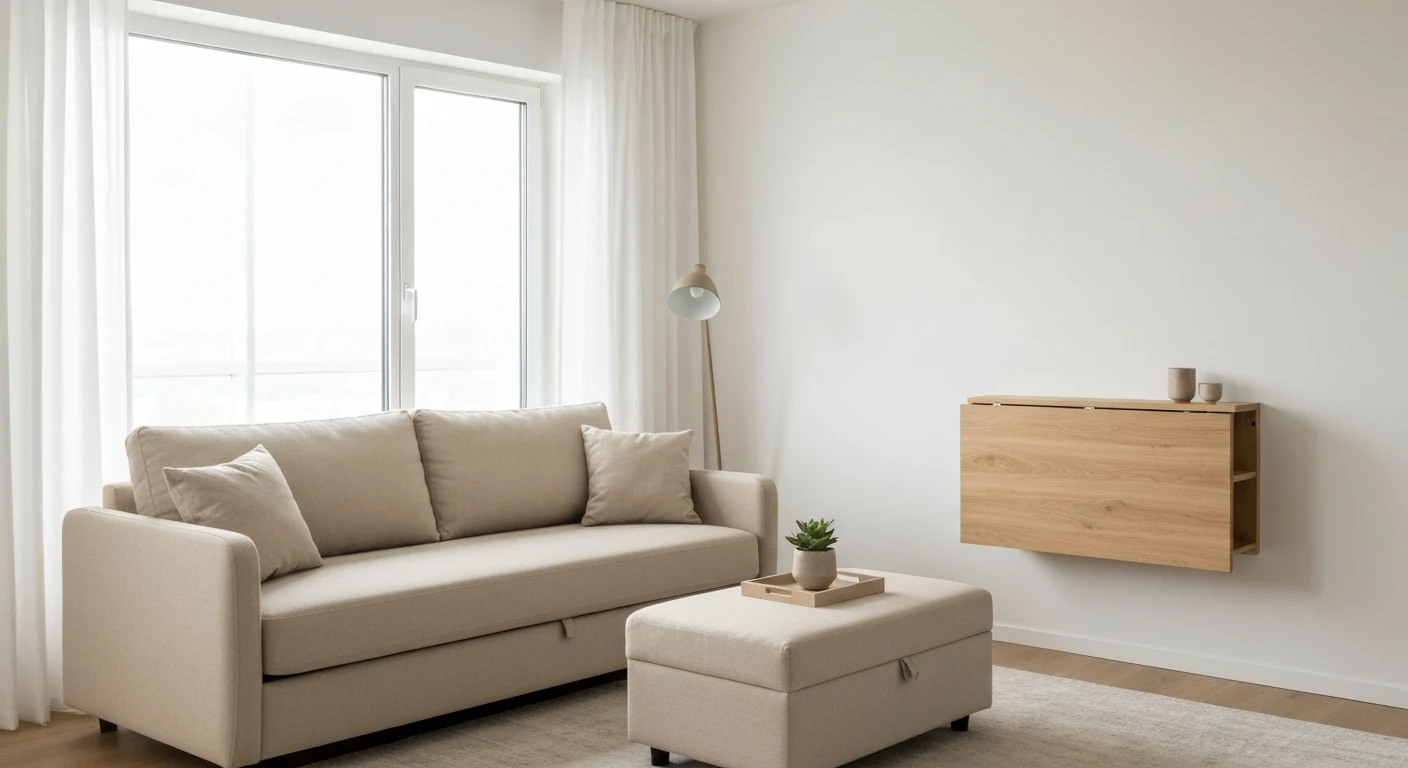
TL;DR: The average US apartment is 908 sq ft, and 34.3% of American households rent (U.S. Census Bureau, 2024). Multifunctional furniture is the fastest way to make a small space livable without paying for extra square footage. Focus on five core pieces: a quality sleeper sofa ($800 to $2,000), a storage ottoman ($150 to $400), a convertible desk/dining table ($300 to $800), modular shelving ($100 to $500), and an entryway bench with hidden storage ($120 to $350). Combined, these five pieces can replace eight to ten single-purpose items and free up 30 to 50 square feet of usable floor space.
Why Every Piece Needs to Earn Its Square Footage
The numbers paint a clear picture. There are 45 million renter households in the United States, making up 34.3% of all households (U.S. Census Bureau, Q4 2024). The average rent is $1,740 per month (RentCafe, 2026). If you divide that by 908 square feet, you are paying roughly $1.92 per square foot per month. A traditional coffee table that takes up 6 square feet and stores nothing is costing you about $11.50 a month in wasted space. Over a year, that is $138 in rent for a surface that holds a remote and a coaster.
The shift toward smaller living is structural, not temporary. The median new US home size dropped to 2,150 square feet in 2024, the lowest in 15 years (NAHB, 2025). Meanwhile, 29% of all US households are now single-person households, up from 13% in 1960 (U.S. Census Bureau, 2024). More people are living alone in smaller spaces. The furniture industry has responded: the small space furniture market alone is worth $6.68 billion in 2025 and is projected to hit $12.15 billion by 2035 (Future Market Insights, 2025).
I think about furniture in a small apartment the same way I think about a Swiss Army knife. Every tool on it has to be useful. If a piece of furniture cannot serve at least two functions, it needs a very good reason to take up permanent floor space. A dining chair is fine because you need somewhere to sit and eat. A decorative console table in a 500-square-foot studio? That is floor space you will wish you had back the first time a friend asks to stay over.
Sofa Beds and Sleeper Sofas: The Overnight Guest Solution
The global sofa bed market is worth $17.15 billion in 2025, with the US segment alone at $5.26 billion (Business Research Insights, 2025). That market exists because tens of millions of apartment dwellers face the same problem: you want to host overnight guests, but you do not have a guest bedroom.
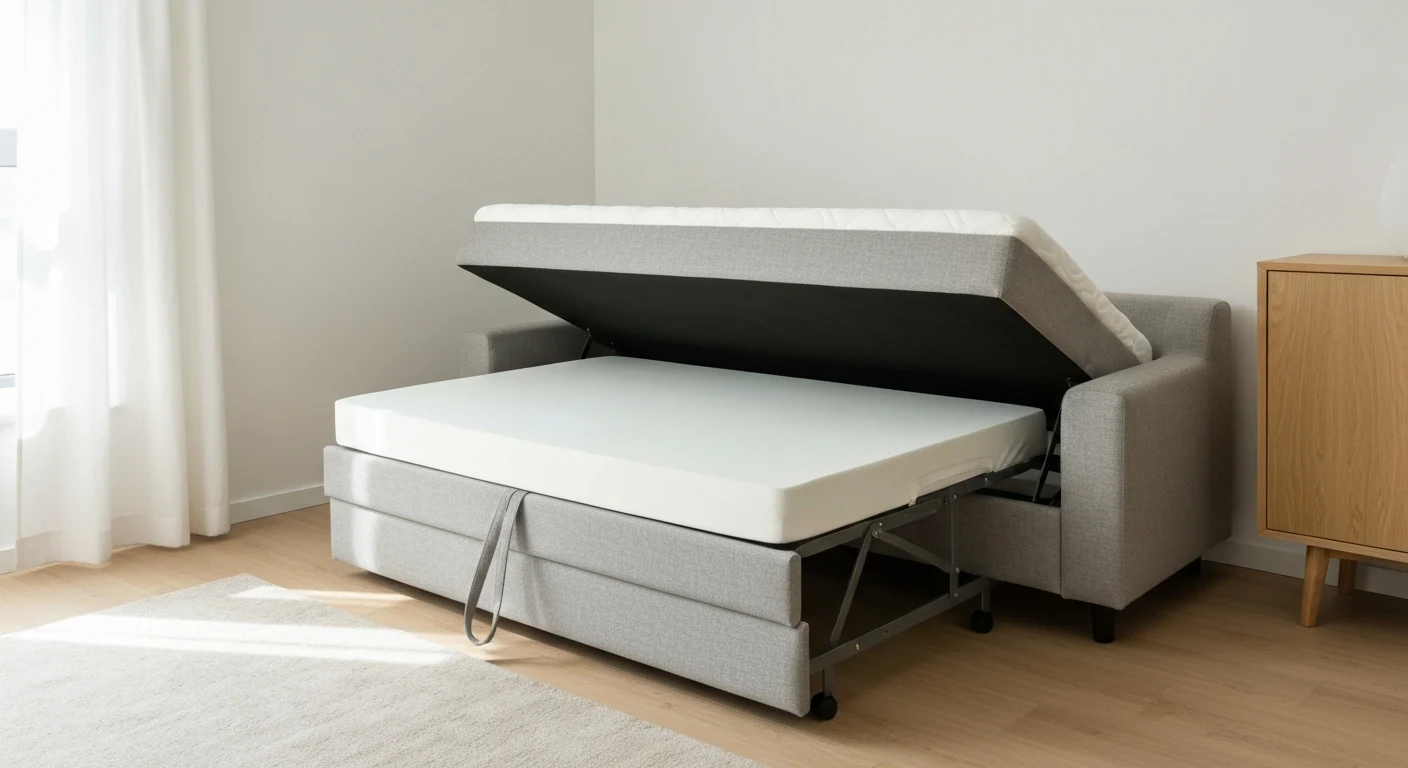
Modern sleeper sofas have improved dramatically from the lumpy pull-out couches of ten years ago. The best options in 2026 use memory foam mattresses instead of spring mechanisms, which means the sleeping surface is genuinely comfortable for a night or two. The key specs to check are mattress thickness (at least 4 inches for guest use, 5 or more if someone will sleep on it regularly), seat depth when in sofa mode (18 to 22 inches is the comfortable range), and the mechanism type (pull-out, click-clack, or futon-style).
I owned a cheap click-clack futon in my second apartment and it was terrible at both jobs. Uncomfortable as a sofa, worse as a bed. When I finally spent $1,200 on a proper pull-out sleeper with a 5-inch memory foam mattress, it changed how I used my living room entirely. Friends actually wanted to stay over. The sofa itself was comfortable enough that I stopped thinking of it as a compromise piece. If you are furnishing a small living room and can only buy one major piece, make it a good sleeper sofa. Our guide to furnishing a small living room covers how to build the rest of the room around that anchor piece.
What to look for: Memory foam mattress (not innerspring), a mechanism that one person can operate easily, removable and washable covers, and a frame that does not creak. Expect to spend $800 to $2,000 for a quality piece that will last five or more years.
What to avoid: Anything marketed as a "sofa bed" under $400. At that price point, you are getting thin padding, a flimsy frame, and a mechanism that will break within 18 months. Also avoid models that require you to remove all the cushions and stack them somewhere before converting. In a small apartment, there is nowhere to put five loose cushions.
Murphy Beds and Wall Beds: Reclaim Your Floor by Day
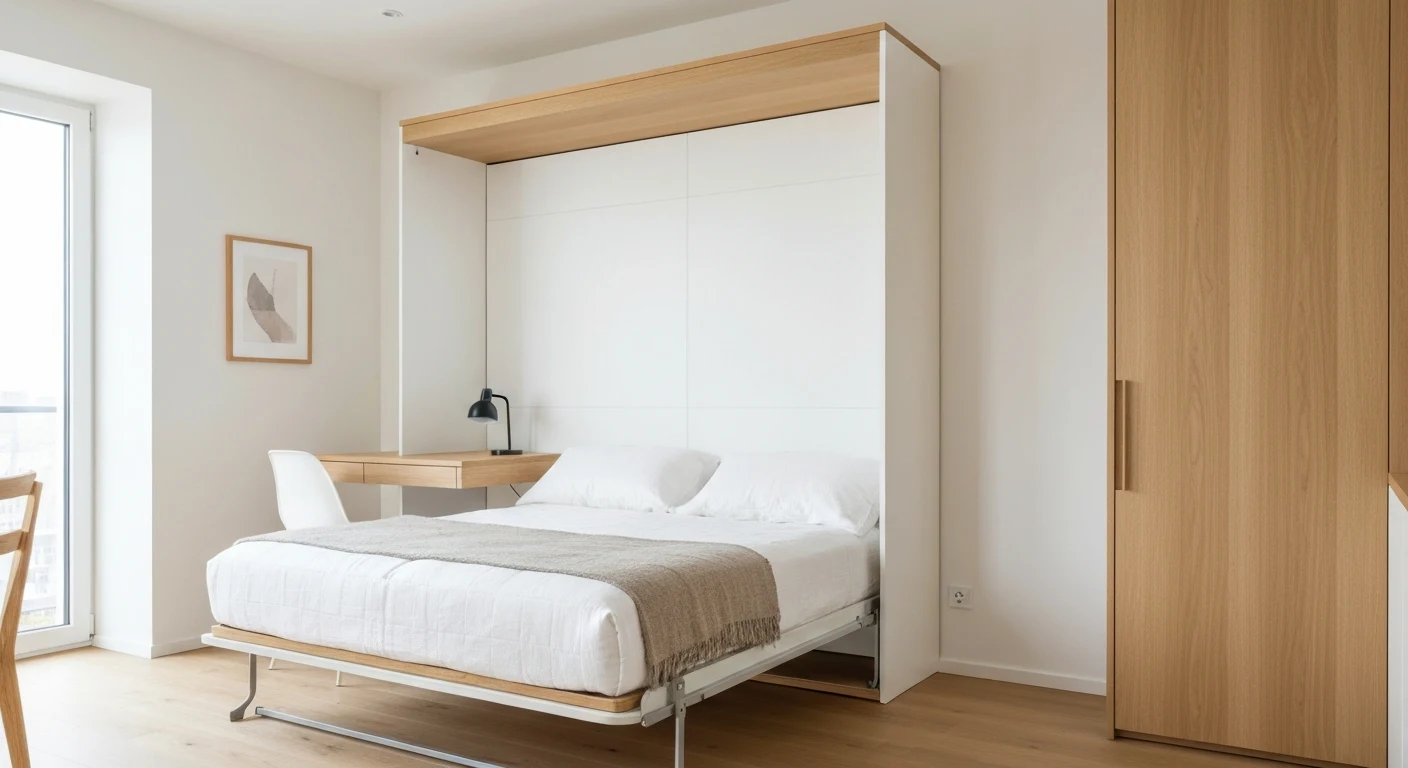
If you live in a studio apartment where the bed is always visible and always in the way, a murphy bed is the single most impactful upgrade you can make. A queen murphy bed folds up into roughly 16 inches of wall depth and frees up about 35 square feet of floor space during the day. At $1.92 per square foot per month, that is $67 worth of usable space you reclaim every month.
The price range for murphy beds is wide. A basic wall-mount kit with a queen frame runs $300 to $600. A full cabinet system with shelving on either side costs $1,500 to $4,000. Custom built-ins can go higher. The kits are surprisingly manageable for renters if your wall has studs in the right positions, though some landlords may not allow wall mounting. Always check your lease first.
I installed a murphy bed kit in my third apartment, a 480-square-foot studio, and it genuinely felt like I had gained a second room. During the day I had a clear open space for a yoga mat, a small desk, and room to actually move around. At night I pulled the bed down in about ten seconds. The mattress stayed on the frame, sheets and all, so there was zero setup. If you are working with a studio layout, our guide to decorating a studio apartment walks through how to zone the space so the murphy bed area does not feel like a bedroom corner during waking hours.
Best for: Studios and one-bedrooms where the bed dominates the room. Also excellent for home offices that occasionally need to double as guest rooms.
Storage Ottomans and Hidden-Compartment Coffee Tables
Americans spend an average of 2.5 days per year searching for lost items, costing households $2.7 billion annually in replacement costs (Pixie Survey, 2017). In a small apartment, the problem is not that things disappear. It is that there is nowhere logical to put them. Storage furniture solves this by hiding functional storage inside pieces you already need.
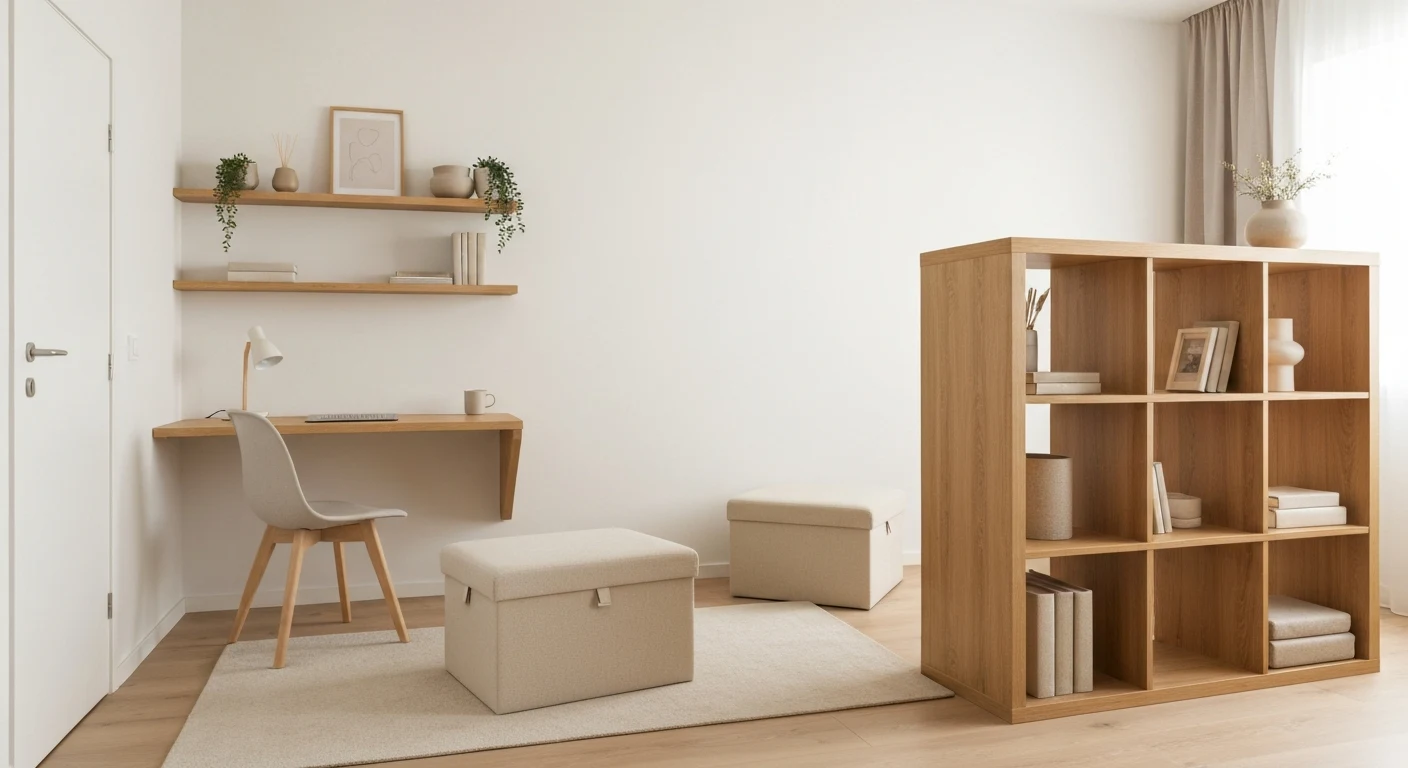
A storage ottoman is one of the hardest-working pieces you can own. It serves as a footrest, extra seating when guests come over, a coffee table with a tray on top, and hidden storage for blankets, magazines, board games, or seasonal items. A good one costs $150 to $400 and holds roughly 3 to 5 cubic feet of storage. That is the equivalent of a small closet shelf, tucked inside something you would have in the room anyway.
Coffee tables with lift-tops or hidden compartments serve a similar double role. The lift-top versions are especially useful for people who work from their sofa because they raise to a comfortable typing height. You get a work surface, a dining surface, and hidden storage for laptops and notebooks, all in the footprint of a standard coffee table.
One thing I have learned through trial and error: choose storage furniture with easy-open mechanisms. If a storage ottoman has a heavy lid that requires two hands to lift, you will stop using the storage within a month. The hinged-top models with a soft-close mechanism are worth the extra $30 to $50.
Convertible Desks That Double as Dining Tables
Here is the stat that explains why this category exists: 22% of the US workforce now works remotely at least partially, and 27% of all paid workdays happen from home (Robert Half, Q4 2025). The US home office furniture market is worth $15.39 billion and climbing (IMARC Group, 2025). But in a small apartment, dedicating an entire room (or even a full corner) to a permanent desk is a tough ask.
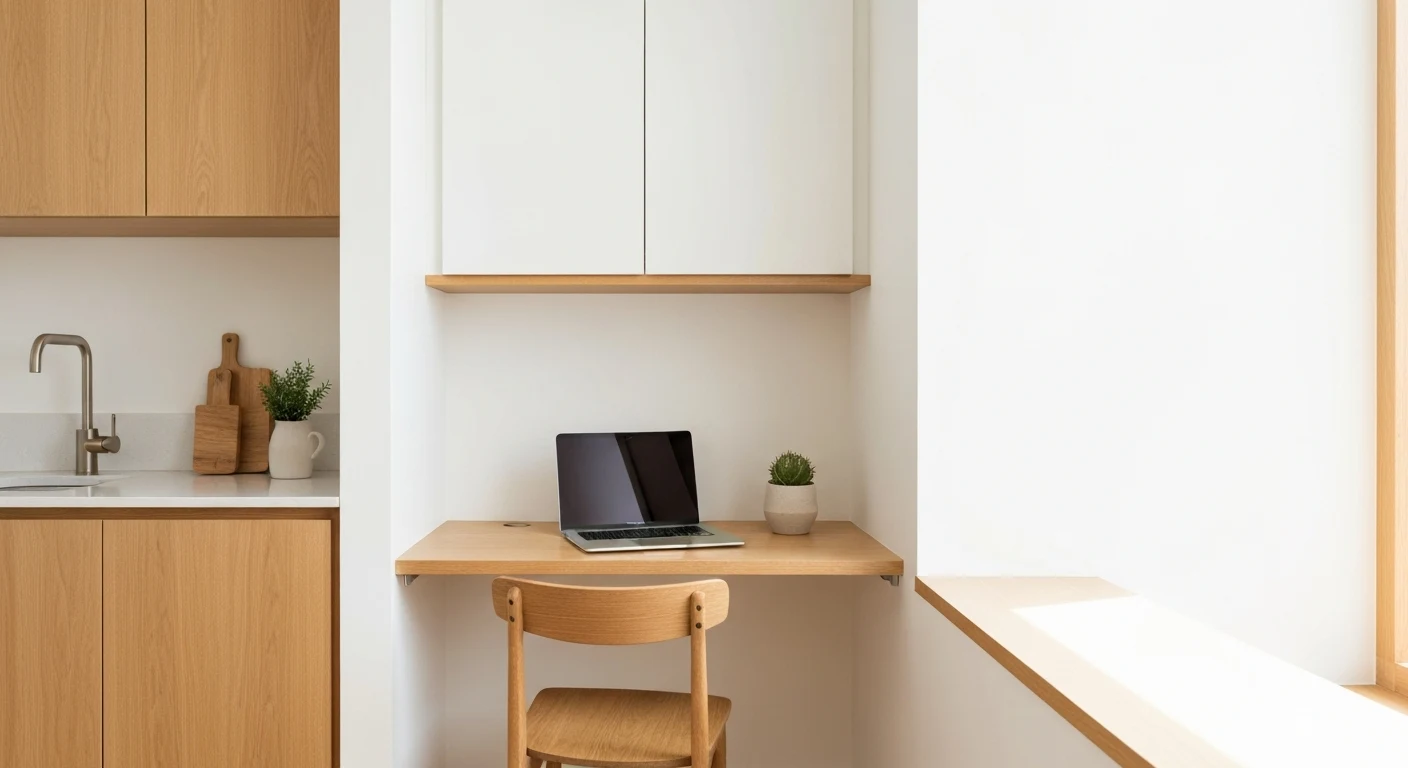
Convertible desks solve this by existing as one thing during work hours and transforming into something else the rest of the time. The most common designs are wall-mounted fold-down desks (which collapse flat against the wall when not in use), drop-leaf tables that extend for dining and contract for work, and secretary desks that close to hide the workspace behind cabinet doors.
My current setup is a wall-mounted drop-leaf desk that folds flat to 4 inches of depth. During work hours, I pull it out and it gives me a 24-by-36-inch surface, which is enough for a laptop, a notebook, and a coffee mug. When the workday ends, I fold it up and the wall space reappears. On weekends, the same bracket supports a wider leaf that serves as a two-person dining table. Total cost: $220 for the desk hardware and a butcher block top I cut to size at a home improvement store.
If you go the drop-leaf or fold-down route, invest in a comfortable chair that works for both dining and desk work. A cushioned dining chair with lumbar-friendly depth is better than switching between two chairs in a small space. For more on setting up a functional small workspace, our guide to desk organization covers the accessories and systems that make a compact desk actually productive.
Modular Shelving and Room Dividers
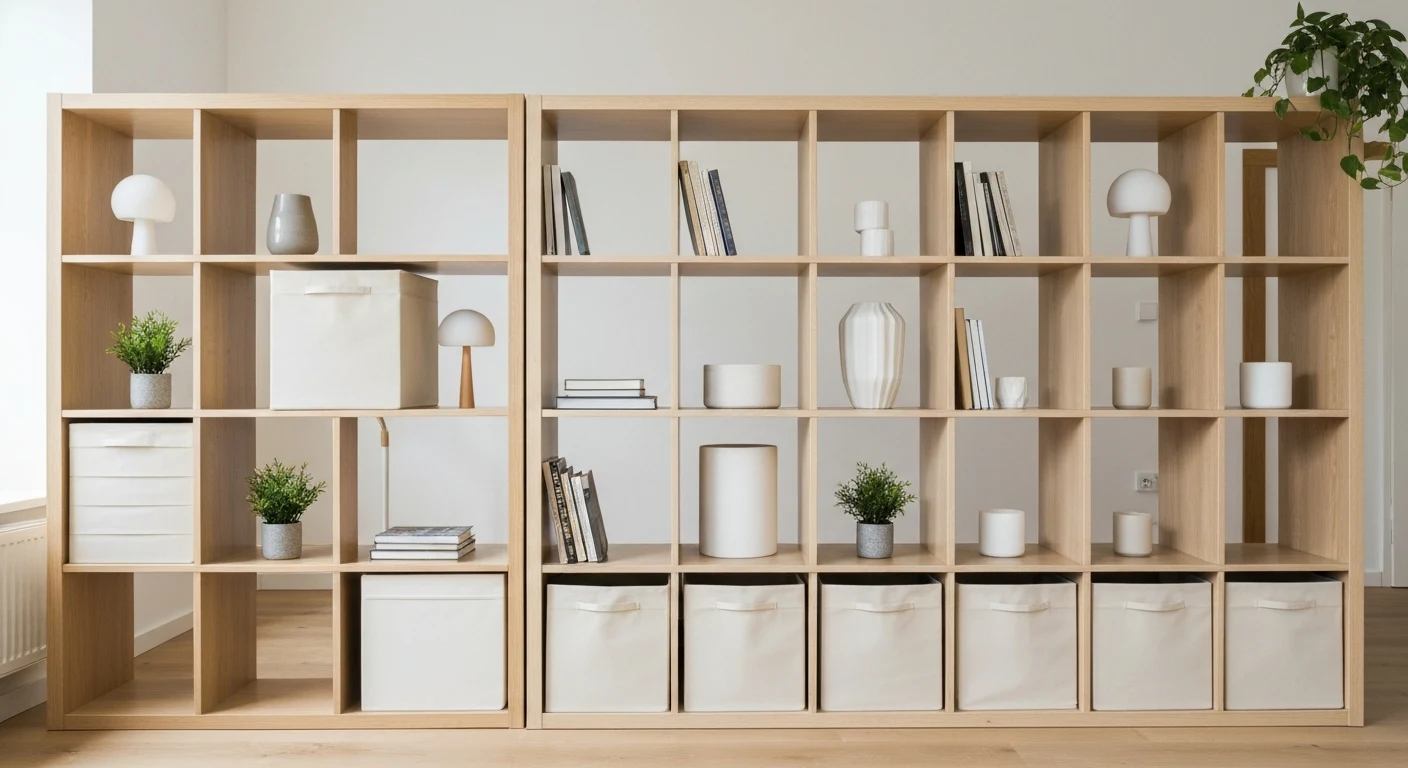
In small apartments, shelving often needs to serve triple duty: storage, display, and spatial division. Modular shelving systems like cube storage units, peg-based wall systems, and freestanding ladder shelves adapt to all three roles without locking you into a single configuration.
The most versatile option for studio and open-plan apartments is a freestanding shelving unit used as a room divider. A 4-by-2 cube shelf unit placed perpendicular to the wall creates a visual boundary between a sleeping area and a living area while keeping both sides accessible. Add fabric bins to the cubes facing the bedroom side for extra closet-style storage, and leave the living room side open for books and decor.
Wall-mounted modular systems (peg boards, track shelving, grid panels) are excellent for renters who want vertical storage without drilling dozens of holes. Many modern systems use two or three anchor points and support multiple shelves, hooks, and bins that can be rearranged as your needs change. This flexibility matters because your storage needs in month one of a new apartment are never the same as month twelve.
I used a 5-by-5 cube shelf as a room divider in a studio for two years. On the living room side, I had books, a small plant, and a record player. On the bedroom side, I had fabric bins with folded clothes, shoes, and linens. It gave me the psychological separation of two rooms without spending $500 more per month on a one-bedroom. If you are working with a studio and want to explore more zoning strategies, our studio apartment guide covers how to use furniture placement, rugs, and lighting to define distinct areas.
Nesting Tables and Stackable Seating for Entertaining
One of the real challenges of small apartment living is hosting. You want to have people over, but you do not have the surface area or seating for more than two or three. Nesting tables and stackable stools solve this by being invisible when you do not need them and instantly available when you do.
A set of three nesting tables typically takes up the footprint of one end table when stacked. When friends come over, you spread them out and suddenly you have three drink surfaces scattered around the room. After everyone leaves, they nest back together in 30 seconds. This is the kind of furniture that pays for itself the first time you host without frantically clearing the kitchen counter for drinks.
Stackable stools follow the same logic. Two or three lightweight stools stacked in a corner or tucked under a console table give you extra seating that appears and disappears as needed. Look for stools that are comfortable enough for an evening of conversation (padded tops help) but light enough that one person can carry two at a time. If you enjoy hosting in an outdoor space too, our guide to hosting a party in a small outdoor space covers how to apply the same space-sharing principles to balconies and patios.
Entryway Benches With Built-In Storage
Every apartment needs a landing zone by the front door. A bench with built-in storage turns that zone from a pile of shoes and keys into an organized transition space. The best entryway benches combine a seating surface (for putting on shoes), hidden storage underneath (for out-of-season shoes, bags, or cleaning supplies), and often hooks or a shelf above for keys, mail, and a mirror.
In apartments without a defined entryway, which is most apartments built after 2000, this bench creates the entryway. Place it within 3 feet of the front door, add a wall-mounted hook rail above it, and you have a functional mudroom in about 4 square feet. Our detailed guide to creating an entryway in an apartment that doesn't have one covers the full setup including renter-friendly wall mounting options.
The price range is reasonable: $120 to $350 for a bench with flip-top or cubby storage. The ones with woven baskets underneath tend to look better in open-plan spaces because the baskets hide the contents while keeping everything accessible. Avoid benches deeper than 16 inches unless you have a wide hallway, because the seat depth quickly becomes an obstacle in a narrow entry.
How to Evaluate Multifunctional Furniture Before You Buy
The worst multifunctional furniture tries to do everything and does nothing well. Before you buy any dual-purpose piece, run it through these five questions:
- Does it excel at its primary function? A sleeper sofa needs to be a great sofa first and a decent bed second. If it fails at either job, it fails period. Sit on it in the store. If possible, unfold the bed and lie on it for at least two minutes.
- Can one person operate the conversion? If you need two people to fold down a murphy bed or open a sleeper mechanism, you will avoid using it. Every conversion should be a solo, 15-second operation.
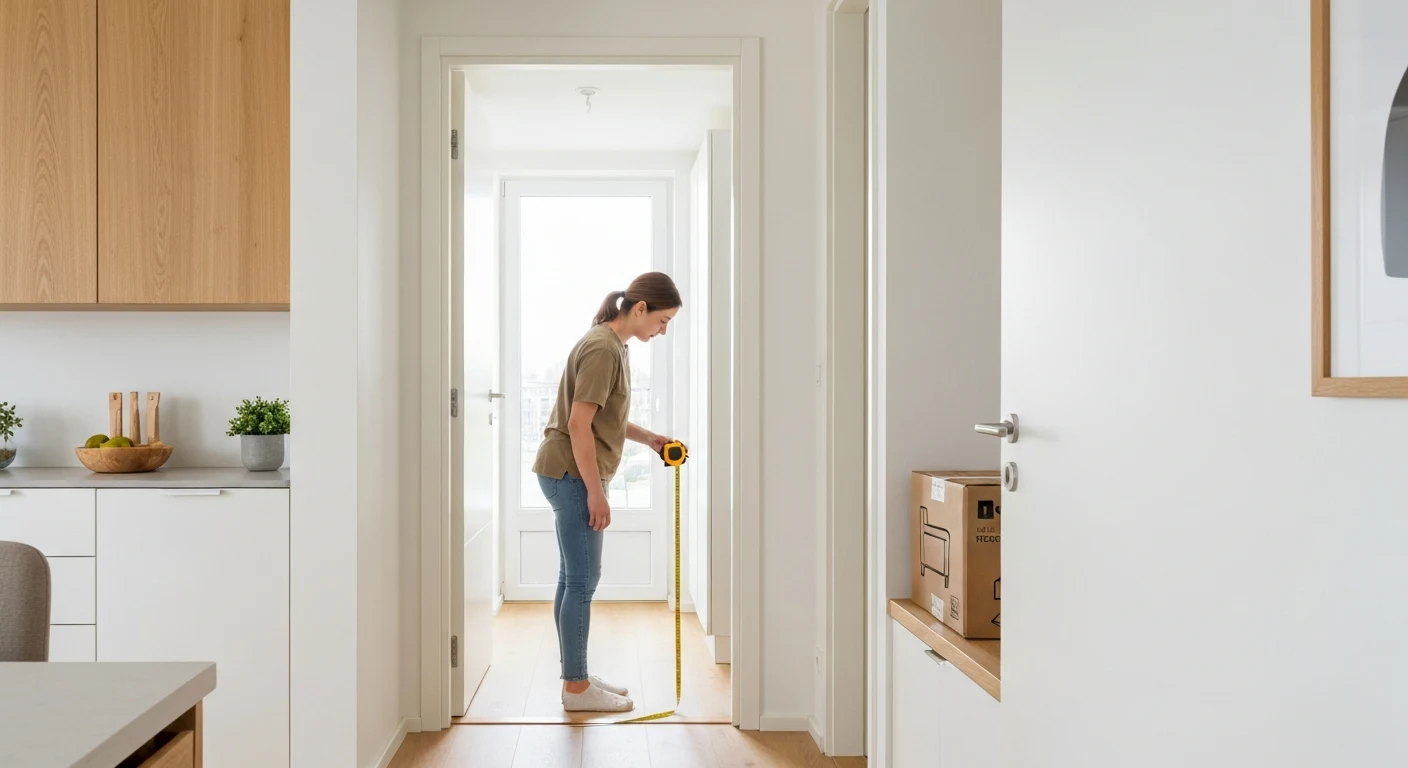
- Does it fit through your door? Measure your apartment door, hallway, stairwell, and elevator before ordering. Multifunctional pieces tend to be heavier and bulkier than their single-purpose equivalents. A sofa bed that cannot physically enter your apartment is not functional at any level.
- What is the durability of the mechanism? Hinges, slides, and folding joints are the failure points. Check reviews specifically for mechanism longevity. A beautiful desk that wobbles after six months of daily folding is not a deal at any price.
- Can you access storage without a major effort? Storage that requires moving three other things first is storage you will not use. The 30-second rule: if you cannot access the stored items within 30 seconds, the design is working against you.
The Storage Unit Math: What Multifunctional Furniture Actually Saves
Here is a number that should make every apartment renter pause: one in three Americans currently rents a self-storage unit, with another 18% planning to rent one (StorageCafe/SSA, 2025). The US has over 50,000 self-storage facilities with more than 2.1 billion square feet of total inventory. We are paying for space to store things that do not fit in our homes, and then paying rent on the homes too.
The average cost of a small self-storage unit (5x5 or 5x10) is $80 to $150 per month. Over a year, that is $960 to $1,800. For that same money, you could buy a storage ottoman ($200), a coffee table with hidden compartments ($250), a bed frame with drawers ($400), and a shelving unit with baskets ($150). Total: $1,000 in furniture that stores the same volume as a small storage unit, right inside your apartment where you actually need it.
I know three people who rent storage units and every single one of them, when pressed, admits they have not visited the unit in over six months. They are paying $100 a month to store things they forgot they owned. The IKEA Life at Home Report found that only 47% of renters experience enjoyment often at home, compared to 55% of homeowners (IKEA/Ingka Group, 2024). Part of that gap, I believe, comes from renters feeling like their space does not truly work for them. Furniture that stores, converts, and adapts is one way to close it.
The clutter connection is real too. A UCLA study of 60 dual-income couples found that women who described their homes as "cluttered" showed flatter cortisol slopes throughout the day, a biomarker for chronic stress (Saxbe and Repetti, 2010). Multifunctional furniture with built-in storage does not just save money. It can measurably reduce the stress of living in a space that feels chaotic. For more on creating a calm, intentional atmosphere in a small home, our guide to biophilic design for apartments covers how natural elements layer on top of a well-organized base.
Where to Start If You Feel Overwhelmed
If you are staring at a small apartment full of single-purpose furniture and do not know where to begin, start with the piece that bothers you most. For most people, that is one of three things: the sofa that cannot host overnight guests, the lack of a proper workspace, or the absence of any real storage.
Pick one. Solve it with a single multifunctional replacement. Live with it for a month. Then move to the next pain point. Trying to overhaul everything at once leads to decision fatigue and impulse purchases you will regret. The sequential approach costs the same in the end but results in better choices because each purchase is informed by how the previous one changed your daily routine.
If your starting point is the living room, begin with the sofa (sleeper or storage) and a better coffee table. If it is the bedroom in a studio, a murphy bed changes everything overnight (literally). If storage is your main problem, start with a storage ottoman and an entryway bench, then add vertical shelving. For a bigger-picture approach to making a one-bedroom apartment feel complete, our guide walks through the full room-by-room sequence.
The furniture industry is not slowing down on this trend. Pinterest searches for "comfy reading chair small spaces" surged 455% in early 2026 (Pinterest, 2026), and small-space-specific product lines from major retailers keep expanding. The best time to rethink your furniture was before you moved in. The second best time is now.
Frequently Asked Questions
Is multifunctional furniture worth the higher upfront cost?
Almost always, yes. A $1,200 sleeper sofa replaces both a $600 sofa and a $300 guest bed setup, saving you $100 in floor space and eliminating the need to store a guest mattress. Over three to five years, the per-use cost of quality multifunctional pieces is lower than buying separate single-purpose items. The key is buying quality once rather than replacing cheap pieces repeatedly.
What is the most impactful first multifunctional furniture purchase for a small apartment?
For most people, a storage ottoman or a coffee table with hidden storage. It is the lowest-cost entry point ($150 to $400), requires no installation, and immediately reduces visual clutter. If you host overnight guests regularly, a quality sleeper sofa is the better first buy despite the higher cost.
Can renters use murphy beds without damaging walls?
Some murphy bed kits mount into wall studs with screws that leave small holes, easily patched when you move out. Freestanding murphy bed cabinets exist but cost more ($2,000 and up) and take more floor space. Always check your lease and talk to your landlord before any wall mounting. Many landlords approve it because it is a value-adding modification.
How do I know if a piece of multifunctional furniture is actually durable?
Focus on three things: the mechanism (hinges, slides, and folding joints should feel solid, not wobbly), the frame material (hardwood or steel over particleboard for anything weight-bearing), and the warranty (reputable brands offer 3 to 5 year warranties on mechanisms). Read user reviews filtered to "6 months" or "1 year" feedback, since initial reviews rarely reveal long-term mechanism issues.
What multifunctional furniture works best for studio apartments under 500 square feet?
The three highest-impact pieces for a sub-500-square-foot studio are a murphy bed (frees 35 square feet of floor), a fold-down wall desk (adds a workspace without permanent floor use), and a cube shelf used as a room divider (creates zones while adding storage). Together, these three pieces can make a 450-square-foot studio function like a space twice its size. Our studio apartment guide covers the full layout strategy.
More from Studio & Small Apartment
Layout, decor, and life in studio and small apartments.
How Do You Decorate a Studio Apartment?
Wondering how to furnish your studio apartment without it feeling cramped? This guide answers your questions with smart ideas for zoning, furniture, and deco...
How to Decorate a Studio Apartment: An Expert's Guide
8 min read
How Do You Decorate a Studio Apartment?
10 min read
The Art of Studio Living: Your Complete Guide
10 min read
How to Layout a Small Apartment?
25 min read

3 Flawless Layouts and 5 Real-Life Studio Solutions
21 min read
How Do You Decorate a One-Bedroom Apartment?
18 min read
Tags

Written by Joesp H.
Interior Design & Small Space Living Specialist
Former marketing manager turned full-time home optimizer. After living in 7 homes ranging from 450 to 2,000 sq ft, I started CleverSpaceSolutions to help people create organized, functional spaces on real budgets.
Other Articles
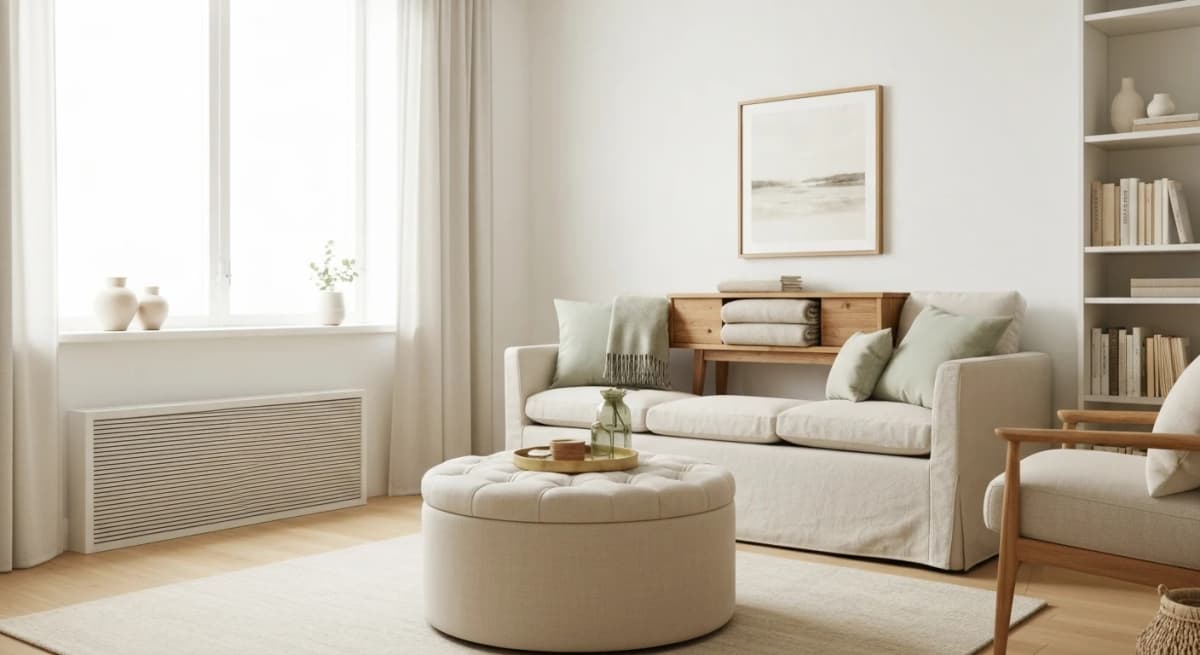
Space-Saving Storage Furniture for Small Apartments: Ottomans, Cabinets & Hidden Solutions
Space-saving storage furniture for small apartments: storage ottomans, beds, lift-top tables, and cabinets, plus 2026 price ranges and three budget setups.
Biophilic Design for Small Apartments: How to Create a Living Green Corner
Turn your small apartment into a calming green sanctuary. Practical biophilic design tips, plant picks by light level, renter-friendly mounting, and budget breakdowns from $10 to $1,200.
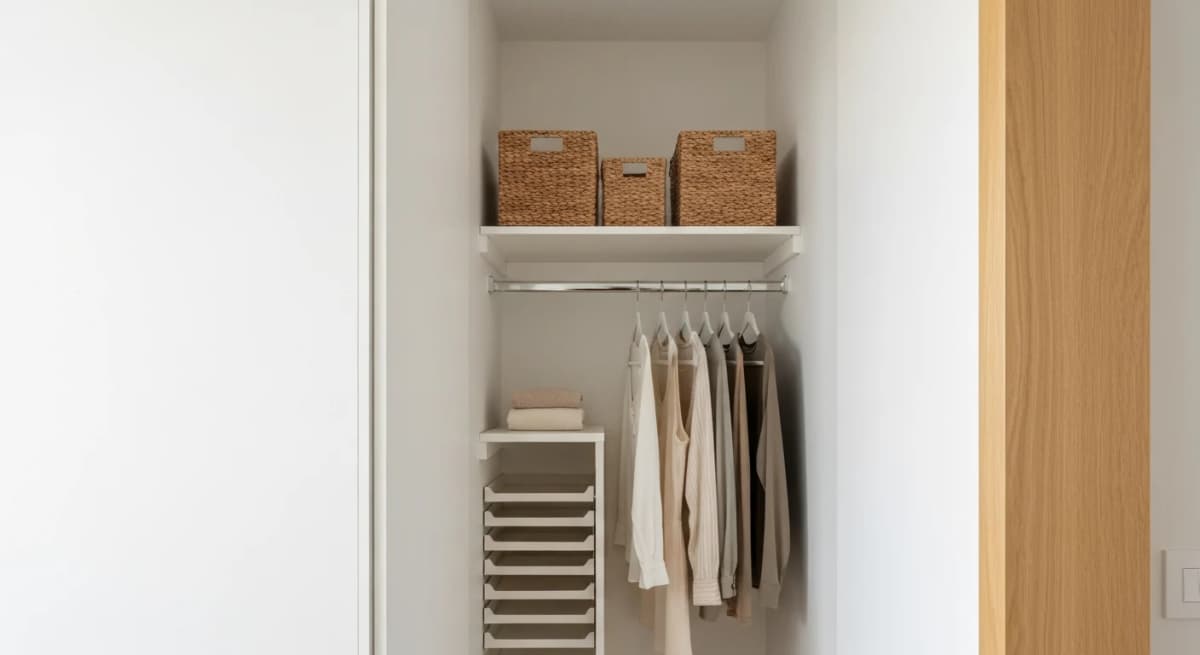
Small Closet Organization Ideas That Actually Work in 2026
55% of Americans say closets are their most disorganized space. These 10 renter-friendly closet organization ideas cost under 50 and work in any apartment.