Tiny Kitchen, Big Dreams: Your Ultimate Guide to Maximizing Style and Space
Wondering how to transform your tiny kitchen into a stylish, functional space? This ultimate guide answers your questions, covering everything from smart sto...

Tiny Kitchen Design Guide: How to Make Every Square Foot Work Harder
The National Kitchen and Bath Association reports that the average American kitchen measures 161 square feet, but kitchens in apartments and condominiums built after 2010 average just 103 square feet — roughly the size of a large bathroom (NKBA, 2022). That gap between expectation and reality is where most small-kitchen frustration comes from. People apply advice designed for spacious kitchens to rooms that operate by completely different rules. This guide covers the specific decisions — layout, appliances, storage, and color — that make tiny kitchens functional, comfortable, and worth spending time in. For a deeper look at small kitchen design principles, the guide on small kitchen design covers the foundational concepts in detail.
TL;DR: Tiny kitchens average just 103 square feet in newer apartments, according to NKBA data. This guide covers the layout formats, appliance choices, storage strategies, and design decisions that make the biggest practical difference — including what to skip entirely. The right combination can recover 20–30% more usable workspace without changing the room's footprint.
What Storage Strategies Actually Work in a Tiny Kitchen?
The NKBA's kitchen design surveys consistently find that storage dissatisfaction is the number one complaint among small-kitchen owners, cited by 71% of respondents (NKBA, 2021). Most small kitchens aren't short on storage potential — they're short on storage that's well-designed. The difference is in how much of the available space is actually captured versus left empty or inaccessible.
Vertical space is the most underused storage zone in almost every tiny kitchen. Standard upper cabinets stop 12–18 inches below the ceiling, leaving a dead zone that can hold seasonal items, rarely used appliances, or bulk dry goods in attractive bins. Floor-to-ceiling cabinetry captures this space and makes the kitchen feel taller at the same time.
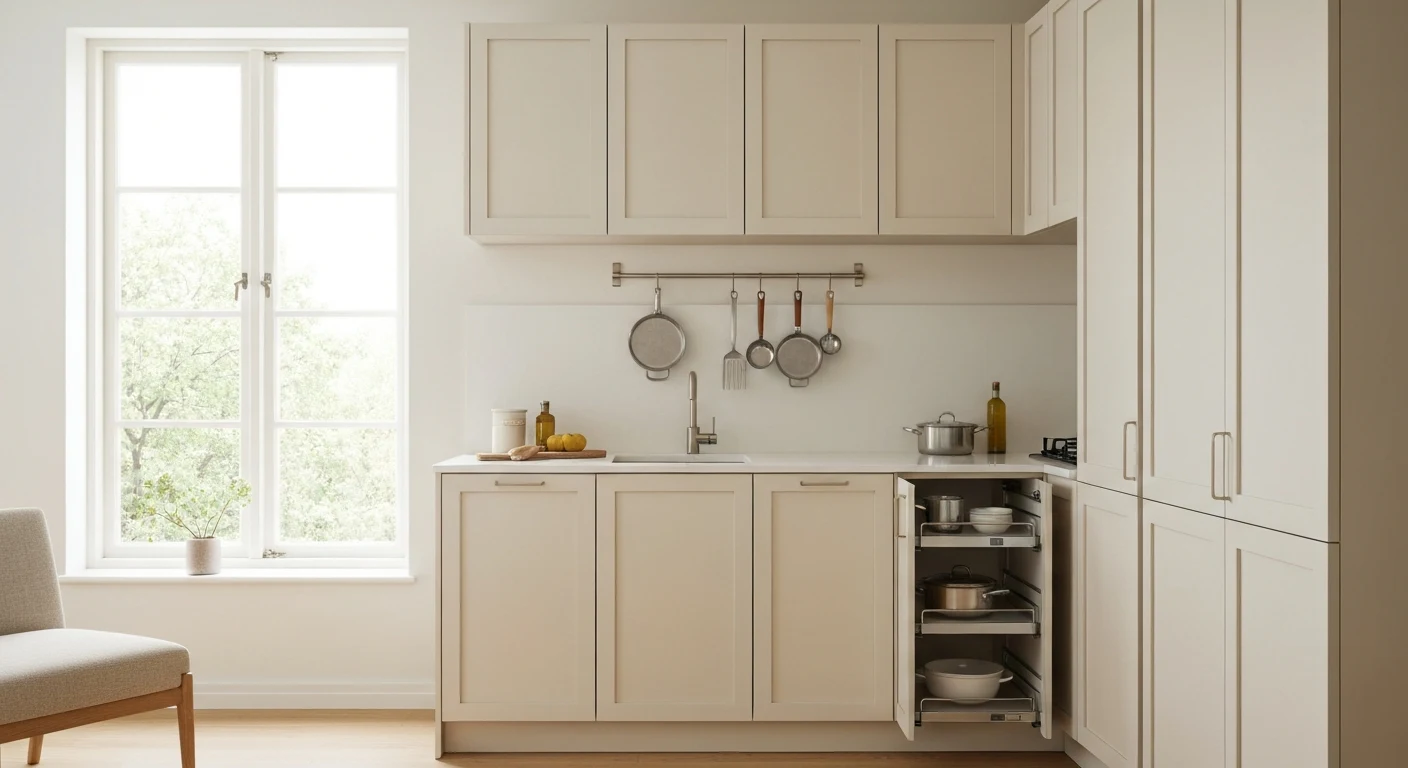
Interior cabinet organization is where most storage capacity is lost or gained. Standard cabinet shelves hold roughly 40% of what pull-out shelf systems hold in the same cubic volume, according to kitchen renovation data from Houzz (Houzz, 2022). Pull-outs, corner carousels, and drawer dividers don't require structural changes — they're retrofittable into most existing cabinetry.
Vertical Storage: Using the Full Wall Height
Wall-mounted magnetic knife strips, rail systems with hanging hooks, and narrow floating shelves handle frequently used items — oils, spices, utensils — without consuming any counter space. A pot rack mounted above the stove or on an open wall keeps bulky cookware accessible while freeing cabinet space for things that don't hang. Every item moved off the counter is working space reclaimed.
The Hidden Storage Zones Most People Miss
Toe-kick drawers — the shallow storage built into the baseboard space beneath lower cabinets — are one of the most overlooked tiny kitchen upgrades. They're shallow but long, and they handle flat items like baking sheets, cutting boards, and platters perfectly. The backs of cabinet doors are another zone: mounted organizers hold spices, cleaning supplies, or foil and wrap rolls without occupying shelf space.
How Does Color and Light Change a Tiny Kitchen?
Research from the Color Marketing Group found that light-reflecting colors in small rooms increase perceived spatial volume by 10–15% compared to dark or saturated tones in the same room (Color Marketing Group, 2019). In a 103-square-foot kitchen, that's a meaningful perceptual shift achieved entirely through paint and finish choices.
Light upper cabinets with slightly darker lower cabinets — the two-tone approach — is one of the most effective small kitchen design moves available. Light uppers keep the eye moving upward and prevent the visual "ceiling drop" that makes a small room feel shorter. Darker lowers ground the space and hide scuffs and wear better than light bases.
Reflective surfaces amplify whatever natural light exists. Glossy cabinet faces, glass-fronted upper cabinets, subway tile backsplashes, and metallic hardware all bounce light around the room. This isn't about making the kitchen feel trendy — it's about multiplying the effect of every lumen entering the space.
Lighting Layers That Make a Real Difference
Under-cabinet LED strip lighting is one of the highest-ROI tiny kitchen investments available. It eliminates the shadow that upper cabinets cast on the counter — the shadow that makes prep work harder than it needs to be. Combined with recessed overhead lighting and a simple pendant or ceiling fixture, three light sources at three heights create depth and make the kitchen feel larger than a single overhead fixture ever could.
When Bold Colors Work in Small Kitchens
Deep navy, forest green, and charcoal aren't off-limits in tiny kitchens. Used on lower cabinets only, paired with light walls and uppers, bold colors create depth and drama without making the room feel smaller. What doesn't work is dark color on every surface simultaneously — ceiling, walls, and cabinets all in dark tones create a compression effect that makes even a well-designed tiny kitchen feel oppressive.
What Appliance Choices Work Best for Tiny Kitchens?
Compact and counter-depth appliances are growing at 8.3% annually in the US market, driven almost entirely by demand from small-kitchen owners, according to the Association of Home Appliance Manufacturers (AHAM, 2023). The standard refrigerator is 30–36 inches wide and 70 inches tall — in a 103-square-foot kitchen, that's a significant portion of both wall and counter adjacency consumed by a single piece. Counter-depth refrigerators at 24 inches deep rather than the standard 30 inches recover 6 inches of floor space along the entire refrigerator wall.
Integrated appliances — dishwashers, refrigerators, and even small wine coolers behind cabinet-matching panel fronts — are the most space-efficient option if your budget allows. They read as cabinetry rather than appliances, dramatically reducing visual clutter and making the kitchen feel more unified and less crowded.
For cooking, a 24-inch range or a two-burner induction cooktop with a separate wall oven is worth serious consideration in a tiny kitchen. Most home cooks use two burners for 90% of what they cook. A 30-inch range occupies a significant stretch of counter adjacency that a 24-inch model or an induction cooktop doesn't.
Appliances Worth Putting on the Counter
Not every small appliance earns counter space in a tiny kitchen. The ones that do are the appliances used daily: a coffee maker, a toaster or toaster oven, and possibly a stand mixer for dedicated bakers. Everything else — the blender used monthly, the waffle iron used seasonally — belongs in a cabinet or on a higher shelf. Counter space is the most precious real estate in a tiny kitchen. Permanently parking appliances you use occasionally is a trade-off that rarely pays off.
The Case for a Good Range Hood
A properly vented range hood matters more in a tiny kitchen than in a large one because the cooking smells, steam, and grease particles have less volume to dissipate into. A wall-mounted or under-cabinet hood that vents to the exterior is always preferable to a recirculating model. If exterior venting isn't possible, a recirculating hood with a good carbon filter is still significantly better than no hood at all, particularly in a space where cooking smells are impossible to escape.
What Is the Best Layout for a Tiny Kitchen?
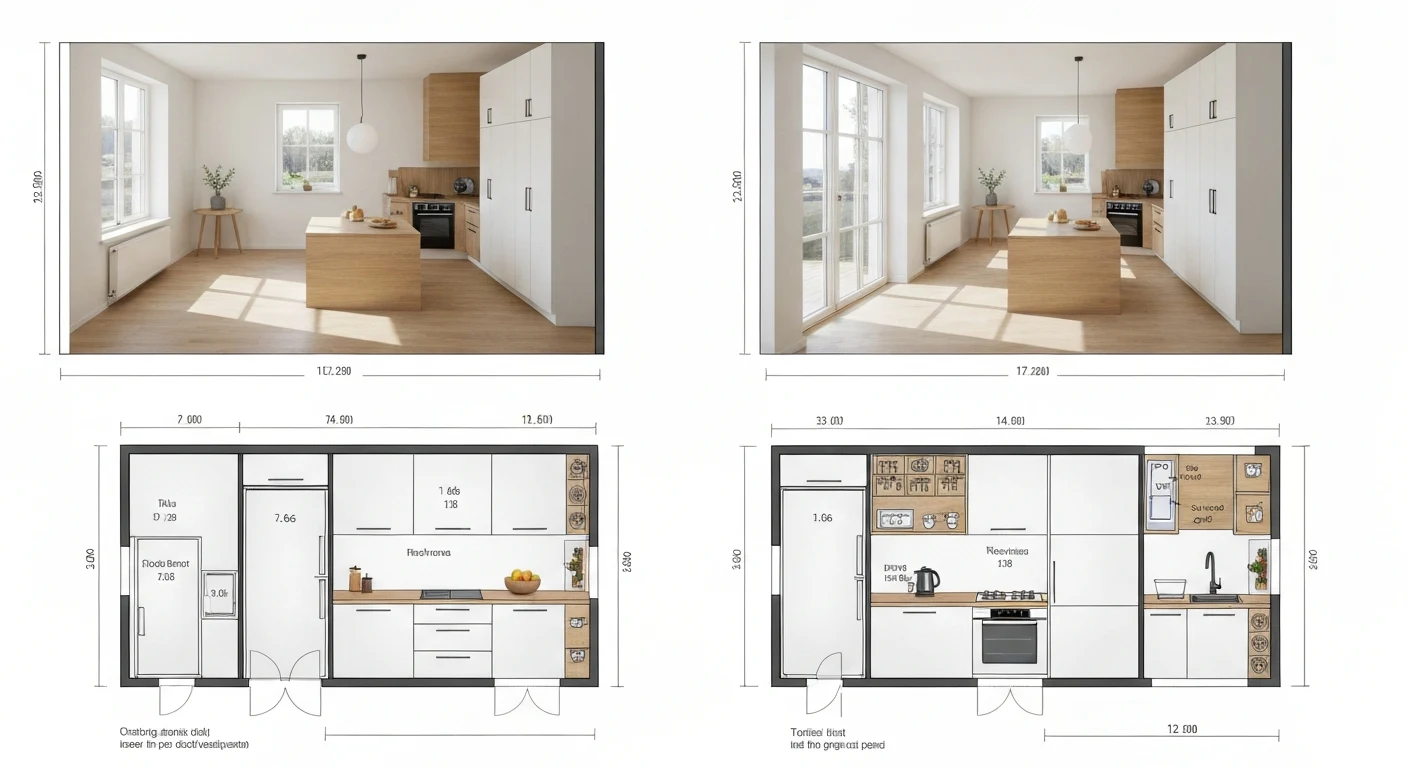
Kitchen layout studies by the NKBA identify the galley layout — two parallel counters facing each other — as the most work-efficient format for kitchens under 120 square feet, with the highest ratio of usable counter and storage to floor space of any standard layout (NKBA, 2020). It's not the most glamorous configuration, but it's the one that delivers the most functional surface per square foot.
The classic "work triangle" connecting sink, stove, and refrigerator remains valid in small kitchens as a planning starting point. The NKBA recommends keeping the total triangle perimeter between 12 and 26 feet — below 12 feet means the kitchen is cramped, above 26 feet means excessive walking between stations. In a tiny kitchen, the risk is almost always a triangle that's too small rather than too large.
Walkway width is the most critical layout constraint. The NKBA specifies a minimum of 42 inches for a single-cook kitchen and 48 inches for a multi-cook kitchen. In a galley layout, measure the clear floor space between the two counter edges. If it's under 42 inches, the kitchen may technically function but it'll feel tight every time you work in it.
Single-Wall Layout: When It's the Right Choice
In very small studios or open-plan apartments where the kitchen is integrated into a larger living space, the single-wall layout concentrates all kitchen functions along one wall. This frees the maximum amount of floor space, which matters when the kitchen shares square footage with the living room. The trade-off is limited counter space — a rolling kitchen cart provides supplementary prep surface and storage that can be moved out of the way when not needed. For dining solutions in this type of space, the guide on best table for small kitchen covers compact dining options that work alongside small kitchen layouts.
L-Shaped Layout: The Best Compromise for Flexibility
An L-shaped kitchen layout works well in square kitchen footprints and in corner kitchen areas within open-plan spaces. It provides more continuous counter space than a single-wall layout without the walkway constraints of a galley. The corner of the L is typically the least efficient zone — address it with a corner carousel, pull-out shelf, or lazy Susan rather than leaving it as dead storage space in the back of a standard cabinet.
Open Shelving vs. Upper Cabinets: Which Works Better in a Tiny Kitchen?
A Houzz survey found that 35% of kitchen renovators who installed open shelving replaced some or all of it with closed cabinets within three years (Houzz, 2023). Open shelving looks clean and spacious in professional photography, but it requires a level of consistent organization and cleanliness that doesn't suit every household. In a tiny kitchen where grease and steam are concentrated in a small space, open shelves collect grime faster than in a large kitchen.
That said, a limited amount of open shelving — one or two shelves above the counter rather than replacing entire upper cabinets — can genuinely open up a tiny kitchen visually. Keep these shelves curated: matching vessels, frequently used items, and a few plants or decorative pieces at most. A shelf that's used as a cabinet without a door just looks like a cluttered cabinet.
The best approach for most tiny kitchens is predominantly closed cabinetry with one open shelf element for visual relief. This gives you the storage reliability of closed cabinets while preventing the fully-enclosed feeling that a tiny kitchen with no open surfaces can produce.
The open shelving debate misses a more important question: cabinet depth. Standard upper cabinets are 12 inches deep, but most items stored in them — mugs, small bowls, spice jars — need only 8 inches. Building or ordering shallow 8-inch upper cabinets creates the visual openness of open shelving (because the thinner profile sits closer to the wall) while maintaining closed storage. This is rarely discussed but solves both the visual and organizational problem simultaneously.
Frequently Asked Questions About Tiny Kitchen Design
What is the minimum size for a functional tiny kitchen?
The NKBA identifies 80 square feet as the practical minimum for a kitchen with a full range, refrigerator, and dishwasher — though some well-designed galley kitchens function effectively at 60 square feet. Below 60 square feet, the kitchen becomes a kitchenette with a two-burner cooktop, compact refrigerator, and no dishwasher. The 103-square-foot average for newer apartments sits above the functional minimum, meaning most small kitchens are workable with the right design decisions.
Does a kitchen island make sense in a tiny kitchen?
Only if the walkway clearance minimum of 42 inches can be maintained on all sides of the island. A fixed island in a kitchen that can't accommodate proper clearance actively makes the kitchen harder to work in. A rolling kitchen cart is almost always a better choice for tiny kitchens — it provides extra prep surface and storage when needed, then rolls out of the way when you're not cooking. The flexibility is more valuable than the permanence.
What countertop material works best for small kitchens?
Quartz and butcher block are the two most practical choices for tiny kitchens. Quartz is durable, non-porous, and available in light colors that reflect light well. Butcher block is warm, repairable, and relatively affordable — useful when a tight budget requires trade-offs. Light-toned quartz or laminate (which has improved significantly in quality) handles the visual expansion goal while remaining practical. Dark granite or marble, while attractive, absorbs light and makes counter space feel more limited than it is.
How do I make a tiny kitchen feel less closed-in?
Three changes make the biggest perceptual difference. First, replace a solid upper cabinet door panel with glass-fronted cabinet doors on at least one section — the visual depth through to the cabinet interior adds perceived space. Second, add under-cabinet lighting to eliminate the counter shadow. Third, if a window is present, avoid placing storage in front of it. Natural light is the single most effective space-enlarger available, and blocking it with shelving is a trade-off most tiny kitchens can't afford to make.
Should I knock out a wall to open up a tiny kitchen?
Removing a wall between a tiny kitchen and an adjacent dining area is one of the most impactful changes you can make — but it's also the most expensive and structurally complex. Before committing to demolition, test the concept by spending a month with the connecting door removed. If the open-plan feel significantly changes how you use and feel about both spaces, the renovation is likely worth pursuing. If the main goal is storage and counter space, invest in internal kitchen organization first — the returns are faster and cheaper.
Key Takeaways: Designing a Tiny Kitchen That Works
The NKBA's finding that tiny kitchen owners cite storage as their primary frustration points to where the real design opportunity lives: not in expanding the footprint but in using the existing volume more intelligently. Floor-to-ceiling cabinetry, pull-out shelf systems, and toe-kick drawers can recover the functional equivalent of several additional square feet without changing the room's dimensions.
Layout is the second critical factor. A well-planned galley or L-shaped kitchen with proper 42-inch walkway clearance and a tight work triangle functions better than a larger kitchen with poor flow. Getting the layout right before choosing finishes and appliances prevents the most expensive mistakes.
Appliance selection, color strategy, and lighting complete the picture. Counter-depth appliances, light-reflective surfaces, and layered lighting each contribute to both the perceived and functional spaciousness of a tiny kitchen. None of these changes requires significant structural work. Most can be made incrementally, which means you can improve a tiny kitchen substantially without a full renovation budget. The right sequence — layout first, storage second, finishes third — keeps every decision building on solid foundations.
More from Small Kitchen
Design, decor, and function for small and tiny kitchens.
How Can You Make a Small Kitchen Look More Stylish? 10 Designer Ideas
Looking for unique ways to improve your small kitchen? This guide answers your questions with 10 designer-inspired ideas, from ceiling racks to clever lighti...
Kitchen Backsplash Ideas for Small Kitchens: Budget-Friendly Designs That Pop
20 min read

How Do You Design a Small Kitchen? An Interior Designer's Guide
7 min read
How Can You Make a Small Kitchen More Functional?
17 min read
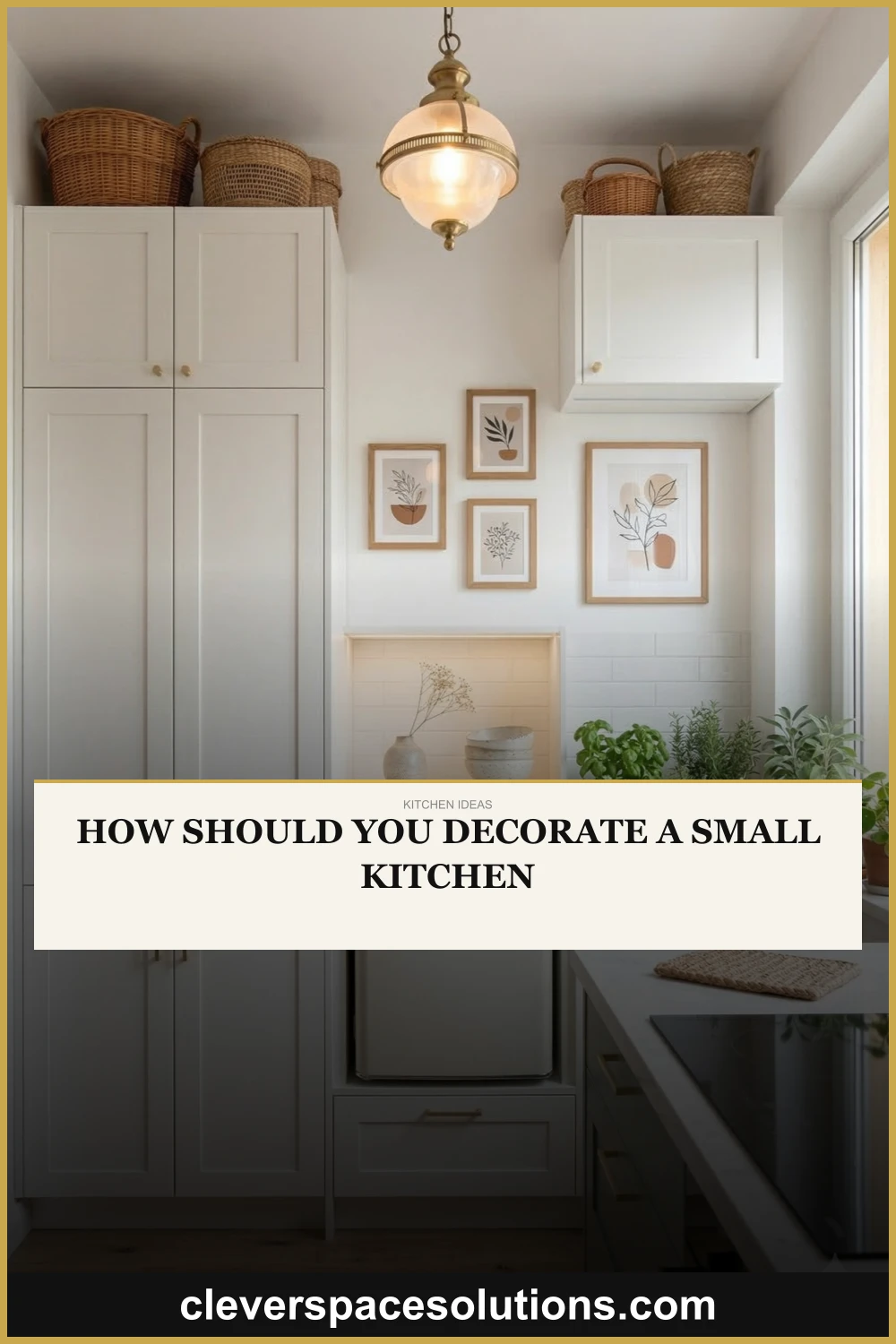
How Should You Decorate a Small Kitchen?
17 min read
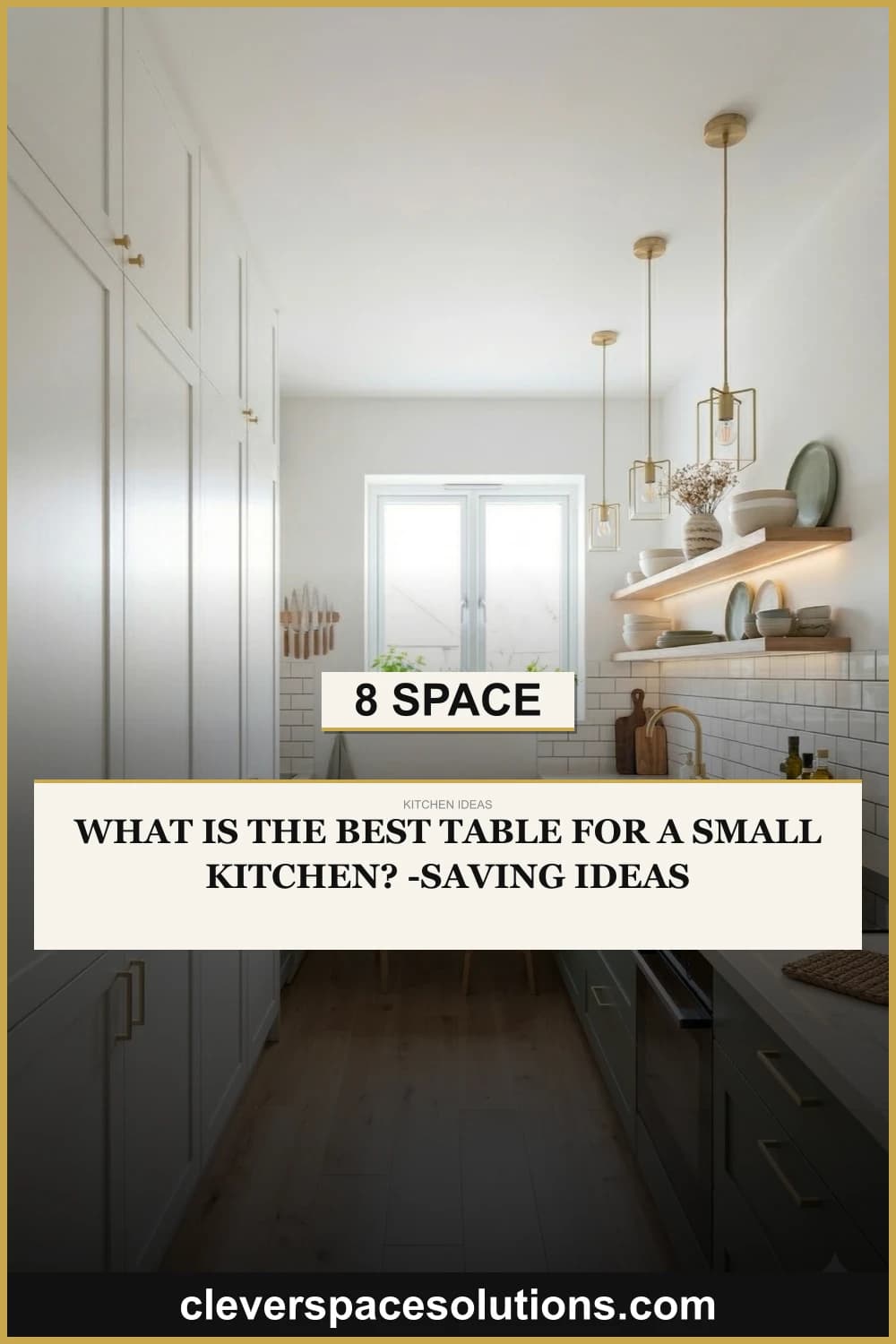
What is the Best Table for a Small Kitchen? 8 Space-Saving Ideas
7 min read
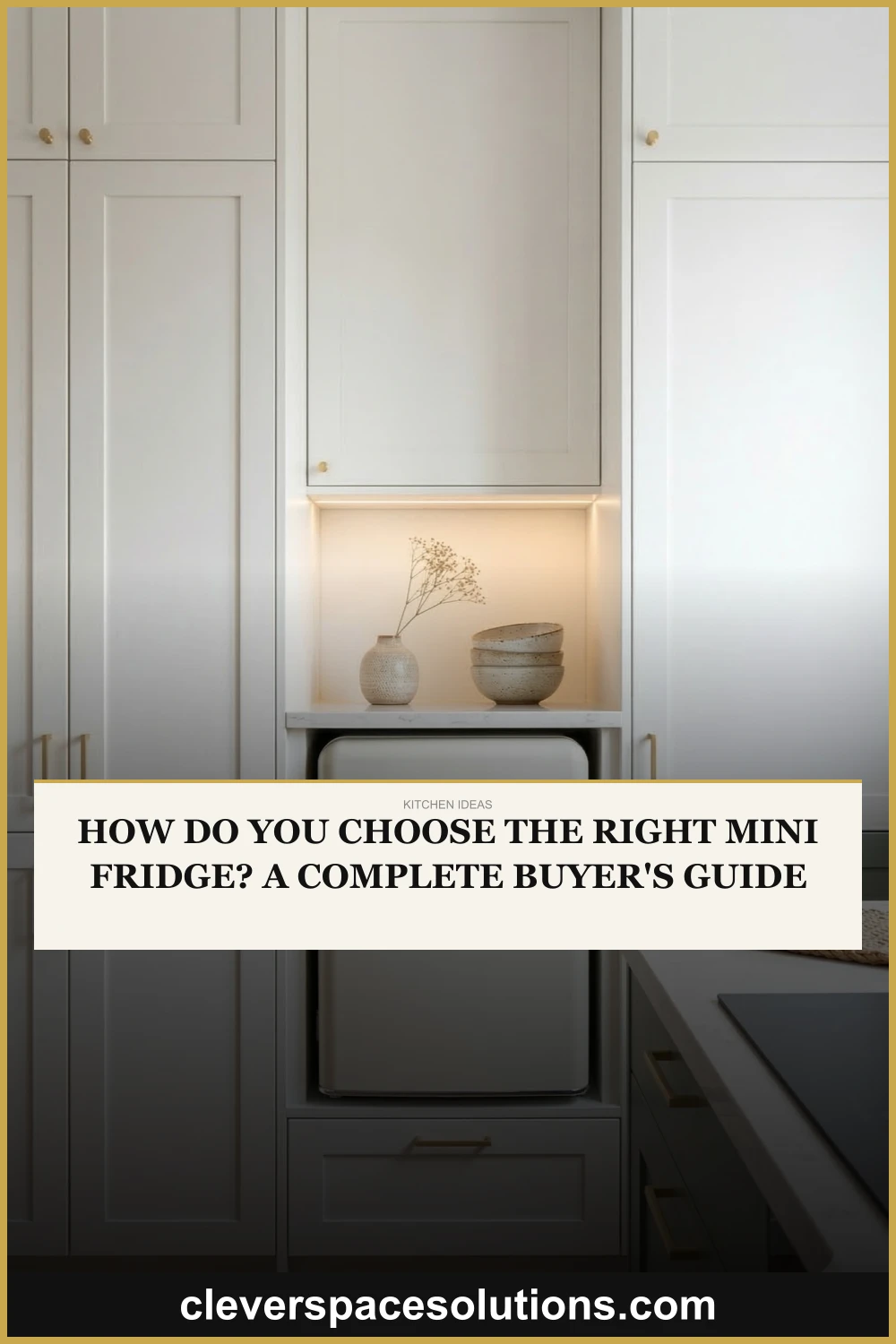
How Do You Choose the Right Mini Fridge? A Complete Buyer's Guide
6 min read
Tags

Written by Joesp H.
Interior Design & Small Space Living Specialist
Former marketing manager turned full-time home optimizer. After living in 7 homes ranging from 450 to 2,000 sq ft, I started CleverSpaceSolutions to help people create organized, functional spaces on real budgets.
Other Articles

How Can You Make a Small Kitchen Look More Stylish? 10 Designer Ideas
Looking for unique ways to improve your small kitchen? This guide answers your questions with 10 designer-inspired ideas, from ceiling racks to clever lighti...

How Do You Design a Small Kitchen? An Interior Designer's Guide
Wondering how to design your small kitchen for maximum style and function? An interior designer shares the most effective methods for color, storage, and lig...
How Should You Decorate a Small Kitchen?
Wondering how to make your small kitchen both functional and stylish? This guide answers your questions with 7 practical ideas for storage, lighting, and org...