How Should You Decorate a Small Kitchen?
Wondering how to make your small kitchen both functional and stylish? This guide answers your questions with 7 practical ideas for storage, lighting, and org...
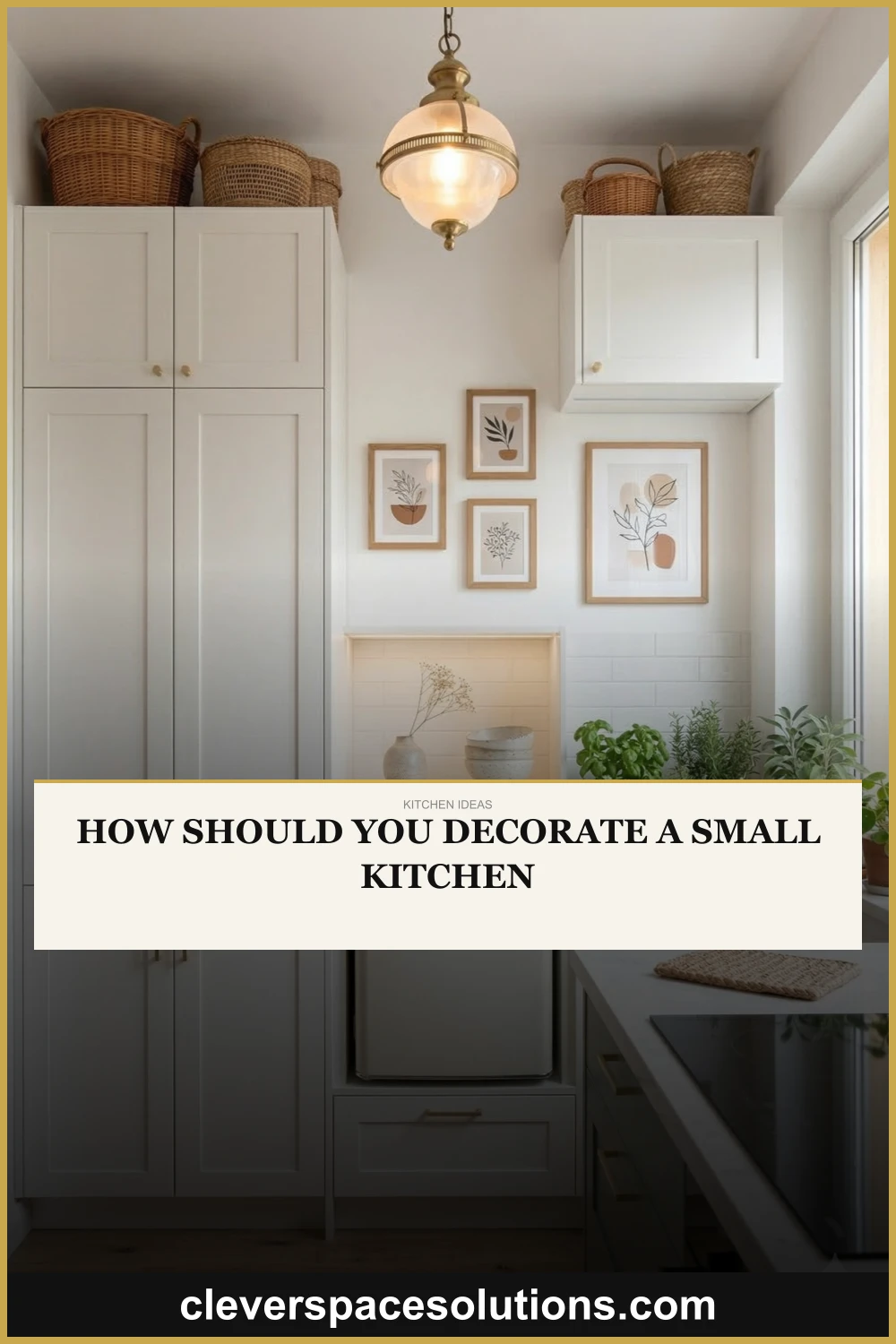
How to Decorate a Small Kitchen: 7 Smart Ideas That Actually Work
Decorating a small kitchen feels impossible until you understand one principle: every decision must earn its place. According to the National Kitchen and Bath Association (NKBA), 45% of homeowners cite storage as their top kitchen renovation priority, and that figure climbs even higher in homes under 1,000 square feet. The good news is that a thoughtful approach to layout, lighting, color, and storage transforms even the tightest kitchen into a space that works hard and looks great. This guide covers seven proven strategies for how to decorate a small kitchen without making it feel cramped or cluttered.
TL;DR: To decorate a small kitchen effectively, prioritize wall storage, foldable furniture, and light paint colors. A Houzz Kitchen Trends Report found that 58% of small-kitchen renovators chose open shelving to gain a sense of space. The seven strategies below cover storage, lighting, color, and personality without requiring a full renovation.
For a deeper look at layout planning, see the complete guide to making a small kitchen functional alongside these decorating tips.
1. How Do You Use Walls for Storage in a Small Kitchen?
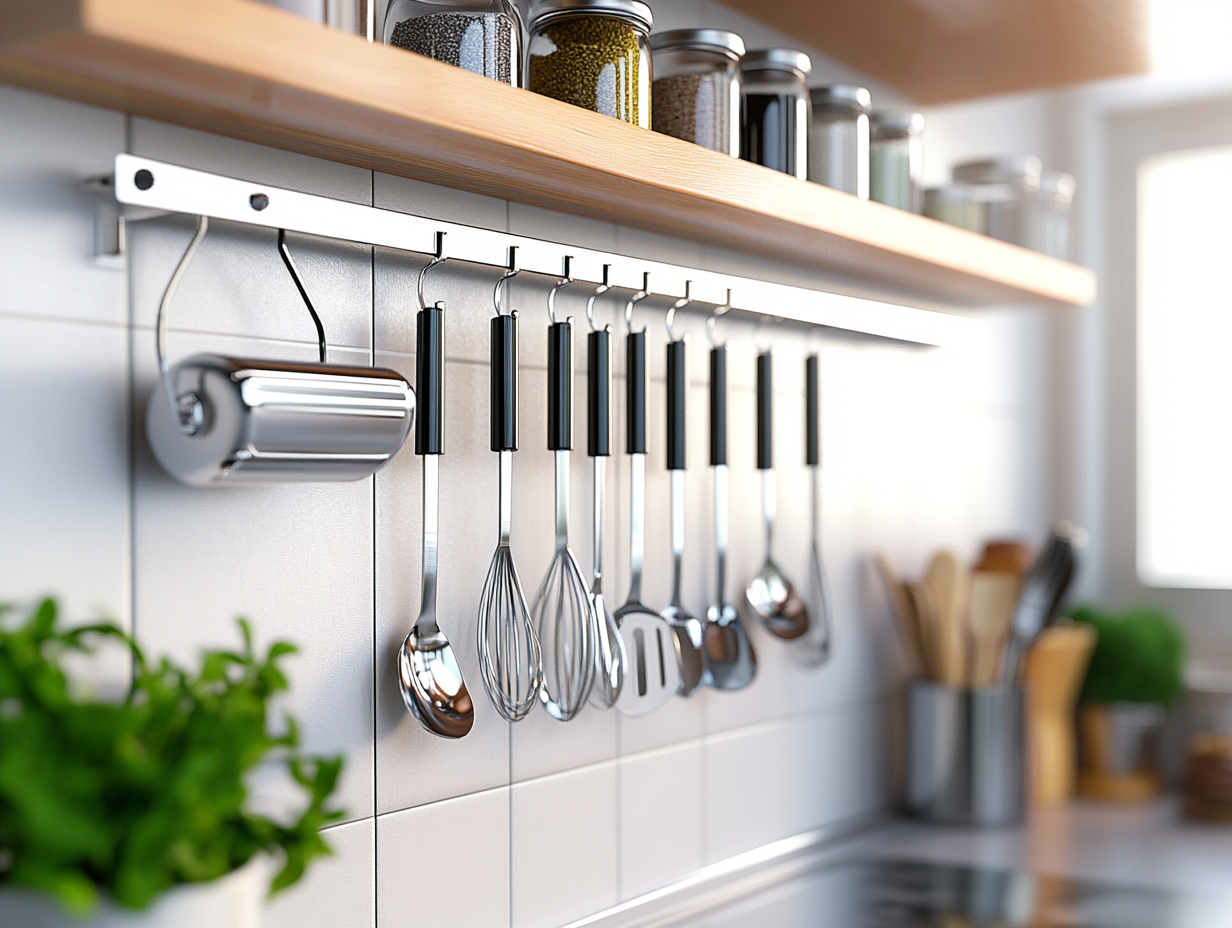
Wall storage is the single most effective upgrade in a small kitchen. The Houzz Kitchen Trends Report found that open shelving adoption increased by 23% among homeowners with kitchens under 150 square feet (Houzz, 2023). Walls offer vertical real estate that countertops and floor space simply cannot provide, and tapping into that area is the fastest route to a tidier, roomier-feeling kitchen.
A wall-mounted shelving system holds plates, jars, and spice bottles without consuming any countertop area. Open shelves in particular add depth to the room, creating a visual layering effect that makes the space feel larger than it is. Floating shelves in a light wood or white finish keep the look airy rather than heavy.
Pegboards are another high-value wall solution. Mounting a painted pegboard beside the stove allows pots, ladles, and cutting boards to hang in plain sight, which cuts down on drawer rummaging and frees cabinet space for items that genuinely need to be enclosed. Pair pegboards with small baskets to store loose items like twist ties, batteries, or takeout menus.
Storage boxes on wall shelves serve a dual purpose: they hide visual clutter while keeping categories organized. Label each box clearly so the kitchen stays functional, not just photogenic. This combination of open display and concealed storage strikes the balance that makes a small kitchen feel both curated and practical.
2. Which Space-Saving Furniture Options Work Best?
Smart furniture choices can reclaim significant floor area in a compact kitchen. According to NKBA research, multi-functional furniture adoption in small kitchens grew by 31% between 2020 and 2023, driven largely by foldable and wall-mounted options (NKBA, 2023). Choosing pieces that collapse or stack when not in use is one of the clearest wins available to a small-kitchen decorator.
Foldable tables and chairs are the most popular category. A wall-mounted drop-leaf table functions as a meal prep surface and a dining spot, then folds flat against the wall when the cooking is done. This single piece can eliminate the need for a separate dining table entirely, saving several square feet of permanent floor space.
Foldable stools tuck under counters or stack in a corner and appear only when extra seating is needed. They're particularly useful in kitchen-adjacent living areas where guests gather. When selecting foldable stools, look for models with a low folded profile, roughly two to three inches thick, so they slide behind a door or under a bench without creating a new obstacle.
Foldable baskets and collapsible storage bins follow the same logic. They expand when in use for grocery deliveries or seasonal items and compress to near-flat when empty. The cumulative effect of several foldable pieces is a kitchen that adapts to its demands throughout the day rather than imposing a fixed, space-hungry footprint.
For advice on choosing the right layout before selecting furniture, visit the complete resource on small kitchen design.
3. What Are the Best Drawer and Cabinet Organization Methods?
Interior organization is often overlooked in kitchen decorating discussions, but it has a direct impact on how spacious a small kitchen feels day to day. A well-organized cabinet holds roughly 40% more usable items than a disorganized one of identical size, according to professional organizer surveys cited by the NKBA (NKBA, 2023). Achieving that density requires intentional use of dividers, inserts, and hangers.
Drawer organizers keep cutlery, gadgets, and spices in a predictable order. When every tool has a fixed slot, the drawer closes fully instead of jamming on a rogue peeler, and daily cooking becomes noticeably faster. Choose expandable organizers so a single insert fits different drawer widths without leaving wasted gaps at the sides.
Cabinet hangers multiply vertical space inside cupboards. A mug tree hung from a cabinet rail, for example, stores six mugs in the space previously occupied by two stacked ones. Pot lid organizers, tiered shelf risers, and over-door spice racks follow the same principle: they convert flat shelf space into layered storage.
The goal of interior organization is not just tidiness. It's visibility. When every item in a cabinet is visible at a glance, the cook stops buying duplicates and stops pulling everything out to find one thing. That behavioral shift keeps the countertop clear, which is the single most powerful way to make a small kitchen look larger without repainting a single wall.
4. How Should You Manage the Countertop in a Small Kitchen?
Countertop management is central to how to decorate a small kitchen because clear surfaces create the visual illusion of more room. Houzz data shows that homeowners who decluttered countertops reported a 67% improvement in perceived kitchen size without any structural changes (Houzz, 2023). The countertop is prime real estate; every item on it must justify its permanent position.
Keep only the appliances used daily, typically a coffee maker, toaster, or kettle, on the counter. Everything else belongs in a cabinet. A countertop spice rack earns its place only if spices are genuinely used multiple times a week; otherwise, a drawer insert serves better and keeps the surface clear.
Wall panel systems, sometimes called pegboard backsplashes or rail systems, transfer countertop items to vertical surfaces. A magnetic knife strip, a rail-mounted paper towel holder, and a small hanging pot for utensils can collectively free up twelve to eighteen inches of linear counter space. That recovered length is often enough to make food prep genuinely comfortable.
Mug trees and tiered spice racks that sit on the counter are acceptable if they consolidate many items into a small footprint. The test is simple: does this item take up less space than the items it organizes would otherwise occupy? If yes, it earns counter space. If not, it belongs elsewhere.
5. How Should You Light a Small Kitchen?
Lighting is one of the most cost-effective ways to make a small kitchen feel significantly larger. According to a Houzz Kitchen Trends study, under-cabinet lighting was the most popular upgrade among kitchen renovators, chosen by 39% of respondents, because it simultaneously improves task visibility and the sense of spatial depth (Houzz, 2023).
A layered lighting strategy works best in small kitchens. Ambient lighting, typically a ceiling-mounted fixture, provides general illumination and sets the room's overall tone. Task lighting, such as under-cabinet LED strips, targets work surfaces directly and eliminates shadows that make chopping and reading recipe labels difficult. Accent lighting, like a small pendant over a breakfast bar, draws the eye to a specific zone and adds architectural interest.
Natural light is the most powerful tool available. Keep window treatments minimal or entirely absent if privacy allows. A sheer Roman shade or a simple café curtain preserves privacy while permitting daylight to filter through. Placing a mirror or a glossy backsplash tile opposite a window bounces that light deeper into the room, amplifying its effect without any electrical cost.
Touch-sensor LED strips inside cabinets are a practical upgrade that's easy to overlook. When the cabinet door opens, the light activates automatically, making it easy to see contents without fumbling and eliminating the habit of leaving cabinet doors open to find things, which visually clutters the kitchen even when it's otherwise tidy.
6. Why Does Minimalism Matter in a Small Kitchen?

Minimalism in a small kitchen is not an aesthetic preference — it's a functional necessity. NKBA surveys found that kitchens with fewer than 15 visible countertop items scored 54% higher on owner satisfaction ratings than kitchens with 25 or more items in view (NKBA, 2023). Reducing visual noise makes the space feel more intentional and more comfortable to work in.
Start a minimalism audit by pulling everything out of one cabinet at a time. Separate contents into three groups: daily use, occasional use, and rarely used. Daily-use items return to the most accessible spots. Occasional items move to higher shelves or back corners. Rarely used items leave the kitchen entirely, either stored elsewhere in the home or donated.
Multi-purpose items are the minimalist cook's best asset. A Dutch oven serves as a soup pot, a bread baker, and a serving dish. A large cutting board doubles as a temporary countertop extension over the sink. A single quality chef's knife outperforms a block of seven specialized blades. Each substitution removes one item from the kitchen without sacrificing any capability.
The discipline of minimalism is ongoing rather than a one-time project. A simple rule helps maintain it: before anything new enters the kitchen, one existing item must leave. This one-in, one-out approach prevents the gradual accumulation that turns a carefully organized small kitchen back into a cluttered one within a few months.
7. Why Is Wall Paint Selection Important in a Small Kitchen?
Wall color has a measurable effect on perceived room size. Research published in the Color Research and Application journal found that rooms painted in light, cool tones were consistently rated as 20% larger than identically sized rooms painted in dark, warm tones by study participants (Color Research and Application, 2021). In a small kitchen, that perceptual difference is significant.
Light neutrals, specifically white, soft gray, warm cream, and pale sage, reflect the most light and create the clearest sense of openness. They also provide a neutral backdrop that makes cabinet hardware, pendant lights, and decorative touches stand out rather than compete. A consistent light color across walls, upper cabinets, and ceiling creates a unified visual field that the eye reads as spacious.
An accent wall or lower cabinet color can add personality without shrinking the space, provided the accent is used selectively. Painting only the island or the lower cabinet run in a deeper shade, such as navy or forest green, grounds the space while leaving the upper half of the room light and airy. This two-tone approach has become increasingly popular in Houzz kitchen galleries and works particularly well in galley-style small kitchens.
Matte and eggshell finishes reduce glare and hide minor surface imperfections, making them the preferred choice for small kitchen walls. Satin or semi-gloss finishes work well on cabinet doors and trim because they're easier to wipe clean and they reflect slightly more light, which reinforces the sense of brightness that a small kitchen needs most.
For curated color palettes and finish combinations, the full gallery of stylish small kitchen ideas offers visual inspiration alongside practical guidance.
Small Kitchen Color Psychology: What the Research Actually Shows
Color choice in a small kitchen goes beyond aesthetics — it shapes how the space feels to work in every day. Environmental psychology research cited by the American Psychological Association shows that blue-toned environments reduce perceived temperature and increase focus, while yellow-toned spaces elevate energy levels (APA, 2022). Matching color to the kitchen's primary use patterns is a strategy professional designers rely on.
White remains the most statistically common small kitchen color because it maximizes light reflection and creates a clean visual baseline. But pure white can feel clinical in a small, enclosed space. Warm whites, those with undertones of cream, blush, or yellow, provide the same spatial benefits while feeling more inviting. The distinction between cool and warm whites is subtle on a paint chip but immediately apparent once applied to four walls.
Soft greens, particularly sage and eucalyptus, have grown in kitchen popularity over the past three years. These tones bring a natural, calming quality that reduces the psychological sense of confinement. They pair naturally with wood accents and brass hardware, making them a strong choice for small kitchens that double as social spaces where residents and guests gather around the counter.
Avoid highly saturated, dark colors on all four walls in a kitchen under 100 square feet. A single deeply saturated wall used as a backdrop to open shelving or a statement range hood can work well, but full-room application of a dark color in a tight space will reliably feel oppressive rather than dramatic. Save bold color for accessories, bar stools, or a single cabinet run where it adds depth without enclosing the eye.
The most overlooked color surface in a small kitchen is the ceiling. Painting the ceiling the same shade as the walls, rather than white, eliminates the visual "lid" effect that makes low ceilings feel lower and small rooms feel boxier. This single change costs nothing extra but consistently makes small kitchens feel taller and more open.
How to Add Personality Without Clutter in a Small Kitchen
A functional small kitchen is not the same as a soulless one. Houzz Kitchen Trends data shows that 72% of kitchen renovators prioritized personality and personal style in their most recent project, even in kitchens under 100 square feet (Houzz, 2023). The key is concentrating personality into a few high-impact moments rather than distributing decorative items across every surface.
Hardware is the fastest personality upgrade available. Swapping standard chrome cabinet pulls for matte black, brushed brass, or hand-cast ceramic hardware costs between $50 and $200 for an average small kitchen and immediately changes the room's character. Hardware is visible on every cabinet door and drawer, so the cumulative effect of a considered choice is substantial without adding any physical bulk to the space.
A single piece of art or a framed print mounted on the backsplash or an empty wall section adds warmth without taking up counter or shelf space. Art in a kitchen should be protected with glass to handle steam and grease, and the frame should be lightweight so it can hang from an adhesive strip rather than a wall anchor. Botanical prints, vintage food labels, and abstract color-field pieces work well at kitchen scale.
Textiles introduce texture and color without permanent commitment. A ceramic-handled kitchen towel hanging from the oven handle, a small woven mat in front of the sink, or a set of matching ceramic canisters on a single shelf shelf add warmth and visual interest without contributing to clutter. The discipline is choosing one textile moment per zone rather than layering them, which quickly tips from cozy to chaotic in a small space.
Plants are often recommended for small kitchen personality, but the ones that survive best are the smallest ones. A single trailing pothos in a four-inch pot on an open shelf, or a cluster of air plants on a magnetic board, adds green without demanding the counter space that a full herb garden requires.
Frequently Asked Questions About Decorating a Small Kitchen
What colors make a small kitchen look bigger?
Light, neutral colors make a small kitchen look bigger because they reflect more light and reduce visual boundaries. White, soft gray, warm cream, and pale sage are the most effective choices. Research in the Color Research and Application journal found that light-toned rooms are perceived as 20% larger than dark-toned rooms of identical dimensions (Color Research and Application, 2021). A consistent light tone across walls, cabinets, and ceiling amplifies this effect further.
Is open shelving a good idea in a small kitchen?
Open shelving works well in a small kitchen when items on the shelves are kept consistently tidy and visually cohesive. The Houzz Kitchen Trends Report found that 58% of small-kitchen renovators chose open shelving specifically to gain a sense of space (Houzz, 2023). The risk is that open shelving shows clutter immediately. Limiting shelf contents to items used daily and grouping them by color or material keeps the look intentional.
How do you create more counter space in a small kitchen?
Creating more counter space involves moving items off the surface rather than adding to it. A wall-mounted rail system with hanging utensil cups, a magnetic knife strip, and an over-sink cutting board can collectively recover 18 to 24 inches of linear counter space. NKBA data shows that wall storage adoption in small kitchens increased 31% between 2020 and 2023 precisely because it solves the counter space problem without requiring structural changes (NKBA, 2023).
What lighting works best in a small kitchen?
A layered lighting approach works best in a small kitchen. Under-cabinet LED strips provide task lighting that eliminates countertop shadows, while a ceiling-mounted fixture handles ambient light and a small pendant adds visual interest. Houzz research found under-cabinet lighting was the top kitchen upgrade chosen by 39% of renovators (Houzz, 2023). Maximizing natural light through minimal window treatments amplifies every artificial light source already in the room.
Can a small kitchen feel stylish and functional at the same time?
A small kitchen absolutely can be both stylish and functional. The two goals reinforce each other when storage is built into the design rather than added as an afterthought. Selecting hardware, paint, and textiles with intention adds personality, while foldable furniture and wall-mounted storage maintain practicality. NKBA surveys found that 54% of small kitchen owners reported higher satisfaction after combining organizational upgrades with deliberate aesthetic choices (NKBA, 2023). See the complete resource on stylish small kitchen ideas for design inspiration.
Key Takeaways
Decorating a small kitchen successfully comes down to four principles: use every vertical surface for storage, keep countertops clear, choose light colors, and add personality through hardware and textiles rather than objects. The NKBA reports that storage, lighting, and color are the three most impactful variables in small kitchen satisfaction — and none of them require a full renovation to address.
Start with the strategy that addresses the kitchen's most pressing pain point. If counter clutter is the primary problem, tackle wall storage and interior cabinet organization first. If the space feels dark and cramped, repaint with a warm white and add under-cabinet lighting before buying a single decorative item. Layering improvements in priority order produces faster, more satisfying results than trying to change everything at once.
Across the seven strategies covered here, the combination of open shelving, light paint, and under-cabinet lighting consistently produces the largest perceived size increase per dollar spent — typically achieving results that homeowners attribute to structural changes when no structural changes were made.
For guidance on layout optimization alongside these decorating strategies, the resource on making a small kitchen functional covers traffic flow, appliance placement, and zoning in detail.
More from Small Kitchen
Design, decor, and function for small and tiny kitchens.
How Can You Make a Small Kitchen Look More Stylish? 10 Designer Ideas
Looking for unique ways to improve your small kitchen? This guide answers your questions with 10 designer-inspired ideas, from ceiling racks to clever lighti...
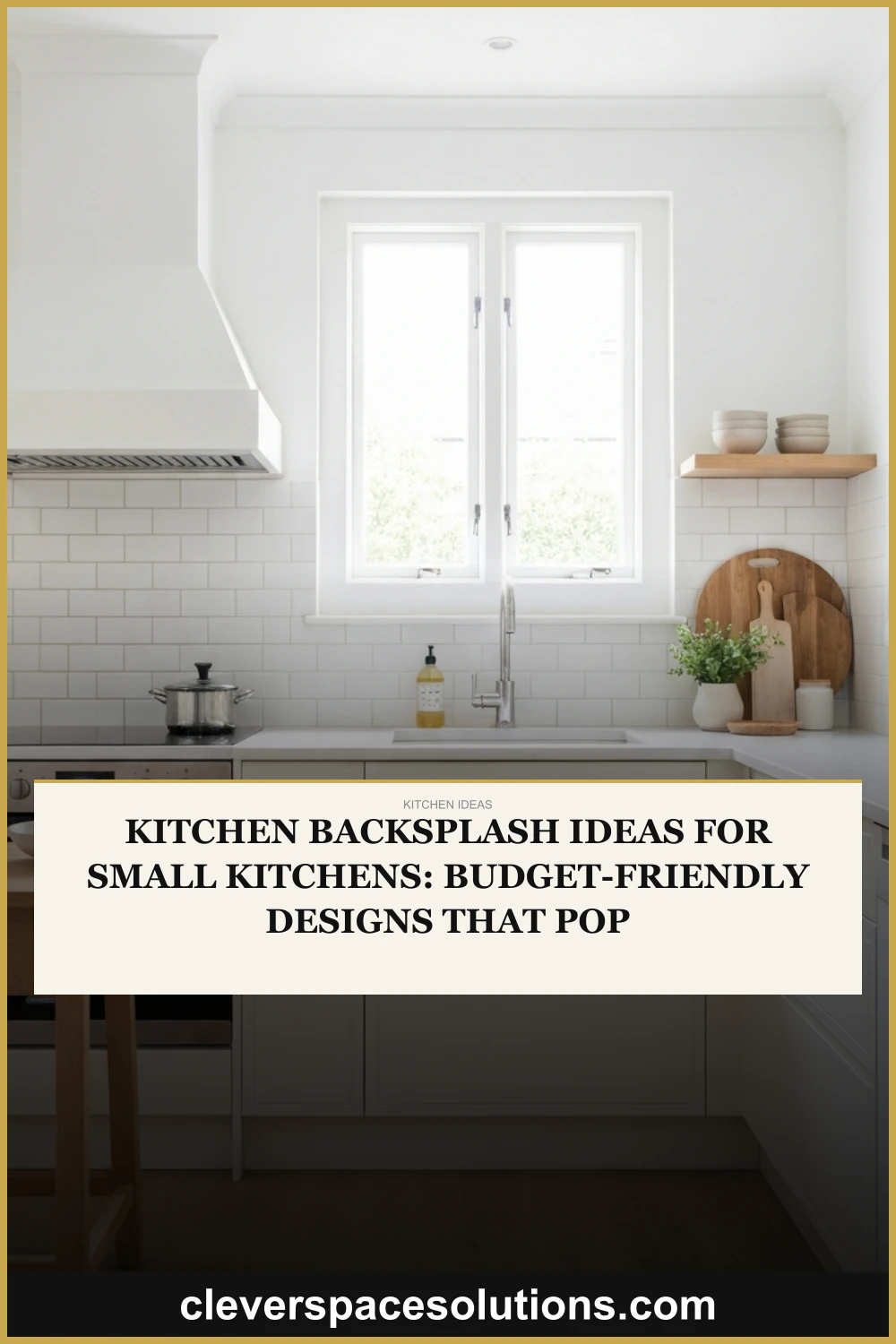
Kitchen Backsplash Ideas for Small Kitchens: Budget-Friendly Designs That Pop
20 min read
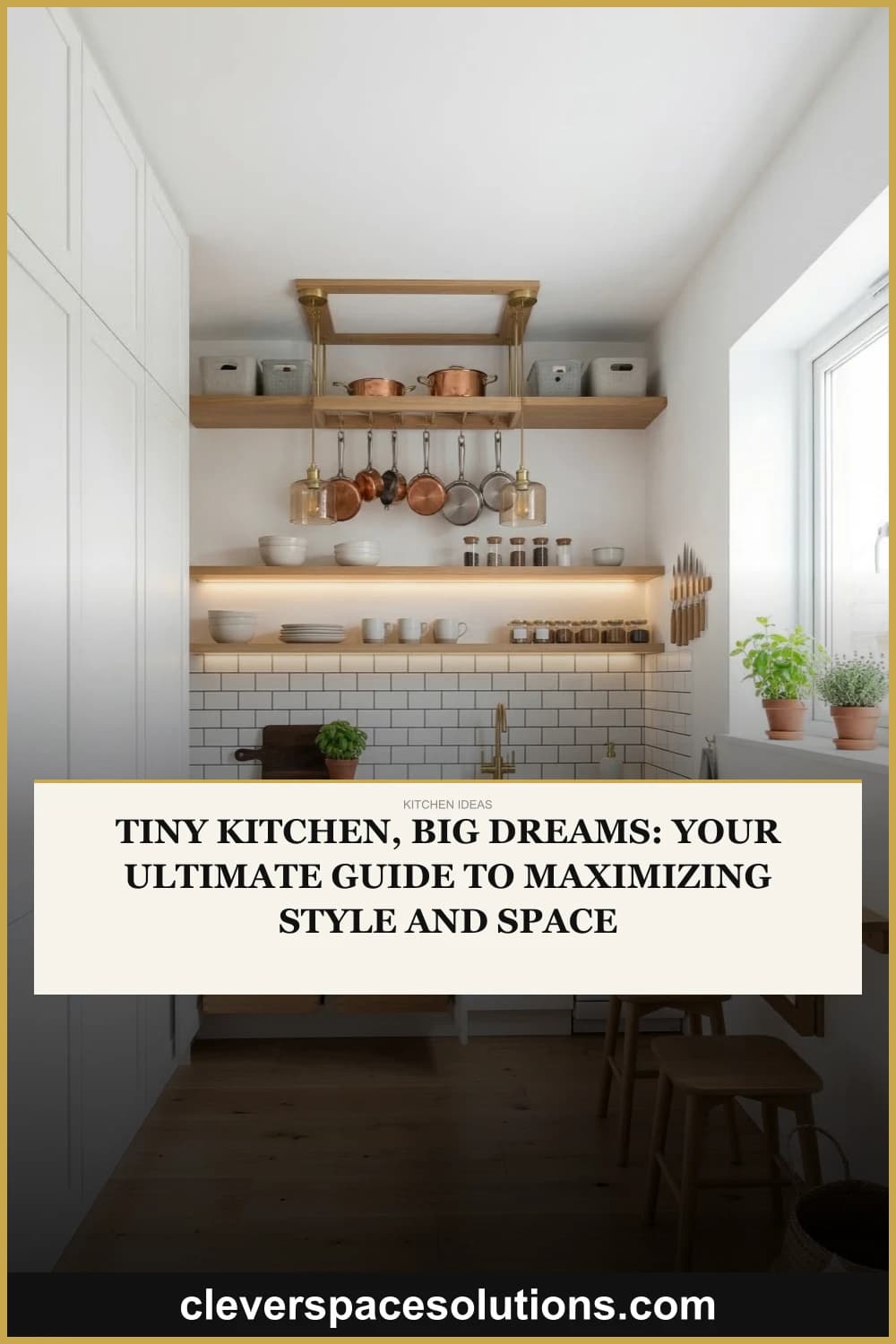
Tiny Kitchen, Big Dreams: Your Ultimate Guide to Maximizing Style and Space
14 min read
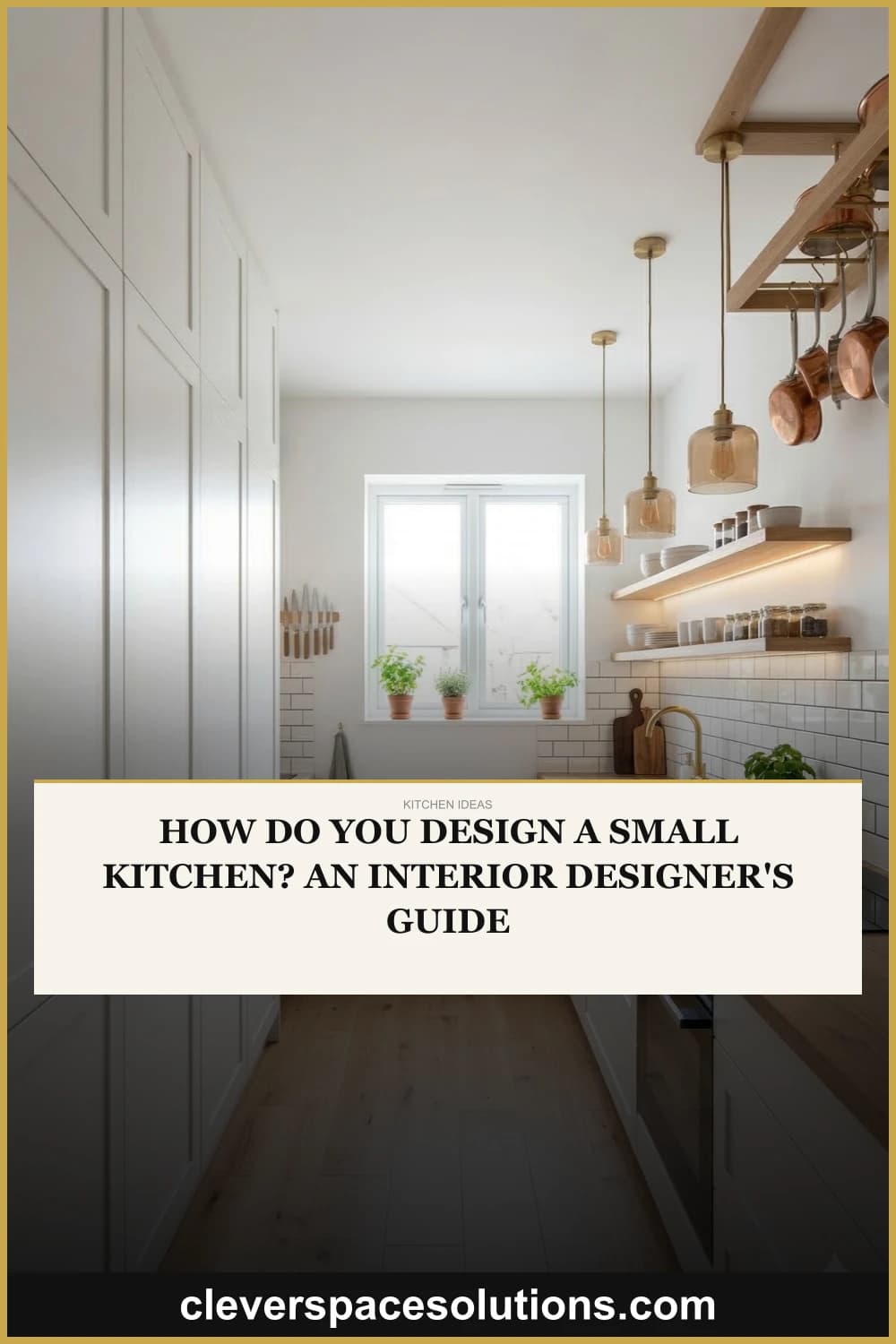
How Do You Design a Small Kitchen? An Interior Designer's Guide
7 min read
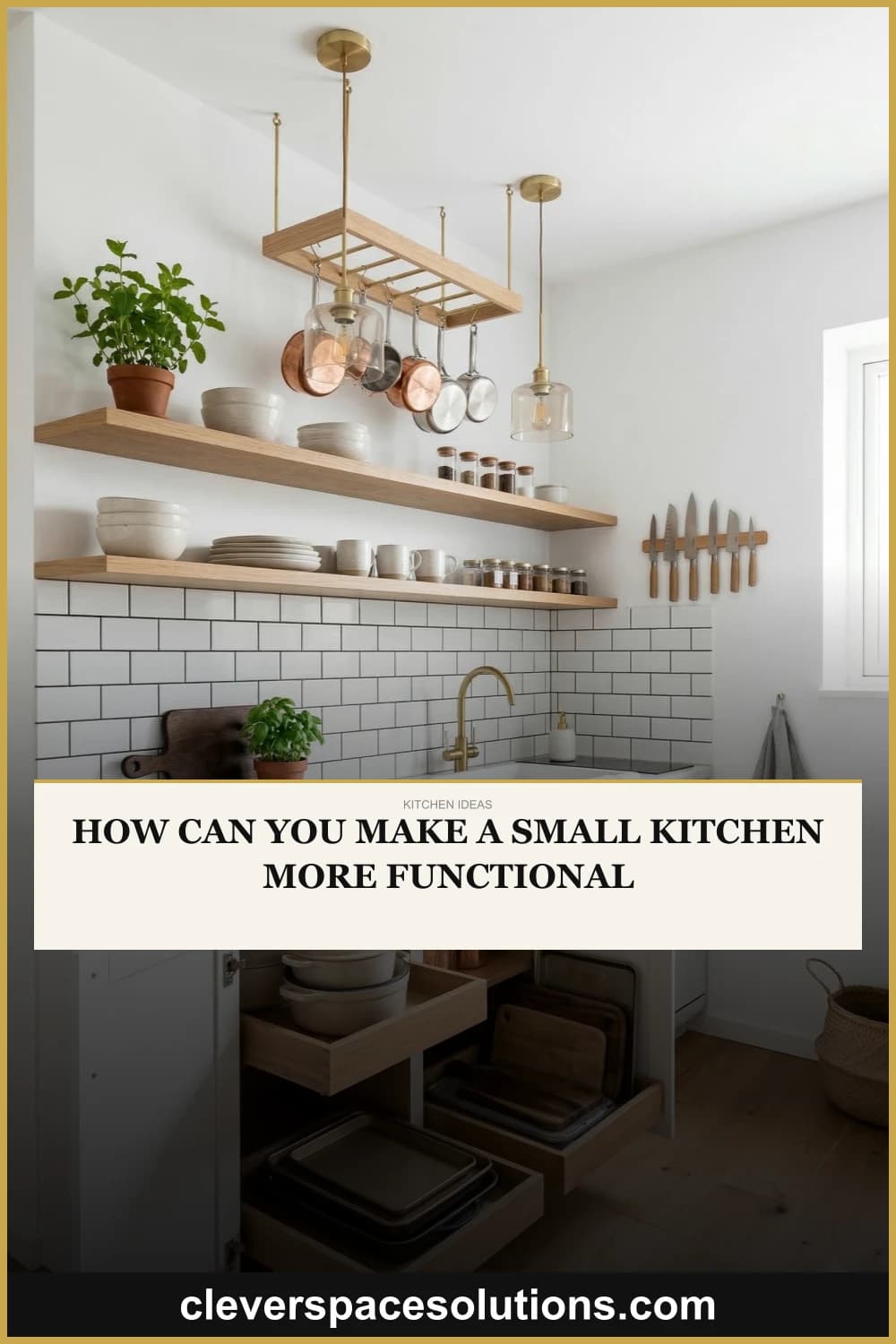
How Can You Make a Small Kitchen More Functional?
17 min read
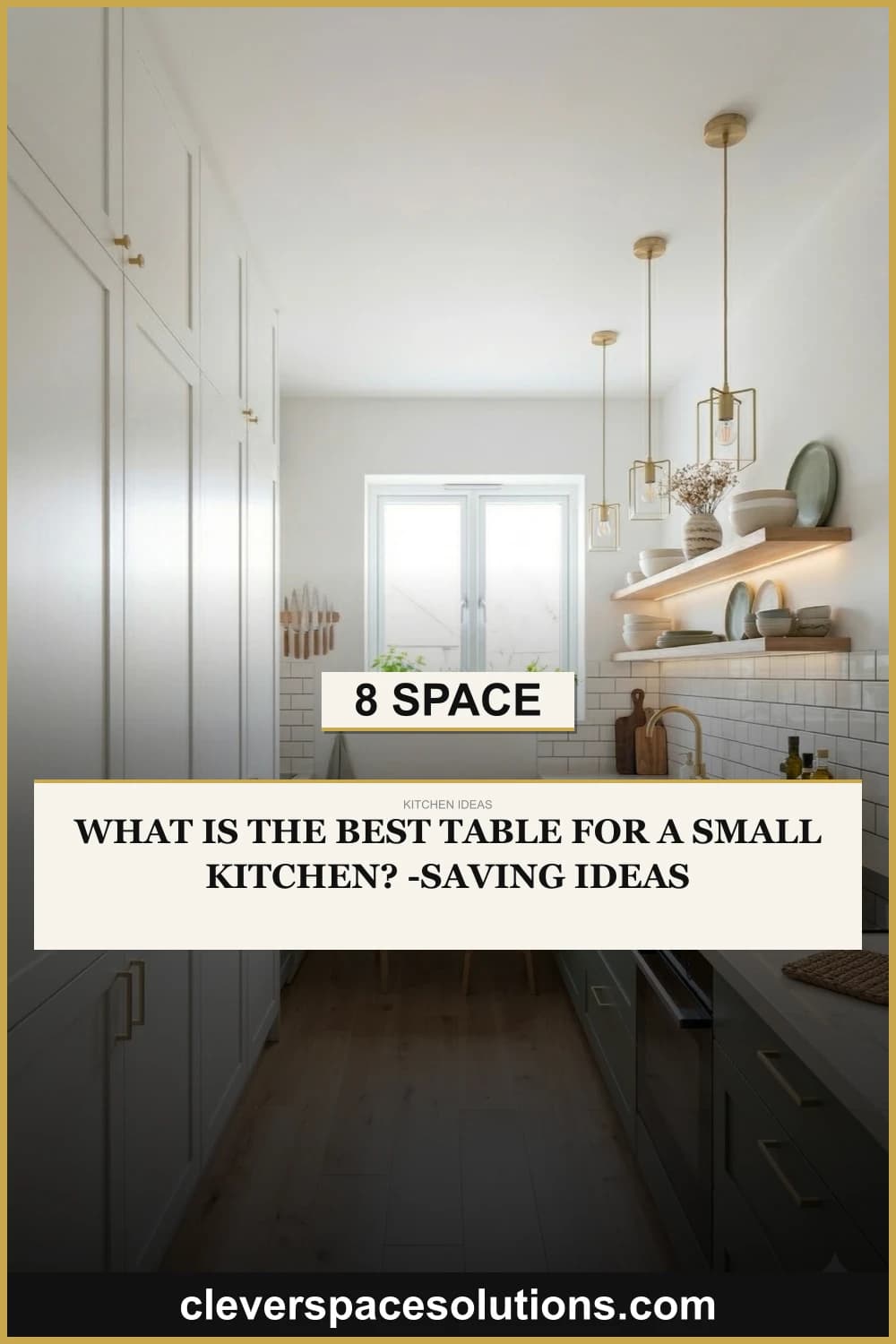
What is the Best Table for a Small Kitchen? 8 Space-Saving Ideas
7 min read
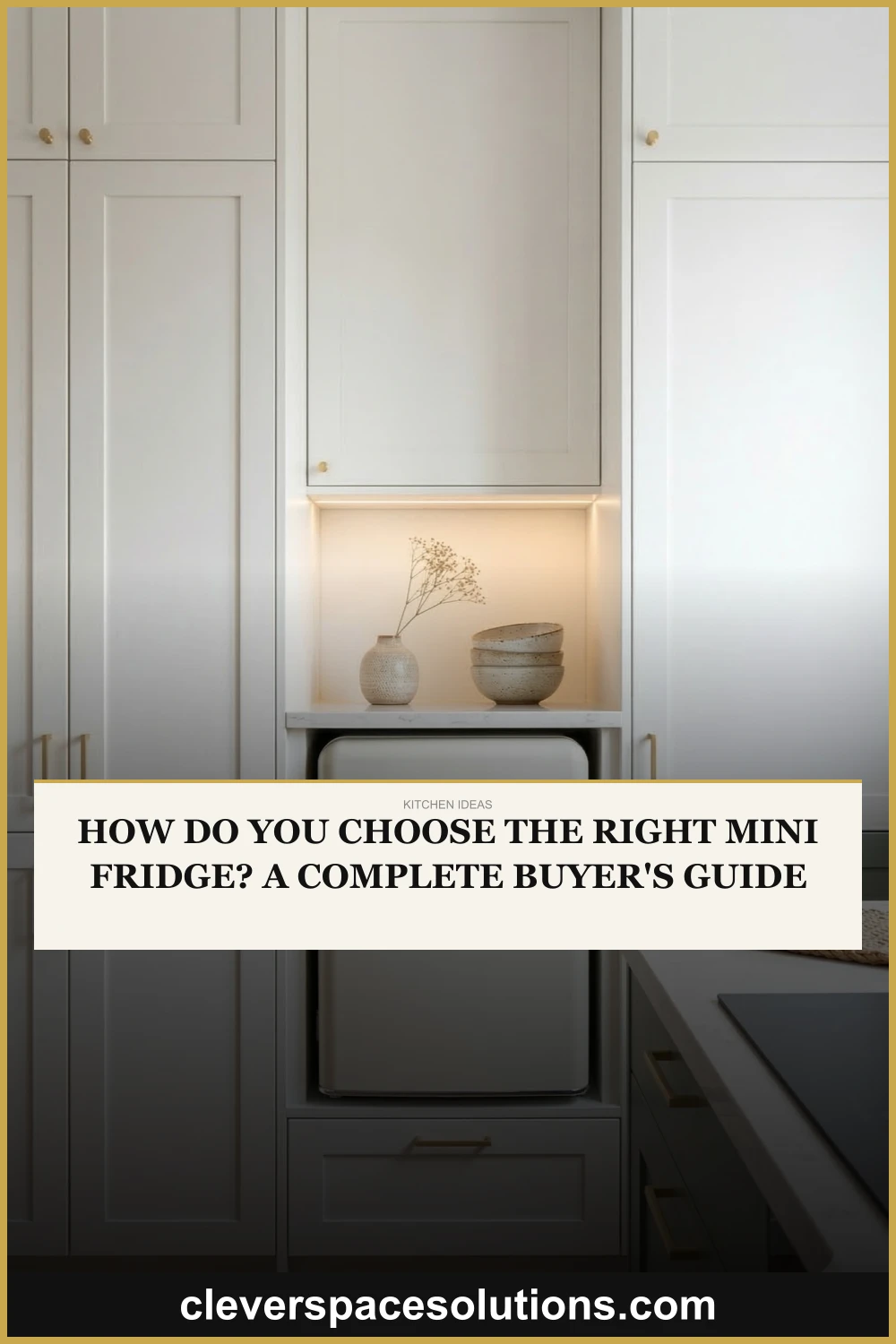
How Do You Choose the Right Mini Fridge? A Complete Buyer's Guide
6 min read
Tags

Written by Joesp H.
Interior Design & Small Space Living Specialist
Former marketing manager turned full-time home optimizer. After living in 7 homes ranging from 450 to 2,000 sq ft, I started CleverSpaceSolutions to help people create organized, functional spaces on real budgets.
Other Articles

How Can You Make a Small Kitchen Look More Stylish? 10 Designer Ideas
Looking for unique ways to improve your small kitchen? This guide answers your questions with 10 designer-inspired ideas, from ceiling racks to clever lighti...
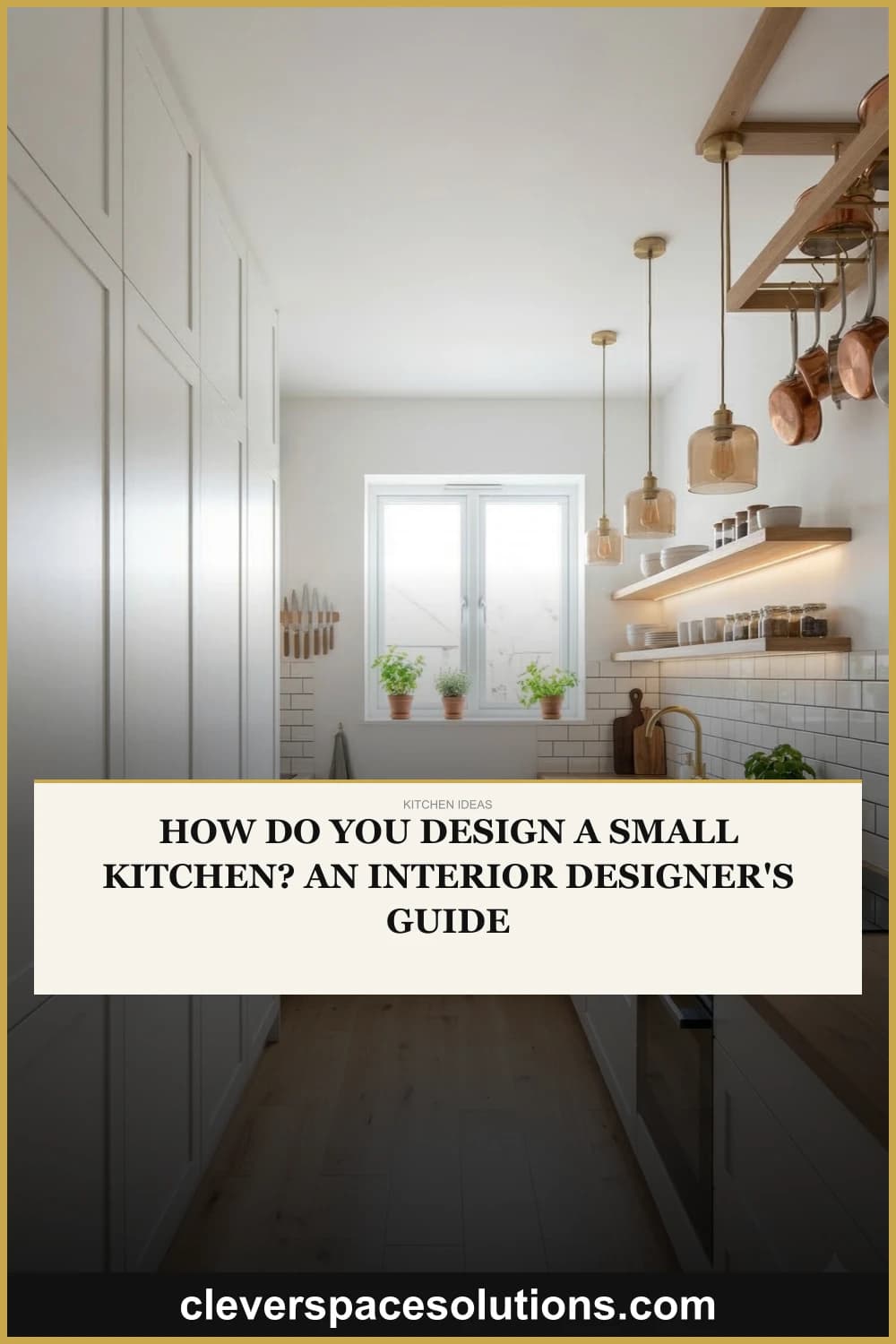
How Do You Design a Small Kitchen? An Interior Designer's Guide
Wondering how to design your small kitchen for maximum style and function? An interior designer shares the most effective methods for color, storage, and lig...
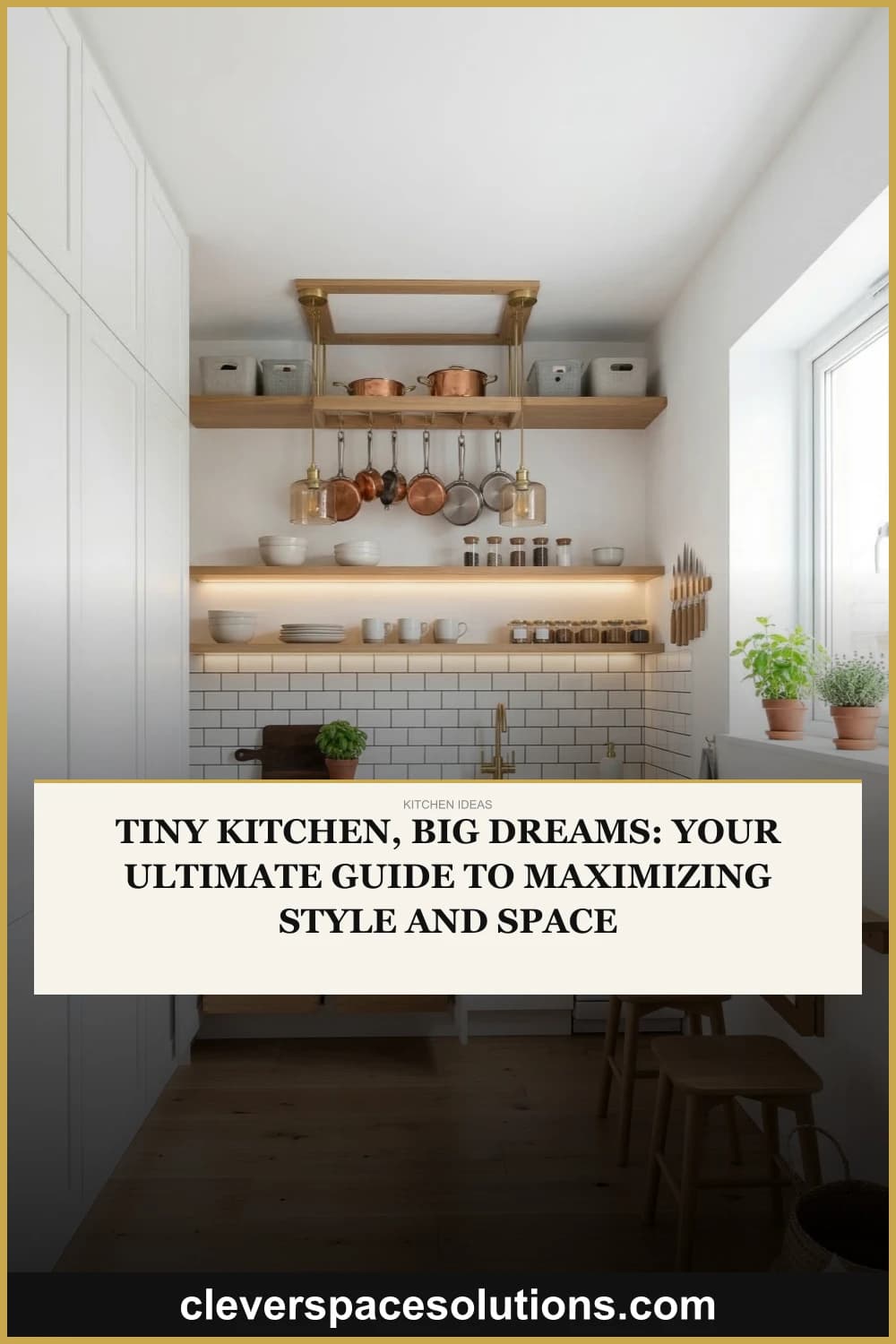
Tiny Kitchen, Big Dreams: Your Ultimate Guide to Maximizing Style and Space
Wondering how to transform your tiny kitchen into a stylish, functional space? This ultimate guide answers your questions, covering everything from smart sto...