How Can You Make a Small Kitchen More Functional?
Wondering how to get more out of your small kitchen? This guide answers your questions with 8 brilliant, space-saving ideas for storage and organization that...
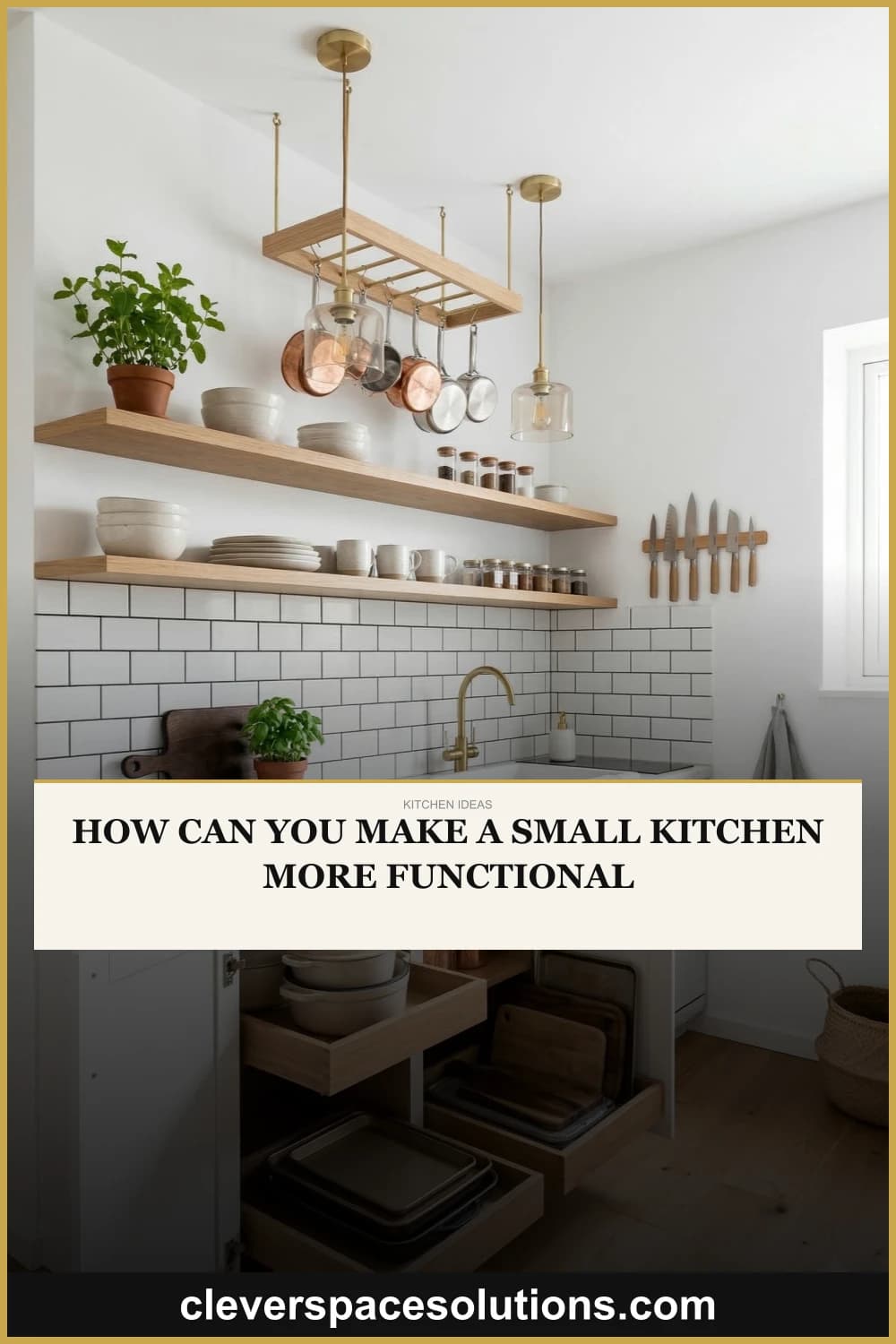
How to Make a Small Kitchen More Functional: 8 Practical Ideas
According to the National Kitchen and Bath Association (NKBA), the average U.S. kitchen is approximately 161 square feet — and for millions of homeowners in apartments and older homes, it's considerably smaller than that. So if your kitchen feels cramped, you're not alone. The good news? You don't need a full renovation to make a small kitchen more functional. A few smart changes to how you use vertical space, cabinet interiors, and countertop real estate can make a dramatic difference.
TL;DR:
- The average U.S. kitchen is ~161 sq ft, but smart storage makes any size work (NKBA).
- The biggest wins come from three zones: cabinets, vertical wall space, and countertops.
- Cabinet shelf inserts, over-door racks, and fold-down tables are among the highest-impact, lowest-cost changes.
- Avoiding five common mistakes — like ignoring door backs and skipping vertical storage — frees up surprising amounts of space.
The 3 Kitchen Zones That Actually Save Space
Before you buy a single organizer, it helps to think in zones. According to a survey by the NKBA, storage is the single most-requested improvement among homeowners remodeling their kitchens — cited by more than two-thirds of respondents. The reason storage feels so tight in small kitchens usually isn't a lack of square footage. It's that most people only use about 60% of available storage space because the other 40% is awkward, hard to reach, or simply overlooked.
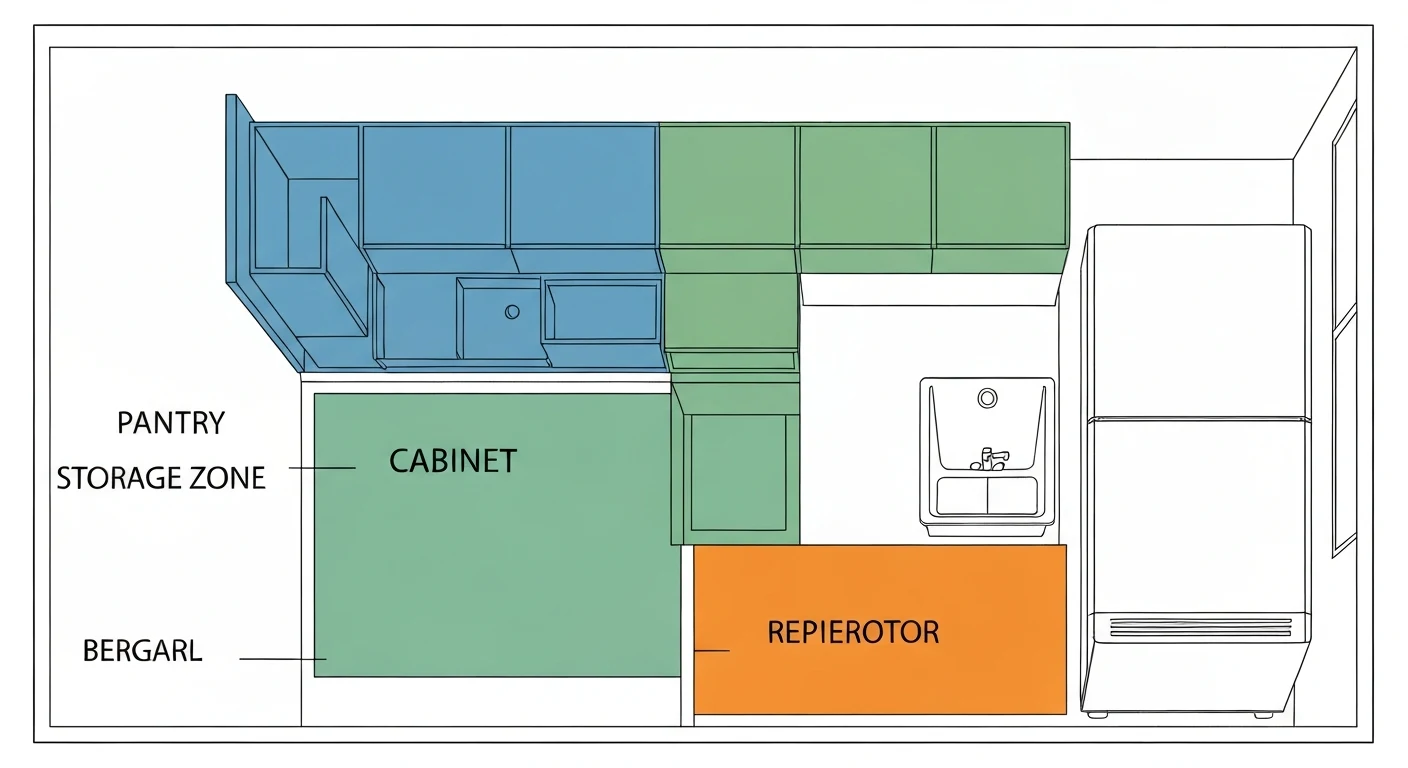
In my experience working through small-kitchen organization projects, there are three zones that consistently deliver the biggest return. Zone 1 is your cabinet interior — the space inside your upper and lower cabinets, most of which goes unused above stacked items. Zone 2 is your vertical wall space, including the area between your upper cabinets and countertop, the sides of cabinets, and any open wall sections. Zone 3 is your countertop layer — not just the flat surface, but the space above it up to eye level.
Once you identify which zones you're underusing, the eight tips below map directly onto them. You'll find that knowing where to focus makes the process much faster than buying random organizers and hoping for the best. For a deeper look at layout decisions, check out our guide to small kitchen design.
1. Use Cabinet Shelf Inserts to Double Your Cabinet Capacity
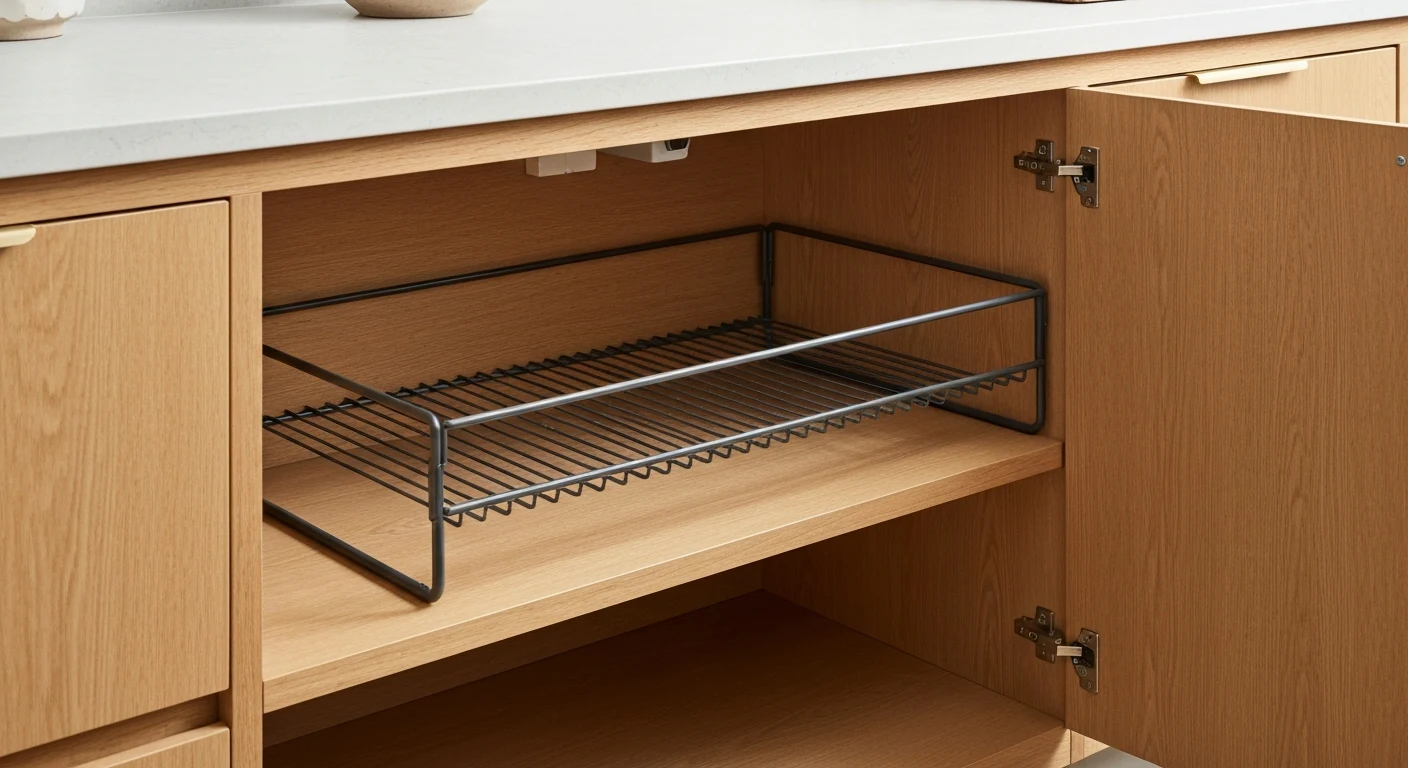
Standard kitchen cabinets are typically 12 inches deep for uppers and 24 inches deep for base cabinets, yet most people stack plates and bowls directly on the shelf and lose half that vertical space to dead air. Cabinet shelf inserts — also called stackable shelf risers — solve this immediately by splitting a single shelf level into two usable tiers.
What you're looking for: a sturdy riser that spans the width of your cabinet without sliding. Wire versions are popular because they let you see what's underneath. Coated metal or bamboo risers feel more premium and are easier to clean. Sizes typically range from 8 to 14 inches wide, so measure your cabinet interior before buying.
Don't stop at plates. Pot lid organizers — vertical racks that hold lids upright like books — are one of the most underrated cabinet inserts on the market. From what I've seen, pot lids are the number-one clutter source in base cabinets, and a simple vertical rack eliminates the avalanche problem entirely. Similarly, pan organizers with adjustable dividers let you store baking sheets and cutting boards vertically rather than stacking them flat.
Common mistake: people buy inserts that are too tall for the shelf gap and end up returning them. Always measure the clear height between shelves before purchasing. Most upper cabinet shelves have 10–14 inches of clearance between them — enough for a standard riser plus a second row of mugs or small bowls.
2. Are You Using the Back of Your Cabinet Doors?
Here's a question worth sitting with: when did you last look at the back of your cabinet doors? That flat surface — typically 10 to 14 inches wide on upper cabinets and up to 18 inches on base cabinet doors — is almost universally wasted. Over-the-door organizers hang on the door frame with hooks or tension clips, requiring zero drilling and zero permanent commitment.
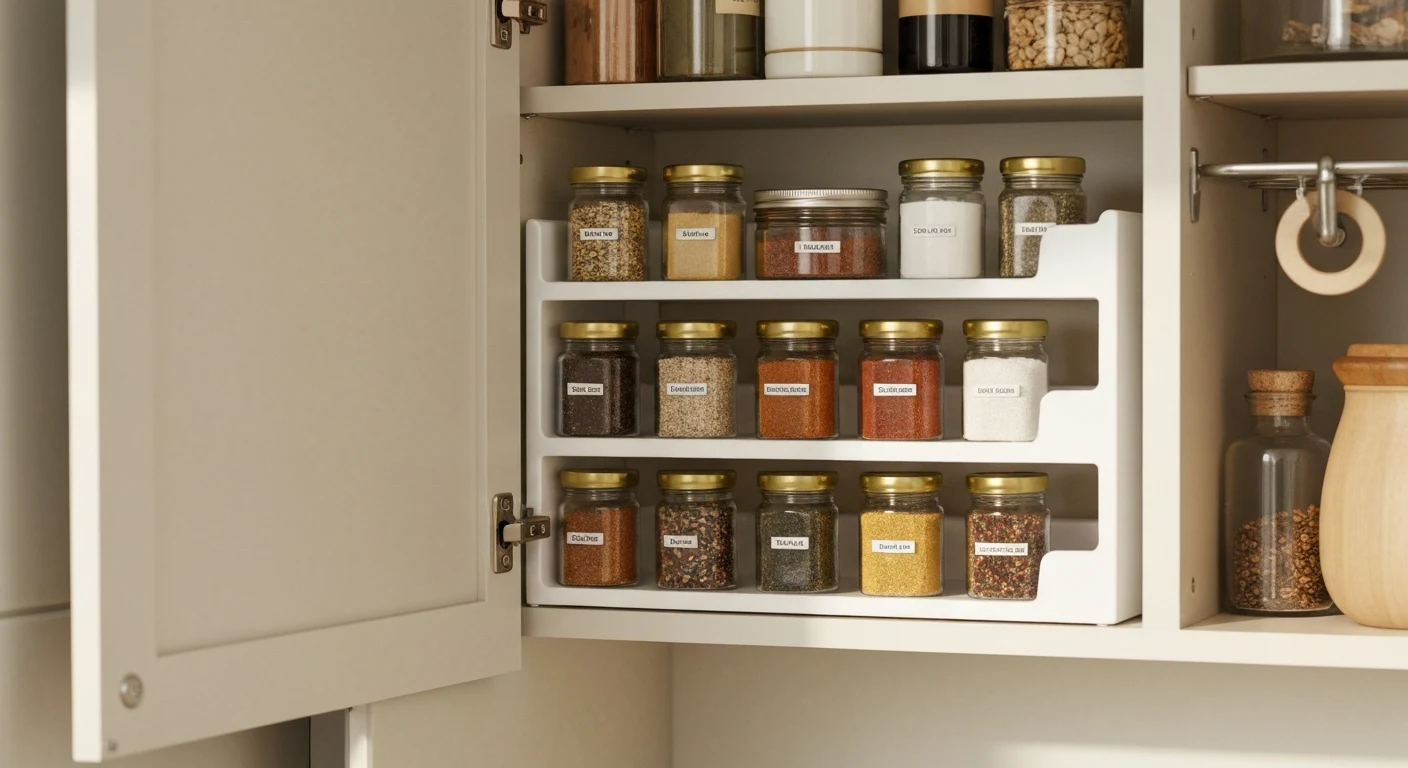
The best candidates for over-door storage are spices, small jars, foil boxes, and cleaning supplies. A shallow two-tier over-door spice rack on the inside of your pantry or base cabinet door can hold 12 to 20 spice jars that would otherwise eat up an entire shelf. On upper cabinet doors, a narrow clear-pocket organizer works well for flat items like seed packets, recipe cards, or snack bars.
What to look for when buying: check the door thickness rating. Most over-door organizers fit doors up to 1 inch thick, but some cabinet frames are thicker — measure yours before ordering. Also confirm the organizer won't hit the shelf inside when the door closes. This is the most common installation frustration, and it's easily avoided by measuring the depth of your cabinet's interior shelf edge.
I've found that the back of the sink base cabinet door is an especially good spot for a slim over-door holder for dish soap, scrub brushes, and rubber gloves — items that otherwise clutter the area under the sink.
3. How Do You Make a Small Kitchen Countertop Work Harder?
Countertop space is prime real estate in a small kitchen, which is exactly why leaving it flat and single-layered is such a waste. A well-organized countertop doesn't mean a bare countertop — it means a layered one, where vertical space above the surface is put to work.
A two- or three-tier countertop shelf unit — sometimes called a counter organizer or prep station riser — lets you store items at eye level while keeping the counter surface below accessible. These typically stand 10 to 15 inches tall and 18 to 24 inches wide, which is enough to hold a coffee station on top and keep mugs and supplies below without taking more horizontal space than a standard appliance.
The wall above the countertop is equally important. A single floating shelf mounted 18 inches above the countertop (following standard clearance guidelines) gives you a dedicated home for frequently used oils, vinegars, and small appliances without consuming any counter surface at all. Pair it with a mounted magnetic knife strip and you've reclaimed even more drawer and block space.
Common mistake: overloading the countertop with appliances that only get used once a month. Toaster ovens, stand mixers, and blenders that aren't used daily should be stored in a cabinet or pantry. This one habit shift alone frees up more usable counter space than most organizers can provide. Looking at more ideas? Our roundup of tiny kitchen design ideas covers countertop configurations in much more depth.
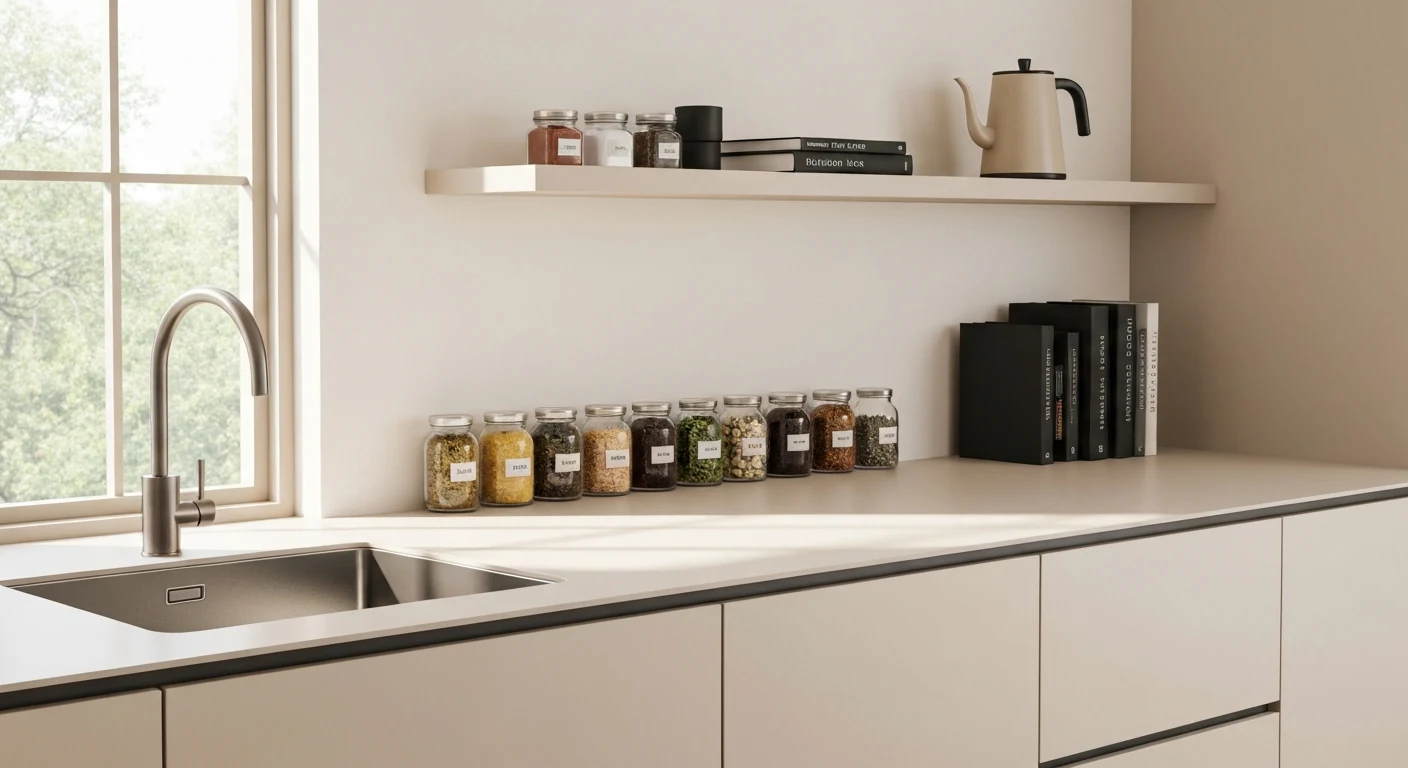
4. Build a Mini-Cabinet with Shelves Between Your Cabinets and Countertop
The gap between the bottom of your upper cabinets and the surface of your countertop is typically 18 inches — a measurement set by building codes to allow comfortable workspace. Most people use this space for nothing. But it's the perfect location for a shallow mini-cabinet or a row of open shelves that function as an always-visible spice and condiment station.
You have two main options here. The first is a pre-built wall-mount spice cabinet — typically 3 to 4 inches deep and 18 to 24 inches wide — that screws directly into the wall studs. This gives you a flush, enclosed storage unit that doesn't disturb the look of the kitchen. The second option is floating shelves: 4-inch to 6-inch deep shelves mounted directly below the upper cabinet line, creating two or three rows of accessible storage without requiring cabinetry at all.
If you're a renter and can't drill into walls, tension rod shelf systems and adhesive-mount options exist, though they have lower weight limits — typically 10 to 15 pounds per shelf. Stick to lighter items like spice jars, small bottles, and boxed items in those cases.
What makes this tip especially effective is visibility. Spices and sauces you can see are spices and sauces you'll actually use, which cuts down on buying duplicates and reduces waste. It's a small organizational win that saves money over time.
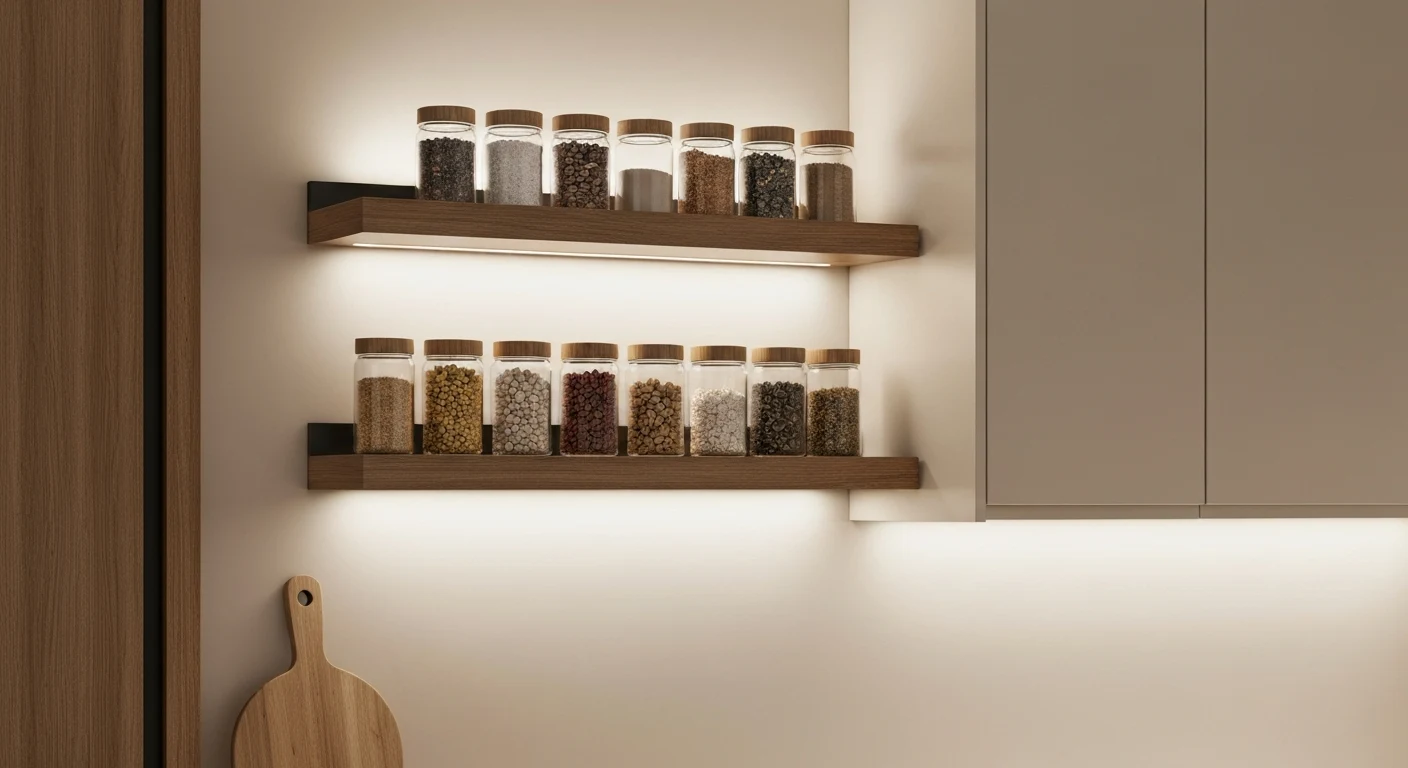
5. Mount Shelves on Open Wall Space to Extend Your Storage
Not every wall in a small kitchen is covered by cabinets — and those uncovered sections are storage potential that too many people treat as decoration-only zones. Open wall shelving in kitchens has grown significantly in popularity, and for good reason: it's customizable, relatively inexpensive, and it makes the room feel larger than closed cabinets by preserving sightlines.
The key measurement to keep in mind: kitchen wall shelves should be no deeper than 10 to 12 inches. Go deeper than that and you'll block natural light and make the kitchen feel boxed in. Standard upper cabinet depth is 12 inches, so matching that keeps things visually consistent. Float them at the height where your cabinets end and the wall continues — this creates a seamless line that looks intentional rather than improvised.
Bracket choice matters more than most people realize. For a wall with no studs in the right place, toggle bolt anchors rated for 50+ pounds are the safer option. For stud-mounted shelves, a standard bracket with two 2.5-inch screws into a stud will hold far more than you'll ever put on a kitchen shelf. Floating shelf hardware — where the bracket is concealed inside the shelf itself — gives the cleanest look but requires precise stud location.
From what I've seen, the most effective placement is beside (not above) the refrigerator, where there's almost always 6 to 12 inches of blank wall that could hold a small three-shelf unit for frequently grabbed items.
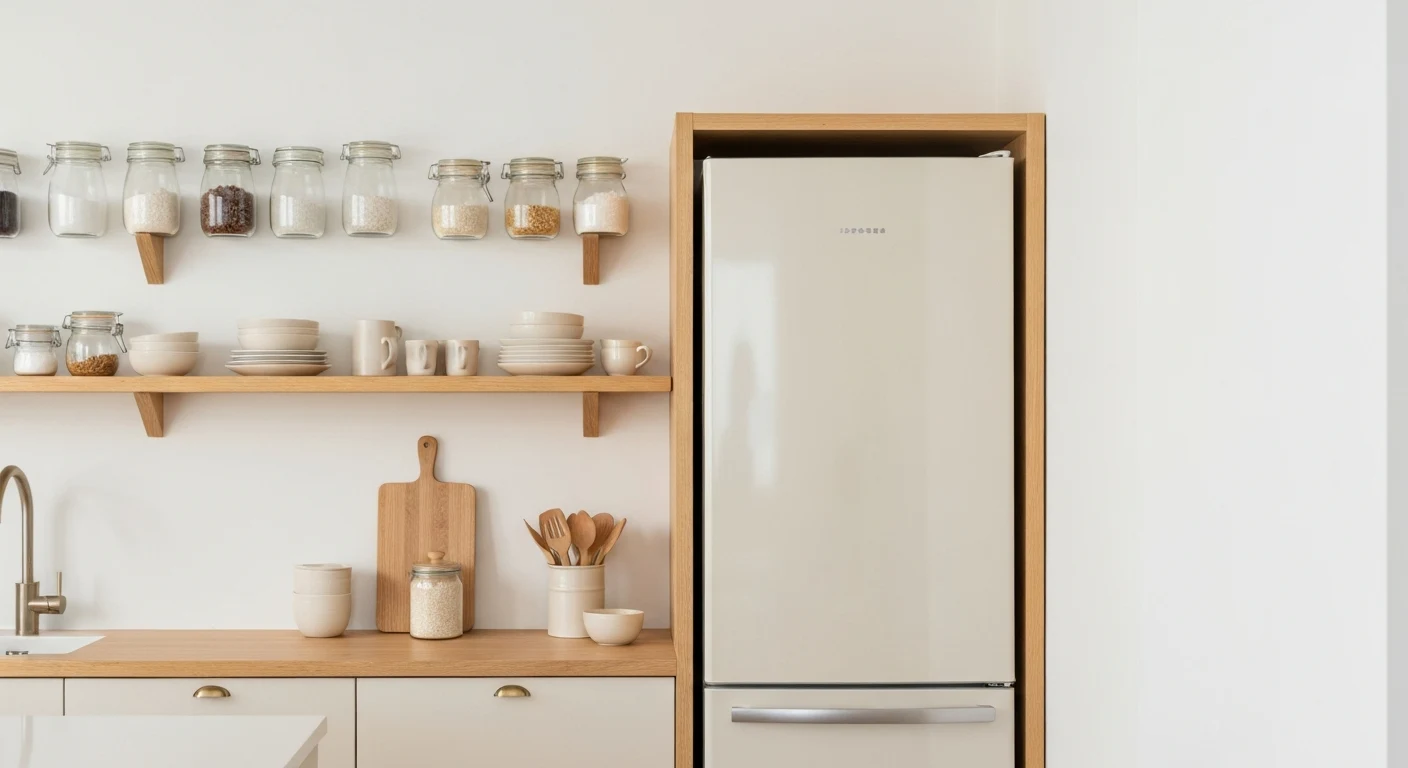
6. Turn a Wall Nook or Recessed Space into a Small Pantry
Older homes and apartments often have quirks in their kitchen walls — a recessed nook where a previous appliance sat, an awkward alcove beside a doorway, or a shallow space between two structural elements. These spots look like design problems. They're actually storage gifts.
A recessed wall space as shallow as 3.5 inches (the depth between drywall studs) is enough for single-file spice storage. Have a shelf unit custom-cut to fit — most home improvement stores will cut lumber to size for a small fee — and you've created a built-in-looking pantry without touching any load-bearing structure. Paint the interior the same color as the wall and it looks intentional and finished.
Deeper nooks — 6 to 12 inches — can hold canned goods, cereal boxes, and even small appliances. Add a tension rod across the opening and a curtain panel, and you have a pantry that looks like it was designed that way from the start. For renters, this is one of the few zero-damage modifications that can genuinely transform a kitchen's functionality.
Don't overlook the space at the end of a kitchen run, either. The side wall where cabinets terminate and open wall begins is often where people hang a clock or a piece of art. A shallow shelf unit there — even 6 to 8 inches deep — can hold a meaningful amount of kitchen storage without feeling like it's closing the space in.
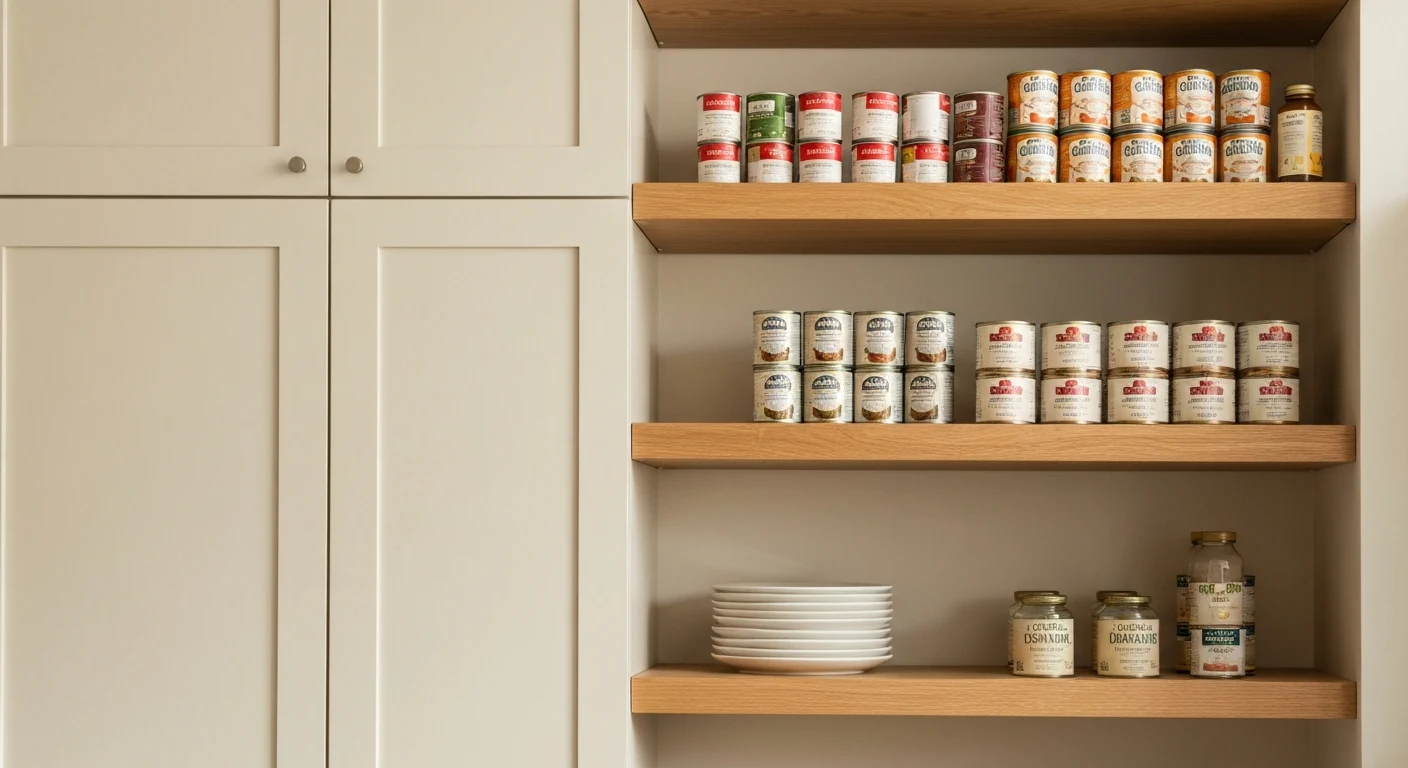
7. Creative Organizational Tools That Most People Overlook
Sometimes the most effective storage solutions aren't purpose-built kitchen products at all. File holders, magazine racks, tension rods, and pegboards all cross over into kitchen use remarkably well — and they tend to be cheaper than dedicated kitchen organizers because they're sold in higher volumes for office and general home use.
A mounted file holder on the inside of a cabinet door holds plastic wrap, parchment paper, aluminum foil, and wax paper boxes vertically, which is exactly how they should be stored to prevent tearing. You can mount two or three side by side across a base cabinet door and eliminate an entire drawer's worth of clutter.
Tension rods — the same spring-loaded rods used for shower curtains — installed vertically inside a base cabinet create dividers for baking sheets, cutting boards, and muffin tins. No drilling required. Standard tension rods sized to your cabinet height (typically 21 to 24 inches for base cabinets) hold the dividers securely with just spring pressure.
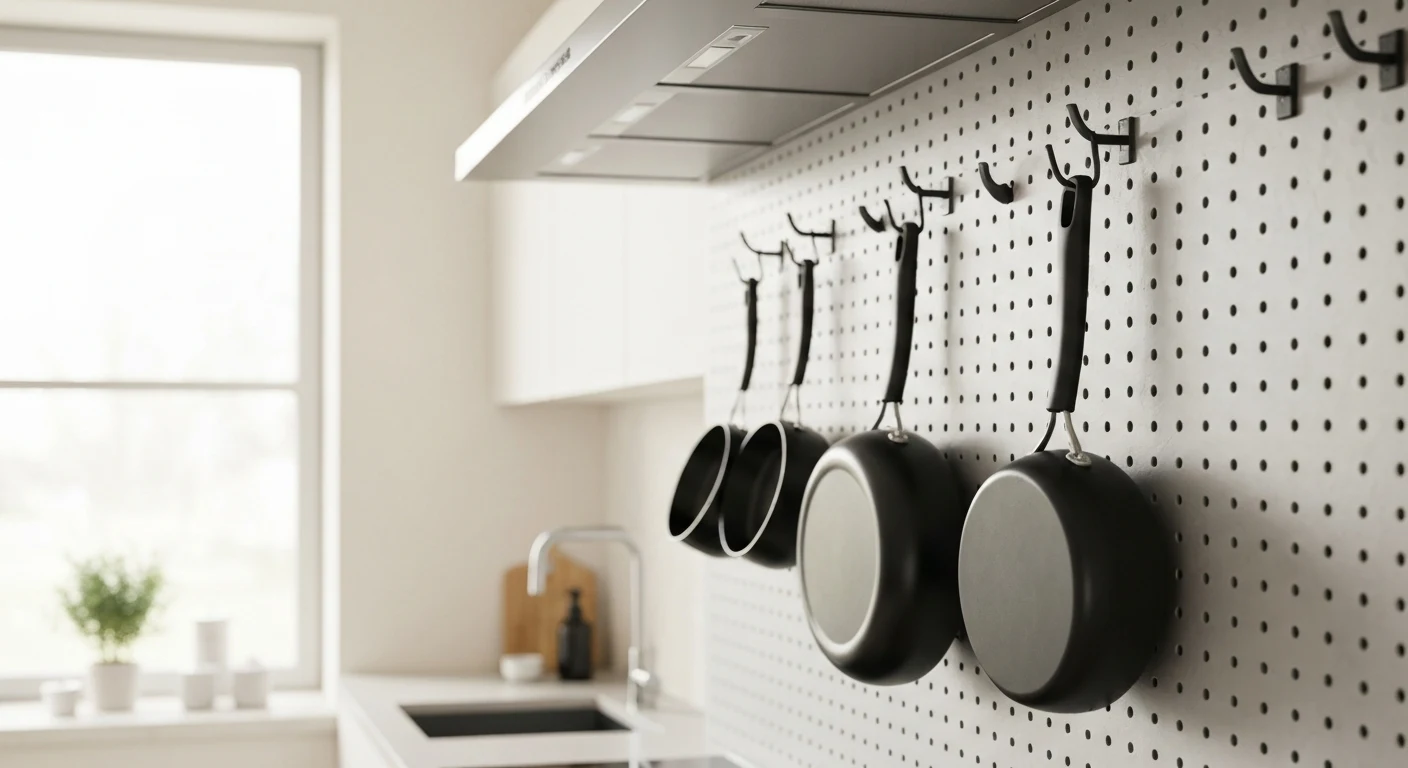
A pegboard mounted on one wall — even a small 2-by-3-foot section — gives you a completely reconfigurable storage surface for pots, pans, utensils, and small baskets. The ability to move hooks and shelves without tools makes a pegboard one of the most adaptable storage systems in a small kitchen. It's particularly useful in rental situations where permanent cabinet modifications aren't an option.
8. Choose a Space-Saving Table That Works With Your Kitchen
A dedicated eating spot in a small kitchen isn't a luxury — it's a functional need that prevents people from piling things on the counter "just for a moment" during meals. The challenge is fitting a table without blocking the work triangle or making the room feel claustrophobic. The solution isn't a smaller table. It's a smarter one.
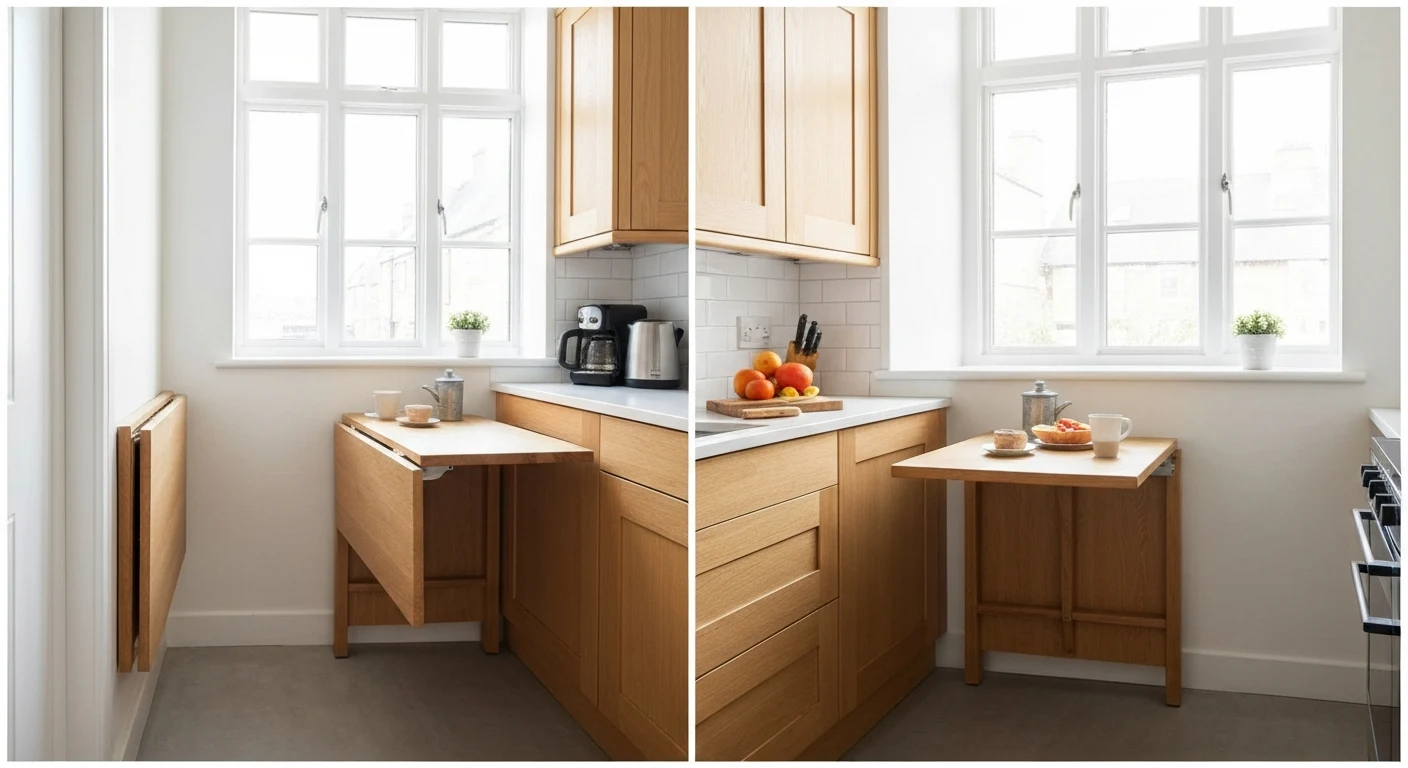
Wall-mounted fold-down tables — often called Murphy tables or drop-leaf wall tables — are the most space-efficient option available. When folded up, most take up only 3 to 5 inches of wall depth. Folded down, they provide a surface of 24 by 36 inches on average, which is enough for two people to eat comfortably. They mount to wall studs and support 50 to 100 pounds in most designs, more than enough for meals and light kitchen prep.
If you prefer a freestanding option, look for a narrow drop-leaf table on casters. The leaf system lets you expand from 12 to 36 inches in width as needed, and the casters let you roll it out of the work area when you're cooking. Bar-height versions on casters double as an island during prep and a dining spot afterward — genuinely doing two jobs in the footprint of one piece of furniture.
For a full breakdown of sizing and style options, see our guide to choosing the best table for a small kitchen before you buy. Getting the dimensions right before purchase saves a lot of frustrating returns.
5 Small Kitchen Mistakes That Waste Space
Knowing how to make a small kitchen more functional is only half the picture. The other half is knowing what not to do — because several common habits actively shrink your usable storage even when you think you're organizing.
Mistake 1: Stacking instead of sorting. Stacking plates six high sounds efficient, but it means the bottom four plates are essentially inaccessible. A shelf riser or plate organizer that holds plates at a slight angle makes every plate reachable with one hand.
Mistake 2: Storing rarely used items in prime locations. The eye-level shelf in your upper cabinets is the most accessible storage in your kitchen. If it's holding your holiday platters, you're wasting it. Move daily-use items to eye level and push seasonal items to the top shelf or a higher cabinet.
Mistake 3: Ignoring the vertical dimension entirely. Most people think horizontally about kitchen storage — more shelf space, more counter space. But vertical is where the real gains are: wall-mounted rails, pegboards, over-door racks, and tall cabinet inserts all add meaningful storage without expanding the footprint.
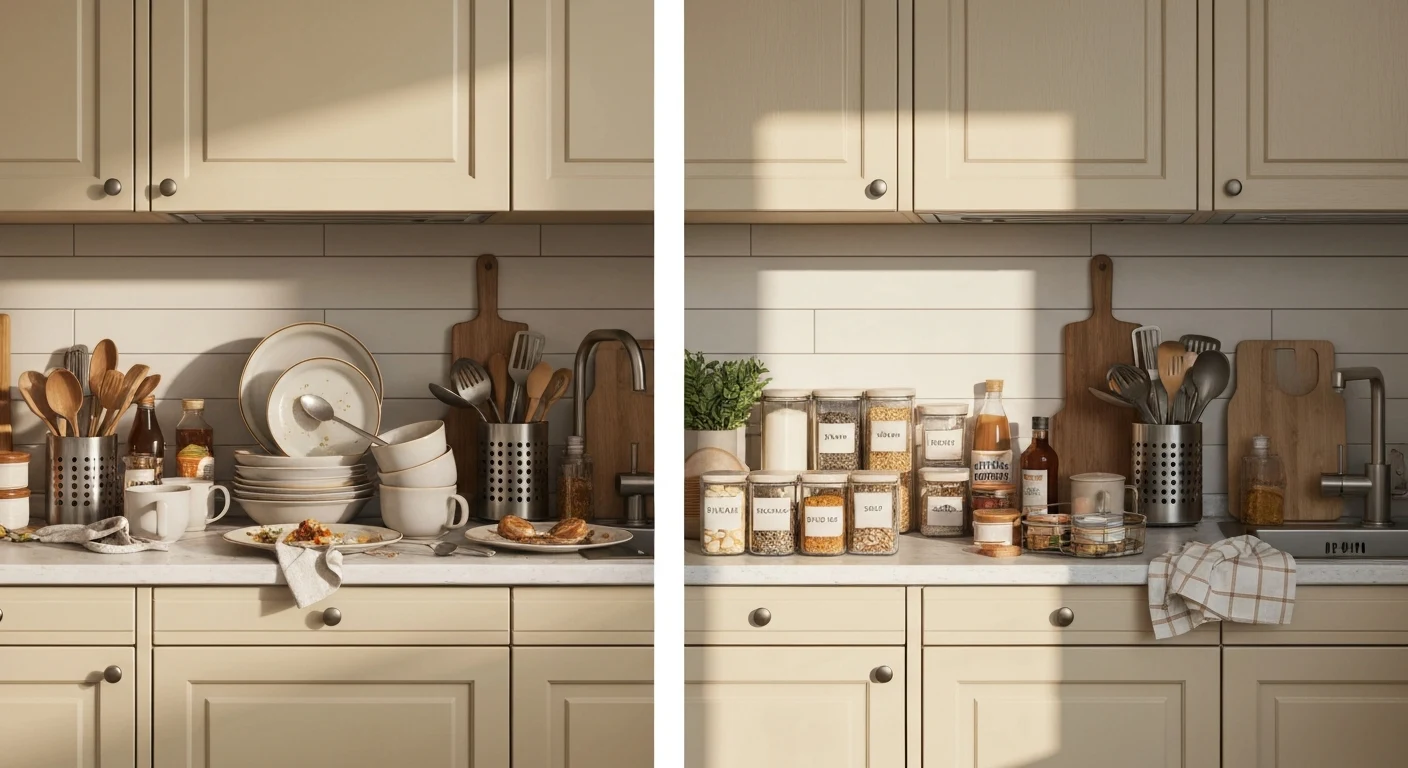
Mistake 4: Letting the counter become a parking lot. Counters attract clutter faster than any other surface in the home. A dedicated landing zone — a small tray or basket where "counter orphans" get collected once a week — keeps the surface clear and makes the kitchen feel twice as large.
Mistake 5: Buying organizers before measuring. This one costs people real money. Cabinet interior dimensions vary widely by manufacturer. Before buying any insert, riser, or rack, measure the clear height, width, and depth of the target cabinet and write the numbers down. A 30-second step that prevents a 30-minute return trip.
Frequently Asked Questions
How do you make a small kitchen more functional without renovating?
The biggest gains come from three areas: cabinet interiors, vertical wall space, and smarter countertop use. Shelf inserts and over-door organizers work within existing cabinets. Floating shelves and pegboards add vertical storage without structural changes. According to the NKBA, most homeowners can reclaim significant functional space through organization alone, before any renovation is needed.
What is the most common small kitchen storage problem?
Unused vertical space is the single most common missed opportunity in small kitchens. Most people fill cabinets horizontally and never think about the air above stacked items or the blank wall above the countertop. Addressing vertical space — with shelf risers, wall rails, and over-door organizers — typically yields more storage than buying a new cabinet would.
How deep should kitchen floating shelves be?
For kitchen walls, 10 to 12 inches is the recommended depth for floating shelves. This matches the depth of standard upper cabinets and keeps shelves from blocking natural light or making the space feel closed in. Shallower shelves of 4 to 6 inches work well in the narrow gap between upper cabinets and the countertop for spice and small-bottle storage.
Are fold-down wall tables sturdy enough for everyday use?
Yes, when properly mounted into wall studs. Most commercially available fold-down wall tables are rated to hold 50 to 100 pounds, which is well above what's needed for everyday meals and light prep work. The key is stud mounting — drywall anchors alone aren't sufficient for a table under load. Always locate studs before installation, or consult a handyperson if you're unsure.
What's the easiest first step to organize a small kitchen?
Start with a full cabinet clear-out. Remove everything, group like items together, and identify what you use daily versus what you rarely touch. This single step reveals how much prime storage space is occupied by infrequently used items. Once you know what you actually need at hand, you can choose the right organizers rather than guessing. It takes about an hour and costs nothing.
Key Takeaways
Making a small kitchen more functional doesn't require a bigger kitchen — it requires using the space you already have more deliberately. The three zones that matter most are cabinet interiors, vertical wall surfaces, and the layered countertop. Addressing all three, even with modest low-cost organizers, can transform how a small kitchen feels and works on a daily basis.
Start with the highest-impact changes first: cabinet shelf inserts and over-door organizers give you immediate results with no tools and no permanent commitment. Then layer in wall-mounted shelves, pegboards, and a space-saving table as your budget and comfort level allow. And if you want to think bigger about layout and flow, our guide to small kitchen design is the logical next step.
The goal isn't a perfect kitchen. It's a kitchen where you spend less time frustrated and more time actually cooking.
More from Small Kitchen
Design, decor, and function for small and tiny kitchens.
How Can You Make a Small Kitchen Look More Stylish? 10 Designer Ideas
Looking for unique ways to improve your small kitchen? This guide answers your questions with 10 designer-inspired ideas, from ceiling racks to clever lighti...
Kitchen Backsplash Ideas for Small Kitchens: Budget-Friendly Designs That Pop
20 min read
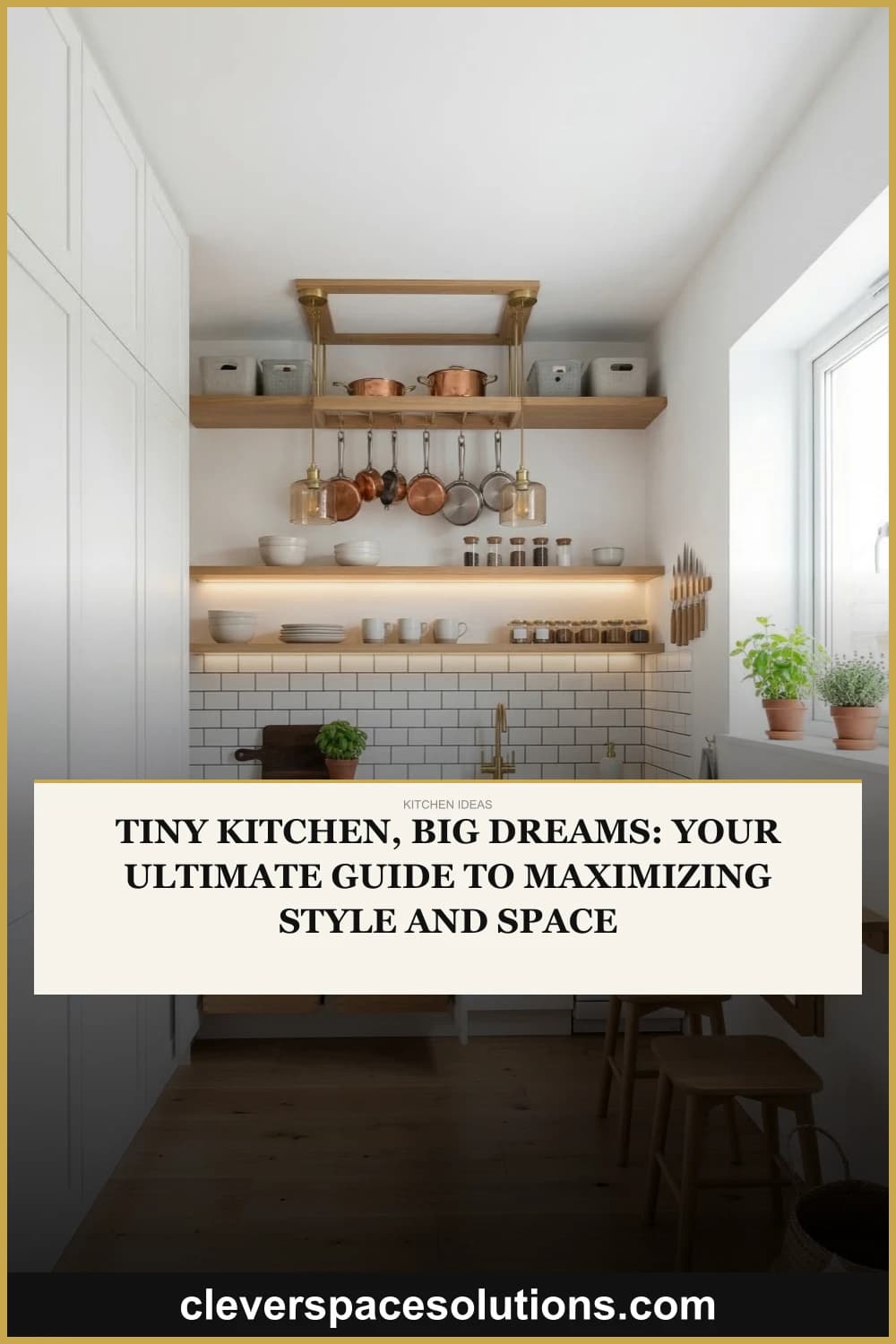
Tiny Kitchen, Big Dreams: Your Ultimate Guide to Maximizing Style and Space
14 min read

How Do You Design a Small Kitchen? An Interior Designer's Guide
7 min read
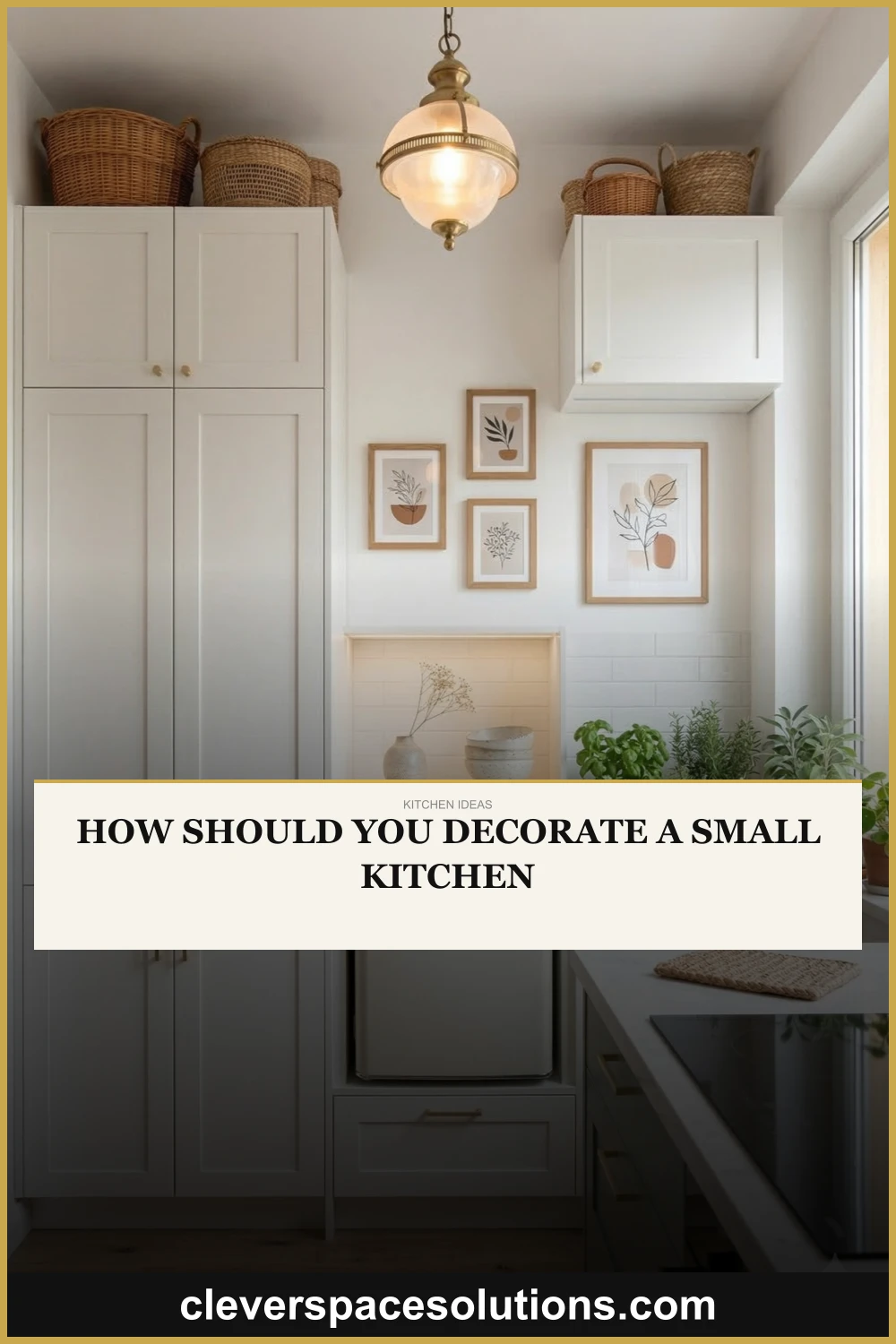
How Should You Decorate a Small Kitchen?
17 min read
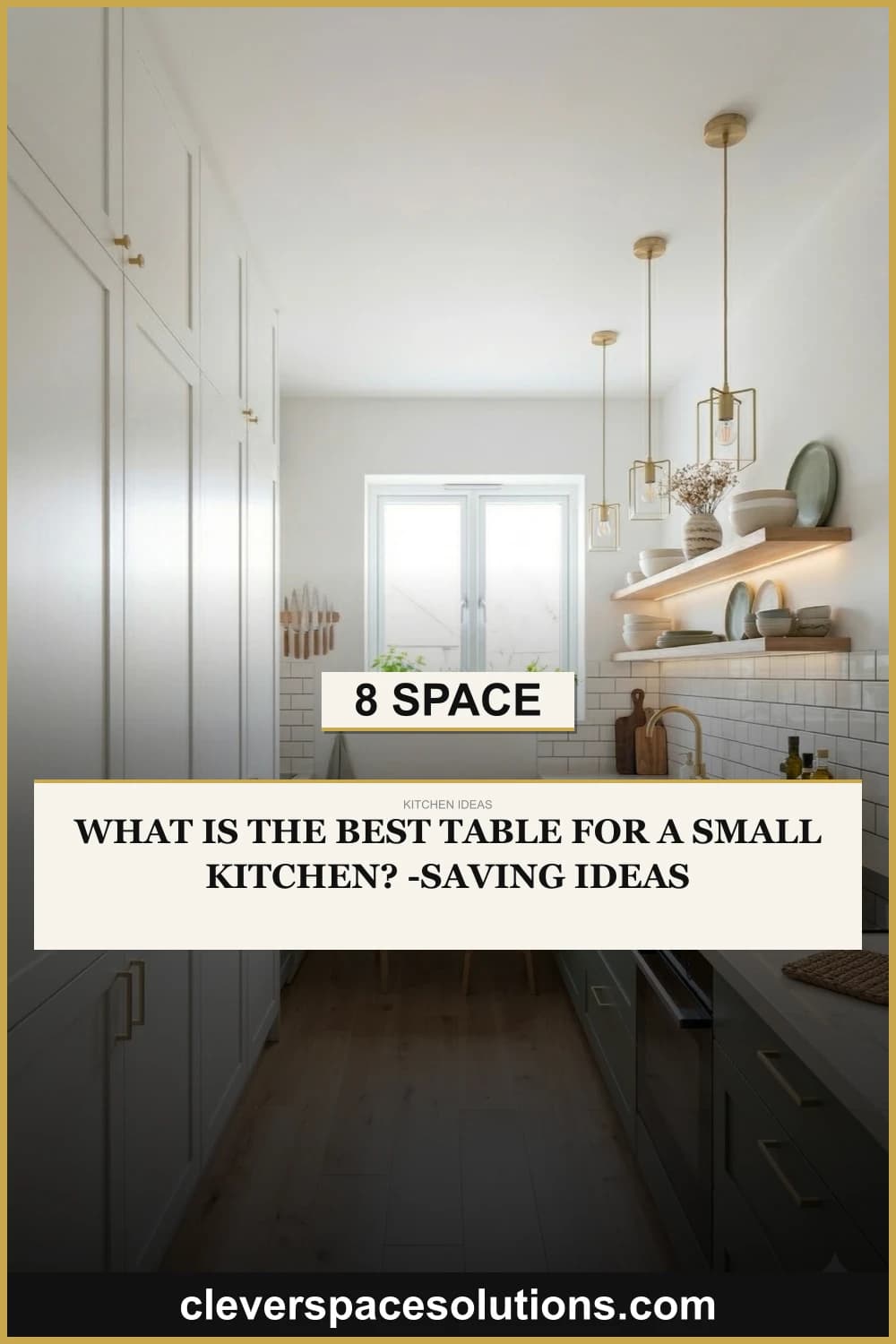
What is the Best Table for a Small Kitchen? 8 Space-Saving Ideas
7 min read
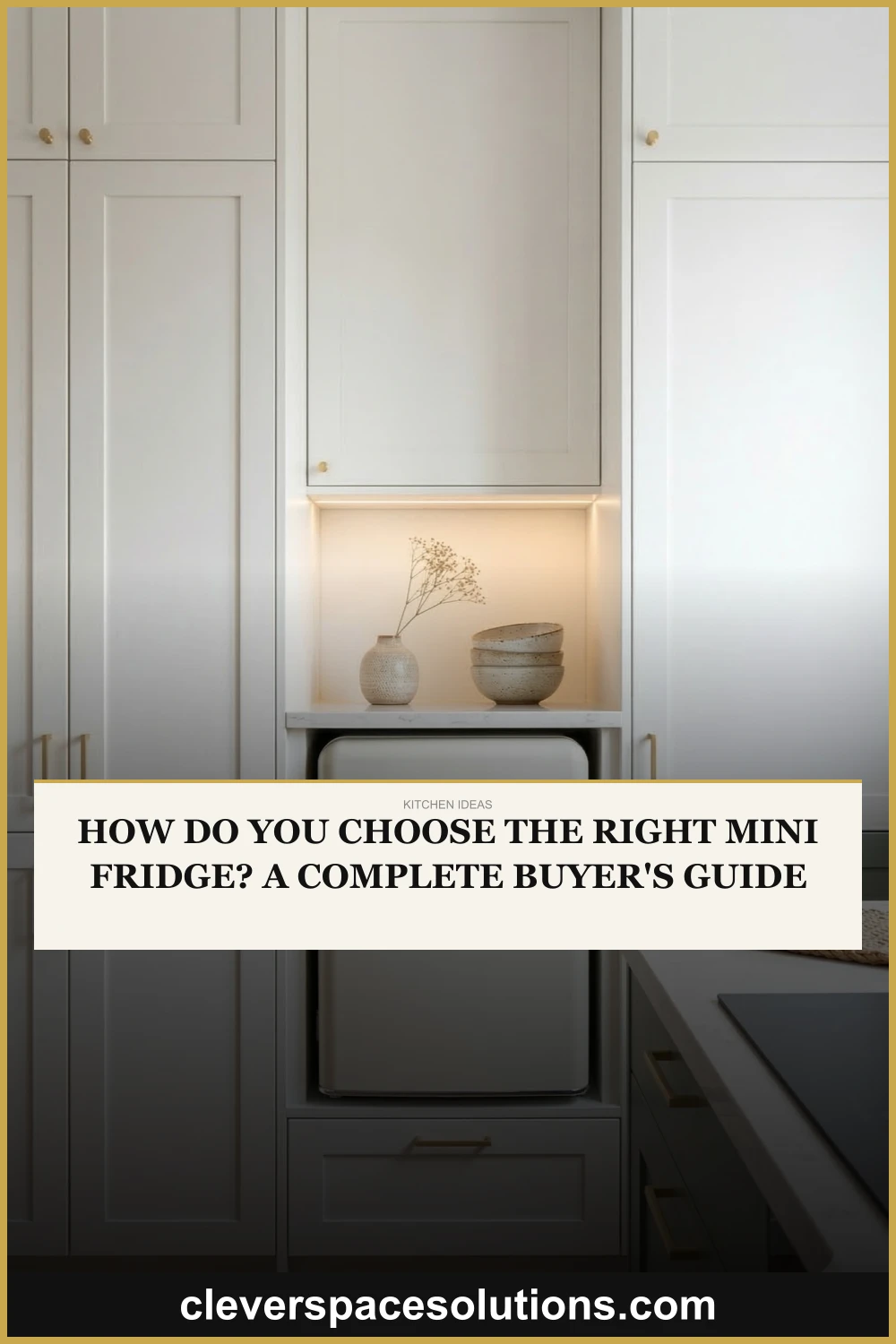
How Do You Choose the Right Mini Fridge? A Complete Buyer's Guide
6 min read
Tags

Written by Joesp H.
Interior Design & Small Space Living Specialist
Former marketing manager turned full-time home optimizer. After living in 7 homes ranging from 450 to 2,000 sq ft, I started CleverSpaceSolutions to help people create organized, functional spaces on real budgets.
Other Articles
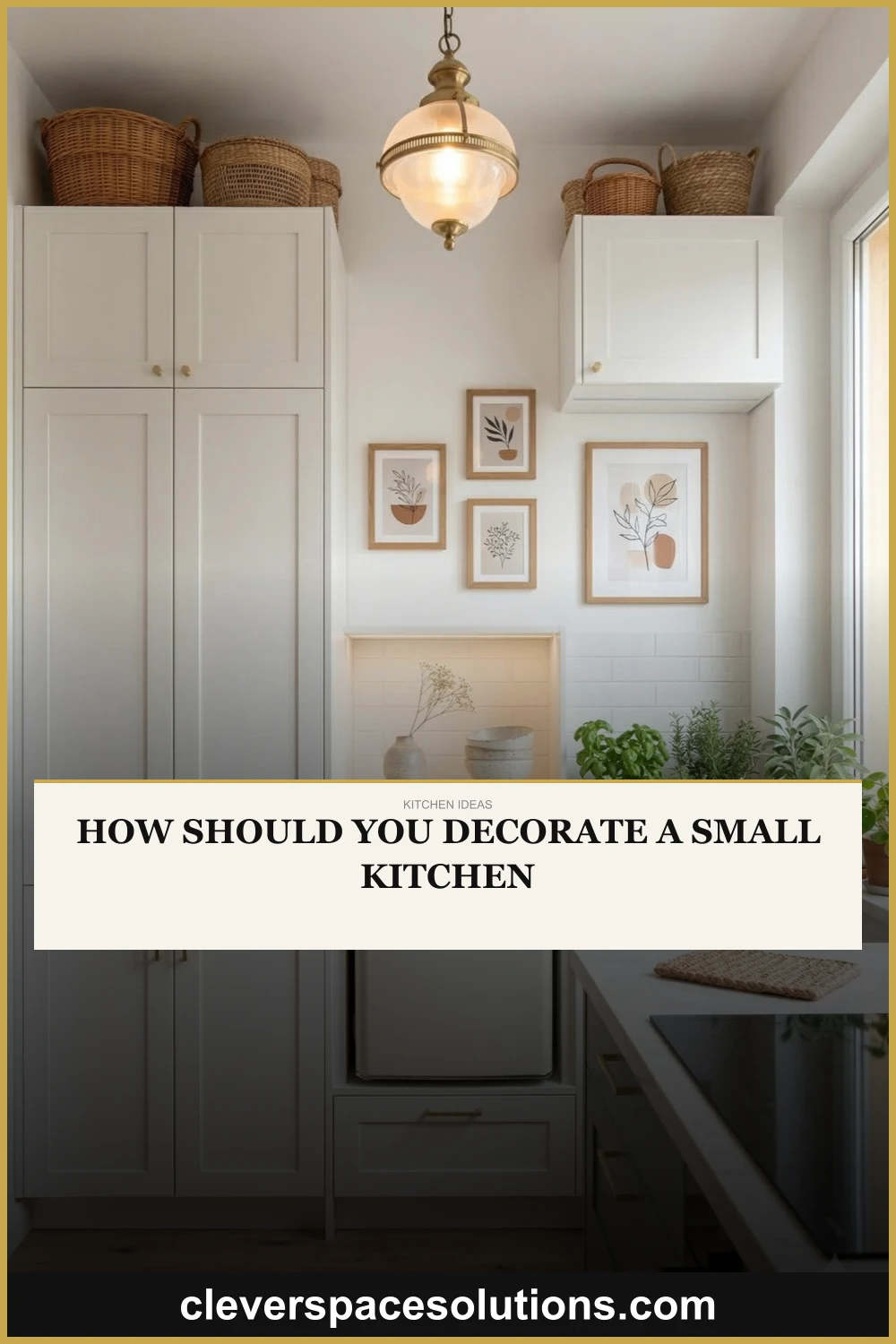
How Should You Decorate a Small Kitchen?
Wondering how to make your small kitchen both functional and stylish? This guide answers your questions with 7 practical ideas for storage, lighting, and org...

How Can You Make a Small Kitchen Look More Stylish? 10 Designer Ideas
Looking for unique ways to improve your small kitchen? This guide answers your questions with 10 designer-inspired ideas, from ceiling racks to clever lighti...
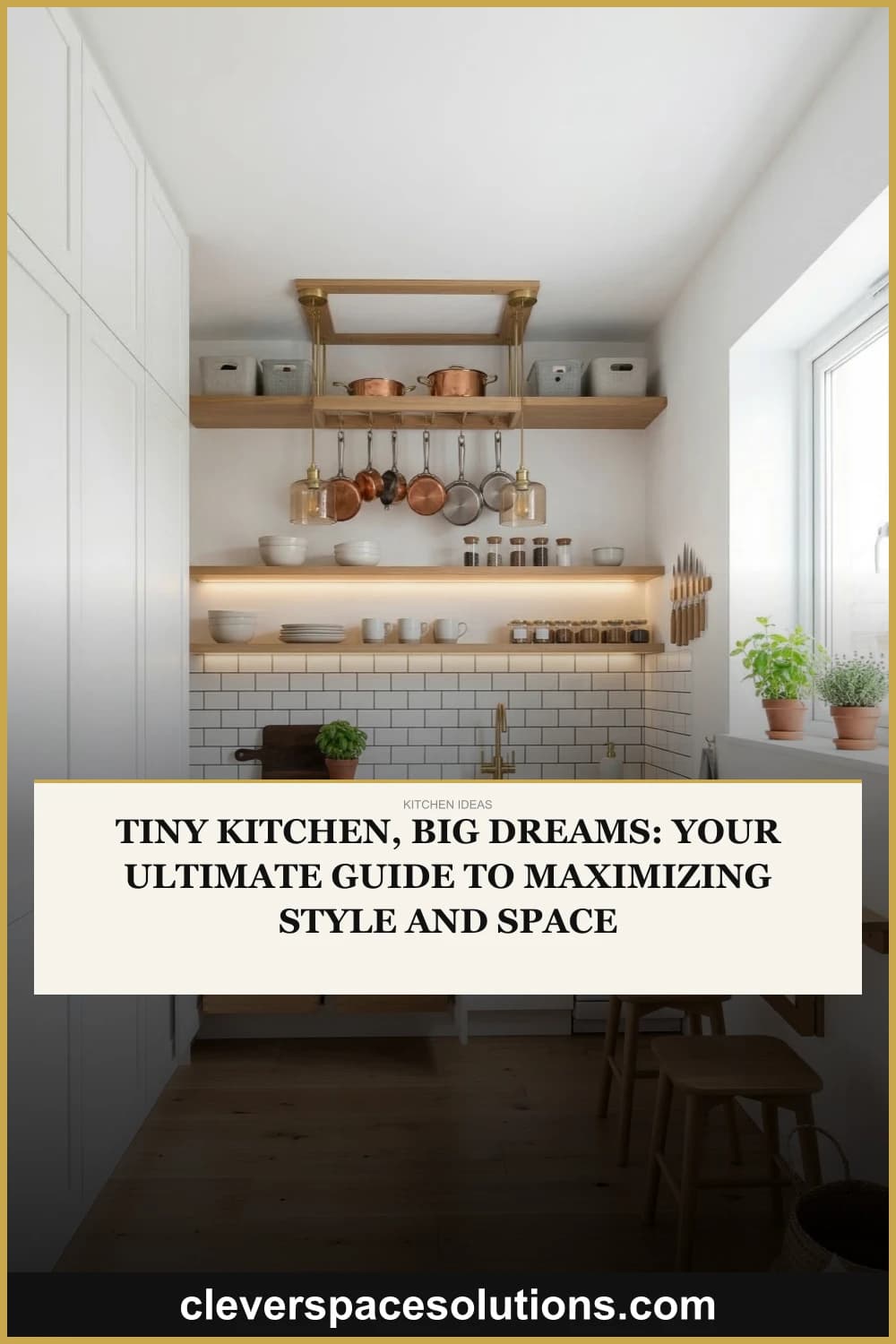
Tiny Kitchen, Big Dreams: Your Ultimate Guide to Maximizing Style and Space
Wondering how to transform your tiny kitchen into a stylish, functional space? This ultimate guide answers your questions, covering everything from smart sto...